
Updated: 11 September 2026 16:42:00
War and Poor Rains Deepen Sudan’s Food Emergency
moatinon
The Famine Early Warning Systems Network (FEWS NET) expects emergency levels of food insecurity to persist across large parts of Sudan, with a credible risk of famine in several areas through January 2027, driven by the continuing conflict, deteriorating economic conditions and poor rainfall.
In an update to its food security outlook for August 2026 to January 2027, published on Friday, the network said Emergency (IPC Phase 4) conditions — the fourth phase of the Integrated Food Security Phase Classification (IPC), immediately preceding famine — will remain widespread during the peak of the lean season in August and September, particularly across much of Greater Darfur, Greater Kordofan and Blue Nile.
FEWS NET attributed the situation to conflict, worsening economic conditions, rising food and fuel prices, and a sharp erosion of people’s purchasing power.
The network said some populations will face Catastrophe (IPC Phase 5) conditions in Um Baru, Kernoi and At-Tiné in North Darfur; Dilling and Kadugli and surrounding rural areas in South Kordofan; El-Obeid and surrounding areas in North Kordofan; as well as among some internally displaced people in Greater Darfur and Greater Kordofan.
Humanitarian food assistance in areas that remain consistently accessible has helped prevent even worse outcomes, particularly in Tawila camp, Al Lait and At Taweisha in North Darfur; As Sunta and Buram in South Darfur; the Jebel Marra areas of Central Darfur; and Um Durein and Delami in South Kordofan.
However, FEWS NET said less than 20 percent of the total population in need of food assistance, according to its estimates, is receiving it.
The network expects Emergency food insecurity conditions, with some populations reaching Catastrophe, to persist during the harvest season from October 2026 through January 2027 in areas along active front lines.
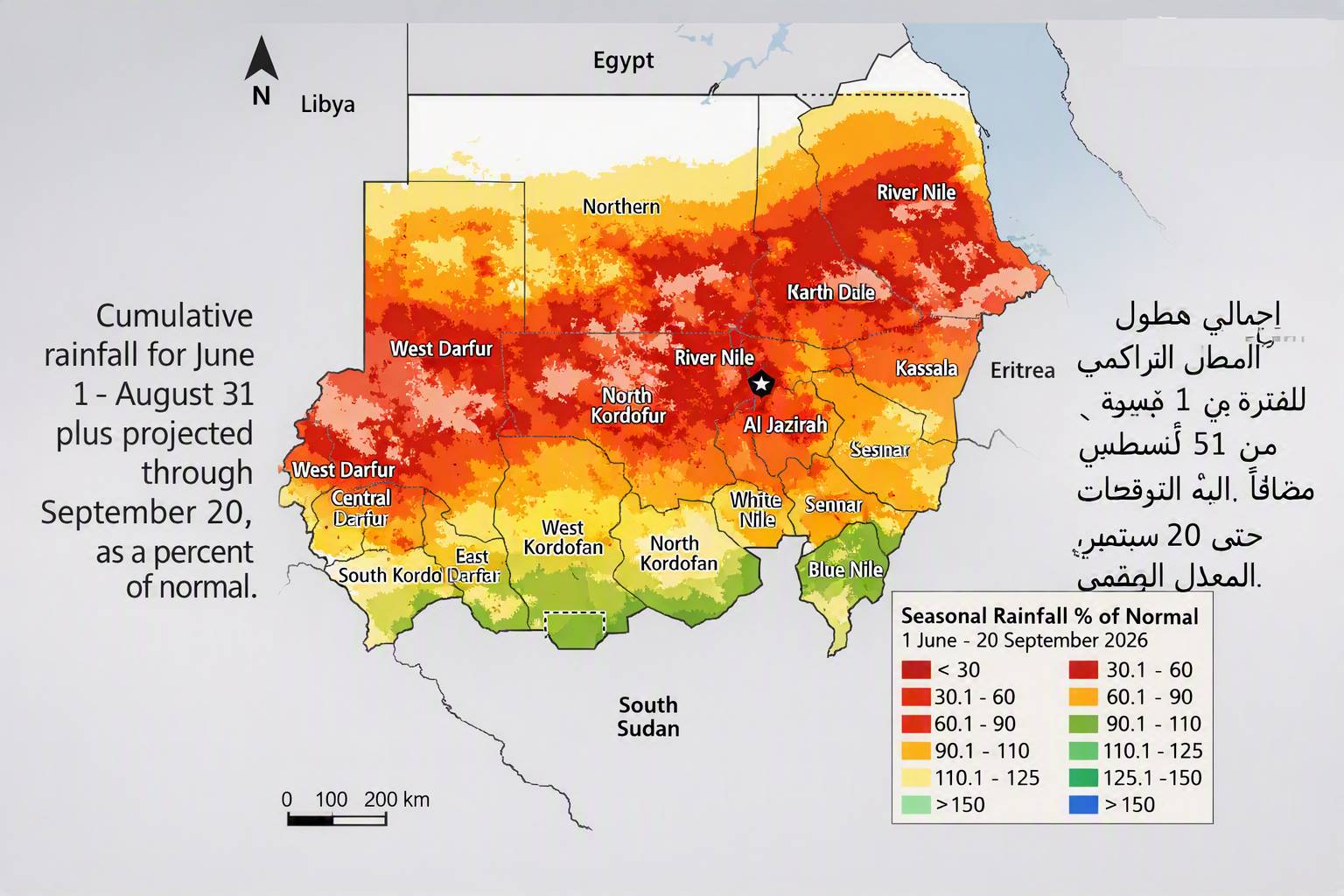
It said the scale of disruption caused by the war has severely limited people’s ability to engage in agricultural activities, while the effects of El Niño have brought significantly below-average rainfall and higher temperatures, raising the likelihood that harvests in conflict-affected areas will be extremely limited.
In other parts of western Sudan, insecurity and poor rainfall are expected to reduce crop production and keep prices high, pushing large numbers of people into Crisis (IPC Phase 3) conditions during the typical harvest period.
In contrast, FEWS NET expects harvests, although below average, along with income from agricultural labor in calmer areas of eastern Sudan, to help reduce consumption gaps and keep conditions at the Stressed (IPC Phase 2) level.
The network warned of a credible risk of Famine (IPC Phase 5) through January in seven areas of northwestern and central North Darfur, as well as in Dilling and Kadugli and nearby rural areas of South Kordofan.
It said large to extreme food consumption deficits are already widespread in these areas, alongside high levels of acute malnutrition.
FEWS NET added that an escalation in fighting or the resumption of severe sieges that isolate populations for prolonged periods, combined with poor or failed harvests, could further worsen food consumption deficits, hunger-related deaths and already high levels of acute malnutrition, making famine increasingly likely.
