
Updated: 8 September 2026 17:15:55
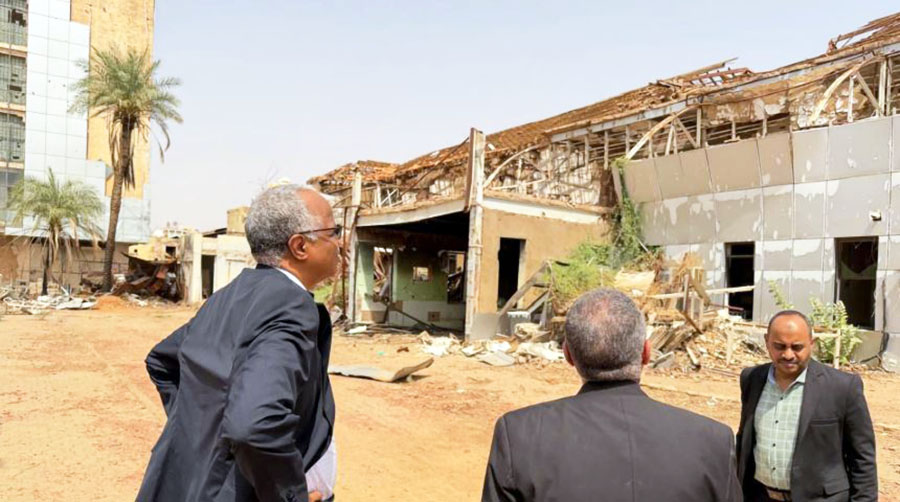
WHO Assesses Extent of Damage to Khartoums Referral Hospitals
Moatinoon
Dr. Abdel Nasser Abu Bakr, the World Health Organization (WHO) Representative in Sudan, visited three of Khartoums main referral and teaching hospitals in Khartoum State and witnessed the extent of the damage inflicted on the hospitals during the war. The buildings and medical equipment suffered extensive damage. Operating rooms were destroyed, imaging equipment was lost, and several wards collapsed. Entire buildings and departments ceased functioning. The buildings require urgent structural repairs before they can safely receive patients.
Before the war, Khartoum Teaching Hospital, the Eye Hospital, and the Dental Hospital treated patients from Khartoum State, in addition to referrals from across Sudan. These three hospitals are both referral and teaching hospitals. Khartoum Teaching Hospital was one of the most important general referral hospitals in Sudan. The Eye Hospital, founded in 1889, is the oldest health facility in the country and, in addition to providing specialized eye care services, it, like the Dental Hospital, served as a training center for the next generation of specialists.
Despite these circumstances, hospital staff were present at every site, treating patients in the usable parts of the buildings. Doctors, nurses, technicians, and administrators met with the delegation and explained the needs of each department to reopen.
"The damage to these hospitals is extensive, and their rehabilitation requires a concerted effort from health authorities at both the federal and state levels, the WHO, and other partners in the health sector," said Dr. Abdel-Nasser Abu Bakr, WHO Representative in Sudan. "What underpins this effort is the commitment of the medical staff we met today, who are ready to return to work as soon as they have a suitable working environment and sufficient equipment."
These three hospitals are representative of the general situation in conflict-affected cities across Sudan. Other major hospitals in Khartoum State have suffered similar damage in terms of nature and scale, and their staff face the same challenges. Therefore, the visit was intended to provide a sample of the needs of the states hospital network, not to prioritize them.
The restoration of the three hospitals requires the rehabilitation of the buildings, the replacement of medical equipment, the reactivation of water and electricity networks and waste management systems, and the strengthening of healthcare staff. The Federal Ministry of Health, the Khartoum State Ministry of Health, the World Health Organization, and other international partners must coordinate their needs assessments, agree on priorities, and determine the sequence for reopening departments to ensure that the population has access to specialized care as quickly as possible.
More than three years of conflict have devastated Sudan’s health system, with damage, looting, and staff losses forcing the complete or partial closure of some health facilities across the country. The full reopening of the Khartoum referral hospitals is a prerequisite for rebuilding an effective referral system, which primary healthcare facilities throughout Sudan rely on for access to specialized and higher-level care.
