
Updated: 7 September 2026 00:08:42
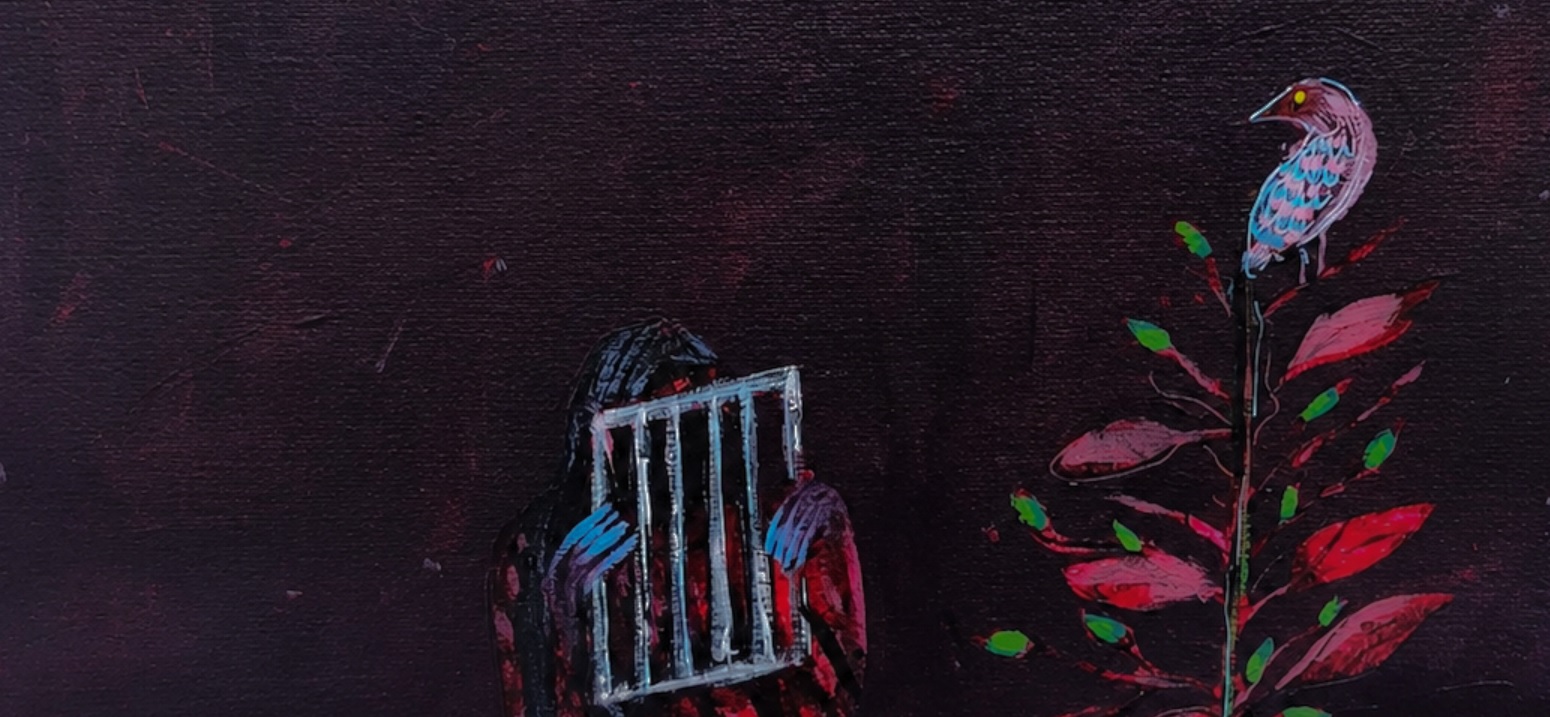
Sudanese Women Journalists: Why Aren’t They Leading?
Gender Justice as a Prerequisite for Free Press
The question looms large: Why haven’t Sudanese women journalists reached leadership positions in Sudanese journalism, despite their growing presence over the past fifty years, amid immense political and social challenges?
Since the 1970s, women’s names have emerged in national newspapers such as Al-Ayam and Al-Sahafa, where they ventured into investigative journalism, political writing, and social commentary with a remarkable presence and significant challenges. During the 1980s and 1990s, with political transformations and social shifts—particularly after the rise of an oppressive and extremist Islamic regime following Omar al-Bashir’s coup—women journalists faced extreme repressive censorship and severe professional risks, including corporal punishment and bodily violations before the judges of the Public Order Courts. Yet, this period also marked a revolutionary turning point, coinciding with the rise of digital media and the Sudanese revolution protests. Women journalists played a prominent role in coverage, breaking the silence on women’s issues, human rights, and broader societal concerns. They established an influential professional presence in the media landscape and stirred the women’s scene with awareness campaigns that the press and its publishers did not take seriously.
Looking at the reality of print journalism over the past three decades—before the expansion of digital journalism—we notice the absence of women in leadership roles within editorial boards, newsrooms, or specialized reporting and editorial sections. Men dominate most journalistic institutions. So where does the problem lie? Where do its roots extend? And how can we imagine journalistic institutions that support and encourage the presence of women in leadership positions?
It’s Not Just Deliberate Exclusion
Dr. Nahed Mohammed Al-Hassan, a writer and specialist in psychiatry, believes the issue is vast and complex. When examining the reality of Sudanese journalistic institutions over the past four decades, the absence of women from newsrooms and decision-making centers cannot be reduced to a single cause or the idea of "deliberate exclusion" alone. The crisis is more intricate, intersecting with the very structure of journalism, as well as the social, cultural, and political frameworks within which it operates. Journalism, by nature, is a demanding and confrontational profession: irregular working hours, high psychological pressure, constant confrontation with authority, and professional and security risks—especially in a Sudanese context marked by authoritarianism, wars, and coups.
She explains in an interview with Fareeda Feminist Magazine: “From a sociological perspective, newsrooms were not isolated from the broader patriarchal culture, where leadership, confrontation, and public visibility are seen as ‘masculine’ traits. Meanwhile, women—even when their competence is recognized—are often pushed into marginal or invisible roles. Over time, these patterns become a kind of ‘forced choice’: not because women are incapable, but because the cost of continuing is higher for them, both psychologically and socially.”
From a psychological perspective, she points to chronic fatigue and burnout, as well as the impact of working in environments that do not recognize differences or provide institutional support. Many women journalists have quietly withdrawn, not due to professional incompetence, but to protect themselves. This reflects what Paulo Freire referred to as the “pedagogy of the oppressed,” where power relations are reproduced within the profession itself, and the oppressed—whether men or women—learn survival strategies rather than transformation.
However, Dr. Nahed states, “It would be a great injustice to say that women were absent. On the contrary, Sudanese journalistic history is rich with women journalists and writers who dedicated their pens to the service of justice, freedom, and democracy, and who wrote under conditions far harsher than today. To name but a few: Madihah Abdullah, Sabah Adam, Amal Abbas, Shamail Al-Nour, Durra Gambou, and Amal Habani, among many others who carried journalism as a moral mission, not just a profession.”
She adds that there are important contemporary experiences reshaping the landscape, including newspapers and initiatives led by women in decision-making positions. “Personally, I chose to support a newspaper led by a fierce activist like Professor Rasha Awad and managed by a capable journalist like Amal Mohammed Al-Hassan, not out of flattery, but out of the belief that having women in leadership changes the culture of the institution, not just its image.”
She believes that the future of women in Sudanese journalism depends on three fundamental transformations: First, redefining journalism as a collective human endeavor, not as an exhausting individual heroism. Second, building institutions that protect their employees, both psychologically and professionally, and break the model of exhaustion. Third, recognizing that gender justice is not just a women’s issue, but a fundamental condition for a free press capable of holding power accountable and serving society. “A press that excludes women or exhausts them to the point of withdrawal is a press that impoverishes itself intellectually and morally. A press that embraces diverse experiences is the one most capable of telling the full truth.”
During the 2003–2004 academic year at the University of Khartoum, the editorial board of the university’s student newspaper consisted entirely of men. Ironically, many of these leaders were the same individuals who led the transitional period (2019–2021), a time that followed a massive revolution in which Sudanese women and girls participated remarkably, with estimates suggesting their involvement exceeded 50%. They contributed seriously and determinedly to organizing marches, media coverage, and consolidating the pillars of the revolution amid intense social and authoritarian repression. Yet, women were once again relegated to the margins of exclusion and denial, suggesting that the phrase “democratic and enlightened forces” is merely a cliché and a slogan for electoral propaganda, or just empty rhetoric.
Writer Rasheed Bakhit, in his interview with Fareeda Feminist Magazine, notes a prevalent and glaring disparity: the near-total absence of women in the leadership of journalistic institutions. He cites the transitional period when Amal Habani temporarily led the editing of Al-Jarida newspaper in its first phase. He also mentions, “Our student newspapers and their various editorial boards lack women, even in non-leadership functional roles.”
He adds that the Sudanese journalistic environment is generally unwelcoming and even more so for women. It is a purely masculine environment with recurrent incidents of harassment and insufficient financial compensation. “Most women prefer to work as opinion writers rather than engage daily in direct journalistic work, such as investigations, press dialogues, and news reporting. There is also an unfortunate stereotype that associates women with the entertainment section, though this does not prevent the existence of some bright and professional names here and there.”
He says that Amal Abbas and Bakhita Hassan Amin might be pioneers in this field, but you won’t find as many prominent women during their time. Sudanese journalism itself is not a widespread or expansive industry, but despite its limitations, it has not produced many internal female voices. Conversely, many successful Sudanese women journalists are found abroad, such as Zainab Al-Badwi, Rasha Keshane, Nahla Taher, and many others, especially from newer generations.
Bakhit believes this indicates that the Sudanese journalistic environment is unwelcoming and does not foster growth, development, or training, especially if there is no natural ladder for promotion to positions like editor-in-chief or managing editor. “I think the low wages, masculine environment, and undefined working hours for journalistic work also do not suit women, and you find them preferring visual and audio journalism more. This reality makes long-term continuity in the work rare, and most women cannot sustain it.”
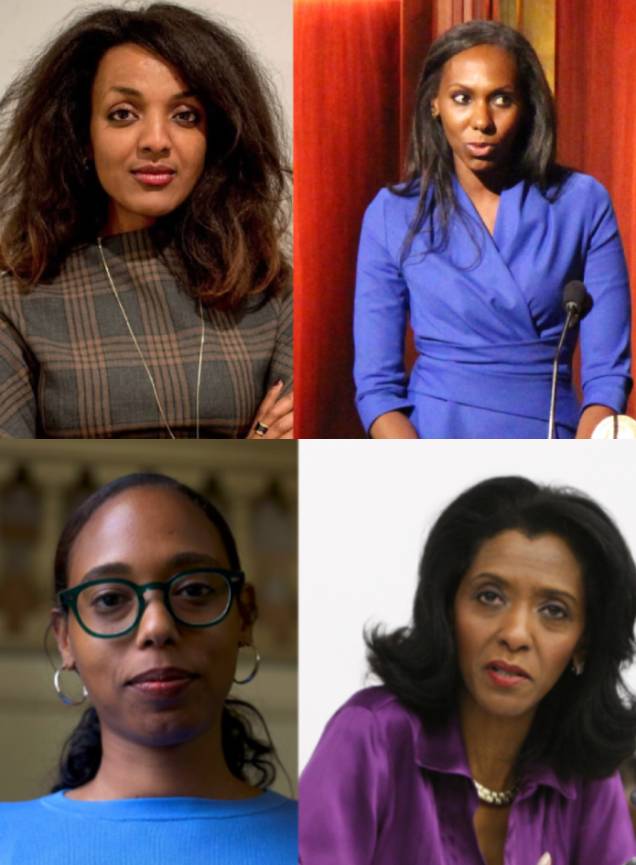
Structural Imbalance
According to a survey conducted by the Al-Aql Center for Press Services in October 2024, which covered 17 Sudanese media institutions, only two women held the position of editor-in-chief out of these institutions. The center, which published its study results in Kampala, Uganda, under the title "The Impact of Women in the Path of Peace: Leadership and Economic Empowerment," found that over 90% of Sudanese media institutions suffer from a significant lack of gender representation in their management. The percentage of women in the administrative bodies of these institutions does not exceed 1%.
In the Sudanese Journalists’ Union, women journalists represent 50%, with more than 1,000 female members, according to Yusuf Hamad, a union member and journalist. However, in the union’s executive office, women make up 43%, meaning 6 out of the 14 executive members are women.
Hamad states that if there is a problem, the solution lies in changing the structural nature of political practice in the country from top to bottom. He explains, “This profession is closely linked to politics at its most intense levels, so it is not easy to make it attractive to women through legislative or administrative measures. So far, the Journalists’ Union has worked to protect the rights of women journalists and established a special secretariat for this purpose, perhaps the first of its kind among similar Arab unions. But this alone does not solve the problem.”
He adds, “It is true that a researcher may notice an increase in the number of male journalists in Sudanese journalism compared to women, and this reality may not be unique to Sudan but applies to all written journalism in the Arabic language. This reality cannot be described as male dominance, at least not in an experimental sense. Instead, it requires a different description that helps explain and resolve it when we consider it a problem. Generally, male journalists have been predominant because practicing the profession over the past 40 years has been harsh and full of challenges. Moreover, journalism has been a confusing mix of professional practice and political stance, which may not have been attractive—or may have been repellent—to women.”
For his part, journalist Alaa El-Din Mahmoud believes that despite the significant increase in the number of women journalists, the natural progression within media institutions has continued to favor male journalists. He notes that many newspapers openly prefer male journalists under flimsy pretexts, such as their willingness to cover night shifts, late hours, and travel. Additionally, the salaries of women journalists are often lower compared to their male counterparts.
He argues that legislation alone cannot provide solutions and is often just a formality that can be circumvented. The real issue lies in awareness and the need for a revolution in traditional ways of thinking. He emphasizes that natural progression within the newsroom should be the norm, not the preferences of editors-in-chief. He explains that narrow-mindedness and favoritism dominate newspapers, and the selection of leadership elements is often based on personal whims and relationships, even when it comes to women. He states, “It is unreasonable to appoint a female editor-in-chief or managing editor who is originally a writer and not an editor. This harms the rest of the women journalists, and the same applies to male journalists.”
Mahmoud adds in his interview with Fareeda Feminist Magazine: “It is important to expand the process of establishing newspapers, whether print or electronic, by journalists themselves, both men and women. The fact that most newspapers are owned by businessmen publishers has greatly harmed the institutional nature of journalistic work. The situation has been worsened by the emergence of newspapers funded by foreign organizations, which harm the integrity of journalism, its concept, and its institutional nature. Journalistic elements are chosen and promoted based on favoritism.”
Seeking Fair Opportunities
Journalist Nada Ramadan traces the crisis faced by Sudanese women journalists back to the discrimination they encountered during the formation of the transitional government (the government of the revolution). Women and women’s organizations were deliberately excluded and omitted from nomination lists without clear justifications from their parties and political organizations. To combat discrimination against women journalists, she emphasizes the need for policies that prevent discrimination within media institutions and ensure fair opportunities for career advancement and training. Having women in decision-making positions in media is crucial.
In her interview with Fareeda Feminist Magazine, Nada states: “What is happening to women journalists—exclusion and gender-based discrimination within media institutions—highlights the urgent need for radical changes in how Sudanese women journalists are treated to ensure their rights in a fair work environment.” She calls for the removal of all obstacles that hinder the development of their professional and legal capabilities, whether within media institutions or in the public and private spheres.
Iman Fadl Al-Siddiq, Secretary of Freedoms at the Sudanese Journalists’ Union, believes that male dominance is not limited to the journalism sector alone—it is pervasive and reflected in all aspects of society. In her interview with Fareeda Feminist Magazine, she notes that while there are women journalists who have reached leadership positions, their numbers are limited and do not proportionally match the percentage of women working in journalism. She attributes this to several factors, including:
Opportunities being provided based on competence and qualifications (the lack of clear criteria has led to these deplorable conditions).
Nepotism and personal relationships influencing hiring.
Traditional views of women.
Social issues related to the status of working women, including the increased burdens of household responsibilities, marriage, and motherhood, which she describes as unjust to women journalists.
The Impact of War
Journalist and former editor-in-chief Sabah Adam highlights an important statistic: In 2019, the National Council for Press and Publications reported that Sudanese women journalists made up 60% of the total registered workers in Sudanese journalism. A similar percentage was later confirmed in a statistic from the Sudanese Journalists’ Union.
Sabah explains that this statistic confirms the numerical superiority of women journalists. However, when looking at women in decision-making and leadership positions in journalism, the number is extremely small compared to their long-standing presence in the profession for over three decades, particularly among graduates of specialized journalism and media colleges. Women have been passionately present in all journalistic sections, especially sports.
She states: “This large percentage and passion should have culminated in their presence at the level of editor-in-chief, managing editors, and heads of various departments. Before 2019, the number of women editors-in-chief was very small—only two.” She continues: “In 2024, the Al-Aql Center for Press Services conducted a study on the circulation of women’s issues in social media. Among the study’s questions were those about women’s issues in media institutions, how they are perceived, and whether the presence of women in a media institution makes women’s issues a priority. We found that the number of women in leadership positions is still only two, the same number for managing editors, and most department heads—especially in news sections—are men. Despite the qualifications, large numbers, and enthusiasm of women journalists, as well as their capabilities and journalistic precedence, they are unfortunately absent from all leadership positions, which are dominated by men.”
A Situation That Predates and Persists Beyond the War
For Sabah Adam, this situation existed before the war and has worsened since its outbreak. The conditions for women journalists have become even more complicated, as they now face double the challenges: first as women, and second as journalists. Since the war began, women journalists, as both a gender and a profession, have become hostages to their families’ decisions regarding displacement and seeking refuge. This has reduced their presence in media institutions compared to their male counterparts. Many have fled with their families, and their movement has been restricted due to violence, rape, and families’ fears of stigma. As a result, women journalists have been unable to perform their professional roles and have struggled to remain in their institutions. Their numbers have dwindled, particularly in print journalism, which has been devastated by the conflict.
Sabah explains: “Despite some women working successfully as correspondents and editors in newsrooms, this cannot be generalized to the larger population of women journalists, given the differing economic circumstances and opportunities for self-development. These are exceptions, not a true measure of the overall reality.”
In her interview with Fareeda Feminist Magazine, she adds: “As for the obstacles, the first is the dominant masculine mindset within media institutions, along with the privileges of working in conflict zones, which reduce women’s opportunities to demonstrate their capabilities. This is a global issue—women journalists in hotspots and conflict areas face significant dangers. Second, the rise of violence post-war has forced women to work without proper identification in displacement centers, making it difficult for them to protect themselves and their families. Additionally, there is a lack of training and development opportunities for Sudanese women journalists. While some opportunities exist through civil society and international organizations—helping them improve their skills in human rights and women’s rights—these are limited. Economic conditions have also made the profession unattractive due to low wages, leading many to leave journalism. Many women were qualified for leadership roles, but marriage, family formation, and social and economic pressures have hindered them, especially in the absence of institutional support such as childcare and leave benefits. As a result, they suffer from a lack of social and institutional protection.”
Source: Farida Magazine
