
Updated: 3 September 2026 13:26:40
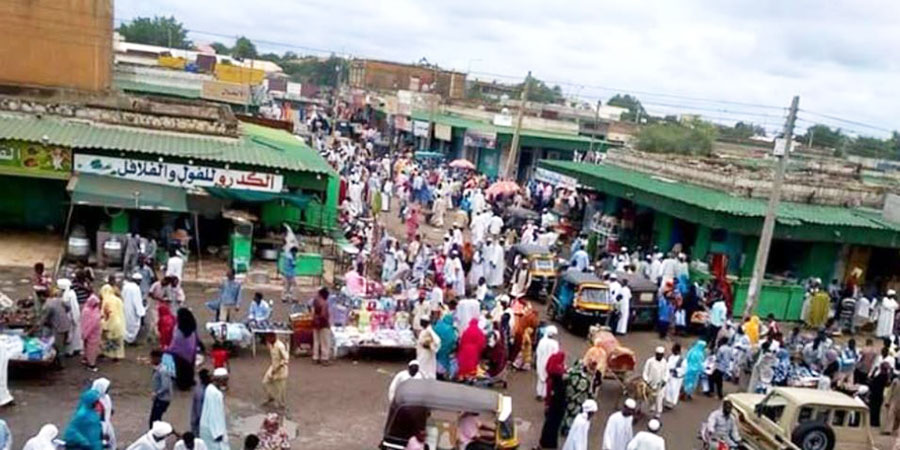
Rising Prices and Fluctuating Bankak: Doubled Living Pressures in Al-Qadarif
Al-Qadarif – Mujahid Nasr al-Din
Markets in Al-Qadarif State are experiencing increasing economic pressures due to the continuous rise in prices of several basic commodities, coinciding with the decline in the value of the Sudanese pound against foreign currencies and the fluctuations in electronic banking services. This has directly impacted buying and selling activity and the cost of living.
This comes at a time when the Sudanese pound has witnessed a sharp decline against the dollar in the parallel market in recent days, with the dollar reaching record levels. This is reflected in the prices of imported goods, as well as transportation, production, and distribution costs.
In Al-Qadarif markets, traders say that the decline in the value of the local currency makes repurchasing goods more expensive, especially for goods whose prices are linked to the exchange rate or transportation and fuel costs.
Adam Sharqa, a wholesaler in the Al-Qadarif market, says: "We, as traders, dont raise prices arbitrarily. We buy new goods at a higher price than before, and if we sell at the old price, we wont be able to buy the same quantity again."
He adds that price instability makes some merchants hesitant to sell or reduce their inventory for fear of increased repurchase costs.
Meanwhile, citizens are facing increasing difficulty in keeping up with the successive price hikes, especially given their stagnant or limited incomes compared to the fluctuating prices of goods and services.
One citizen says, "My salary or income hasnt increased, but the prices of food, transportation, and everything else have. Things we used to buy for a certain amount are now more expensive, and weve had to reduce the quantity we buy and forgo other things."
The effects of the crisis arent limited to food; they extend to other services, including transportation, medical treatment, and education.
Abdulrahman Sarhan, a rickshaw driver in Al-Qadarif, says, "Transportation has become an additional burden. Every fare increase affects the family budget, especially for people who commute daily to work or school. We hear their stories and live among them."
On the other hand, financial transactions have become more difficult due to the fluctuations in the "Bankak" service of Bank of Khartoum, which a large number of citizens and merchants rely on for transfers and electronic payments amidst the cash shortage. Bank of Khartoum apologized to its customers for the service disruptions, stating that its technical teams are working to address the technical challenges and improve the service.
One merchant says that service outages or fluctuations directly affect sales, especially when the buyer or seller lacks cash.
He adds, "The customer might have the money in their account, but if Bankak isnt working, they cant pay, and we also need transfers to continue operating."
Economists believe that the price hikes in Al-Qadarif are not due to a single factor, but rather the result of several interconnected factors, including the devaluation of the Sudanese pound, increased transportation and production costs, difficulty in securing liquidity, and disruptions to supply chains.
Recent data indicates continued inflationary pressures in the Sudanese economy, with the inflation rate rising in June 2026, coinciding with the pounds depreciation and rising commodity prices.
As the costs of food, transportation, and services rise, residents of Al-Qadarif find themselves facing a difficult equation: limited income in the face of constantly fluctuating prices.
Under these circumstances, the markets remain a direct reflection of the economic crisis, with citizens bearing the brunt of its impact on their daily lives and their ability to provide for their families.
