
Updated: 29 August 2026 15:59:29
Food Crisis in North Kordofan: Thousands of Families Trapped and Starving
Follow-ups – Moatinoon
Source: Al-Araby Al-Jadeed
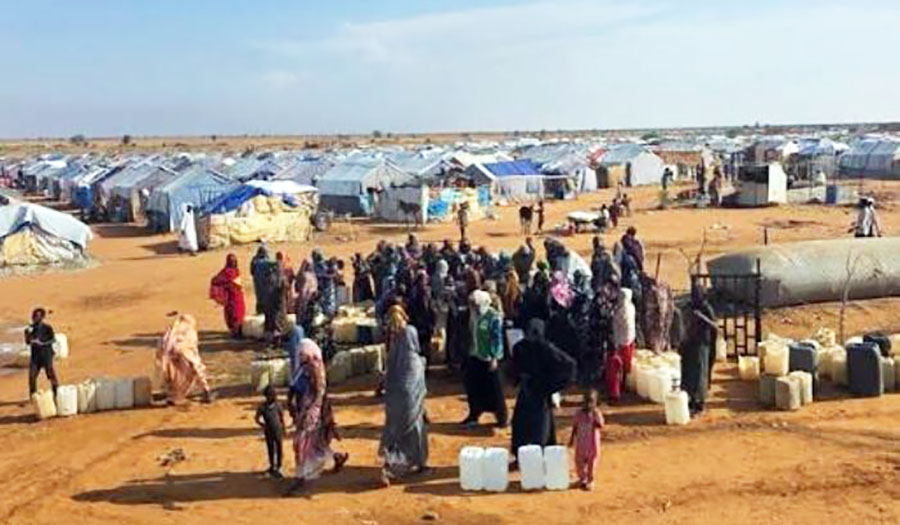
The recurring clashes that have created a fragile security situation in Sudans North Kordofan state have led to a worsening food crisis, particularly regarding sorghum, a staple food for the population. Thousands of families are now facing severe food shortages and are struggling to meet their basic needs due to the security restrictions imposed on the region.
Since the beginning of this year, obtaining food has become extremely difficult for residents, while traders are hesitant to transport goods due to security risks, restrictions on vehicle movement, and fuel shortages. Those who have remained in their villages and towns are left with very limited options for securing food and water, especially given the drought that has struck the region due to delayed rainfall, threatening the agricultural season.
The local government of North Kordofan, as well as the central authorities, imposed strict measures on the transport of food supplies to areas controlled by the Rapid Support Forces (RSF), areas near their control, and areas witnessing military operations. This directly impacted trade and the flow of supplies, as transporting food became extremely dangerous.
The food shortage caused a severe humanitarian crisis, and its continuation forced some residents to flee in search of food and work to secure a livelihood. However, displacement became increasingly difficult due to escalating security risks, the lack of transportation, and the closure of many roads. Furthermore, the reduced ability of citizens who had lived under siege for more than three years to afford the cost of displacement, coupled with the lack of transportation and the perilous nature of the roads due to their location in areas controlled by one of the warring parties, left families with only two options: remain in their areas, which suffer from a complete lack of basic necessities, or attempt to leave via unsafe routes that risk their lives.
The crisis is no longer limited to soaring food prices, but extends to food scarcity in the markets. Despite the worsening situation, no entity has taken action to provide food for the tens of thousands of people facing escalating hunger amidst ongoing fighting and the decline in commercial and agricultural activity. Military forces are preventing citizens from entering or leaving certain areas, effectively isolating them from one another.
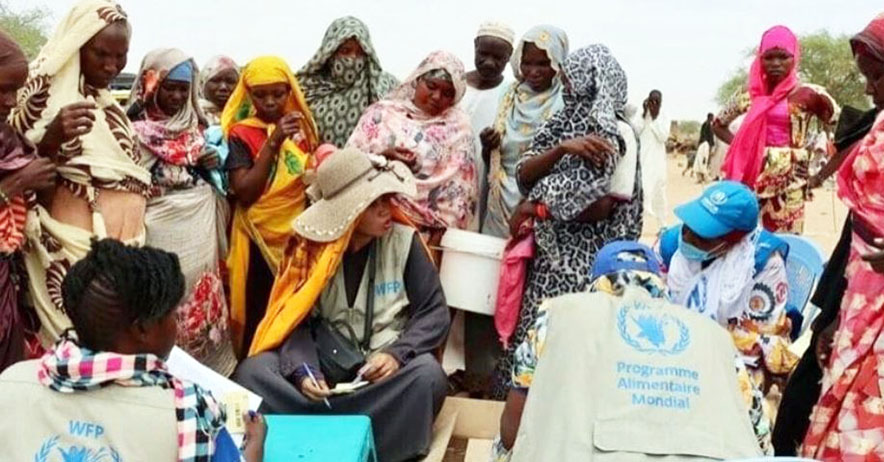
From North Kordofan State, Ahmed Ibrahim told Al-Araby Al-Jadeed: "Preventing the delivery of basic goods to the region has led to food shortages. Most of the traditional markets in villages and towns have closed due to the scarcity of available goods, creating a climate of uncertainty among the population. Security forces besieging the area confiscate goods before they arrive, impose exorbitant fines on traders, and detain vehicles carrying food supplies under the pretext that they might be smuggled to enemy territory."
Ibrahim continues, "These unfair measures have made traders hesitant to transport food supplies to North Kordofan, fearing the loss of their goods and the means of transport they rely on for their businesses. The scarcity of food in the region and the difficulty for citizens to travel to neighboring cities to obtain their daily necessities have led to widespread hunger and disease."
For his part, Suleiman Hamad, from a village in North Kordofan, told Al-Araby Al-Jadeed, "The residents of villages and small towns used to depend on the movement of traders to provide food, but after the ban on transporting food supplies, these goods began to gradually disappear from shops and markets, and obtaining the food we need became much more difficult. Most areas of the Kordofan region have been suffering from hunger since the tightening of the ban on the entry of food supplies and the restrictions imposed on citizens attempting to flee to areas under army control."
From Rahad al-Nuba, Al-Tom Babiker told Al-Araby Al-Jadeed, “The disruption of supply chains and the prevention of traders from bringing in food has created a severe food crisis in the Kordofan region, which has been a war zone for about two years. People are no longer looking for milk, vegetables, or meat, which have become luxuries. They are now searching for sorghum, the staple food in the region, but it has disappeared from the markets. The little that remains is being refused for sale by traders because they cannot bring it back under the siege imposed on the region.”
Citizens’ testimonies reveal that the crisis is no longer limited to a shortage of certain food items, but has transformed into a scarcity of basic food sources. The majority of the population lacks the means to provide alternative food sources, especially in areas experiencing ongoing fighting. With this dire situation persisting, the people of Kordofan find themselves facing a multifaceted crisis that includes insecurity, the cessation of agricultural production, a decline in trade, the disruption of supply chains, a liquidity crisis, and a security vacuum.
From Jebrat al-Sheikh locality, Al-Sadiq Jadallah told Al-Araby Al-Jadeed: “The ongoing fighting is the primary reason for the food shortage. The isolation of the area has prevented its residents from obtaining their necessities from outside, and many have lost the ability to feed their families under the current circumstances.”
As the battles intensify across large areas of the Kordofan region, the need for food and healthcare among civilians increases. From North Bara, Sharif Muhammad told Al-Araby Al-Jadeed: “There are extreme difficulties in providing food supplies, and families are suffering from hunger, especially in areas where there are no communal kitchens or where humanitarian and relief organizations cannot reach them because they are considered war zones. Under these circumstances, many residents have no means of securing food and are suffering from hunger. This will continue until the road is opened and the warring parties allow the entry of food supplies.”
He adds: “Thousands of citizens are facing a harsh reality imposed by the war. Many cannot leave their areas, cannot find transportation to flee, and do not have the money to buy enough food. There are no immediate solutions other than government intervention to provide food, but this seems unlikely at present because the government is preventing food supplies from reaching them under the pretext that they are being diverted to the Rapid Support Forces.”
Yaqub Hamid, displaced from Al-Nuhud to Al-Ubayyid, describes the living conditions in Kordofan as the worst since the beginning of the war. He told Al-Araby Al-Jadeed, "For the past two years, residents relied on corn they had stored from previous years. However, with the war dragging on and the agricultural seasons disrupted, the stored corn ran out, along with their savings. People were left with no option but to flee to areas where they hoped to find food. But displacement has become a difficult task for thousands of families trapped in remote villages and areas that have become daily battlegrounds. They cannot leave and are forced to remain where they are due to the significant risks and the high cost of displacement."
Hamed pointed out that providing food for the citizens trapped in Kordofan has become a daily crisis because the region is completely isolated, and they cannot flee, especially since displacement does not solve the problem, as food is almost nonexistent everywhere.
The Kordofan region has become a battleground since the Rapid Support Forces withdrew from Khartoum and Gezira states in mid-2017. Kordofans towns and villages have become a theater of conflict, with the warring parties exchanging control of territory. This exposes the population to the most egregious forms of abuse and forces them into repeated displacement to escape the fighting. While fierce battles rage on the ground, residents face a struggle to obtain bread, which has become scarce in areas where evacuation is extremely difficult due to the security risks.
