
Updated: 25 August 2026 14:05:59
UNESCO: Hate Speech and Misinformation Fuel Conflict in Sudan
Agencies
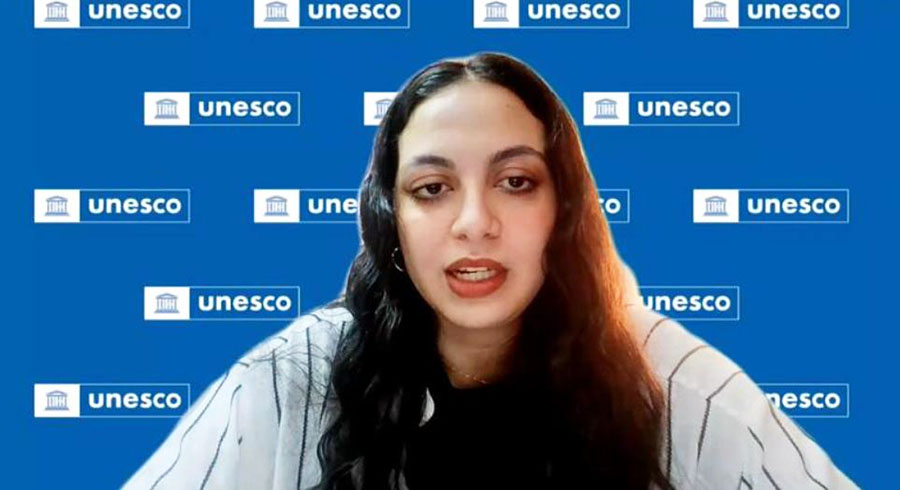
Since the outbreak of war in Sudan, hate speech and misinformation have become part of the environment fueling the conflict. Violence is no longer confined to the battlefield but has also spread to media and digital spaces. This was confirmed by Heidi Mirza, Head of the Communication and Information Sector at the UNESCO Office in Khartoum.
In an interview with UN News, Mirza explained that the spread of fake news and unreliable information, as well as speeches that incite various forms of hatred, "can increase polarization and deepen divisions within societies."
Here, the United Nations Educational, Scientific and Cultural Organization (UNESCO) plays a crucial role in assisting communities, based on a vision that promotes "the ability of people and communities to access accurate information, think critically, distinguish between facts and misinformation, and interact responsibly and accurately with digital content," Mirza said.
She stated that one of the most prominent forms of assistance provided by the organization is through workshops that support professional journalism and journalists, and enhance the safety of journalists and media workers in general during war and conflict.
She added, "We also promote the use of media and information literacy, one of UNESCOs tools for helping communities think critically, engage in public debate, raise awareness of the dangers of hate speech, reduce the risks of misinformation, and use artificial intelligence responsibly."
Bullying and Discrimination in Schools
Heidi Mirza also spoke about the repercussions of hate speech and misinformation on the education sector, and the "tension, divisions, bullying, and discrimination" they can incite in schools.
She pointed out that students may not be aware that what is being promoted is hate speech or misinformation. She warned that "this creates an atmosphere of fear and distrust."
UNESCO plays a role in this regard by raising awareness against hate speech. It seeks to integrate media and information literacy tools into school curricula, promoting critical thinking and dialogue, understanding the nature of hate speech and how it can be stopped in schools, and equipping teachers with tools to verify the credibility of information.
She added that the organization is working to integrate these tools into the Sudanese curriculum in various schools in Khartoum and other states.
She emphasized the importance of investing in these information skills for teachers, media professionals, youth, and all communities, as they represent an essential part of building a more knowledgeable, resilient, and peacefully coexisting society.
The Importance of Local Partnerships: Reaching communities is not easy amidst the ongoing conflict, the difficulty of movement, and the damage to infrastructure.
To overcome this challenge, the head of the Communication and Information Sector at the UNESCO office in Khartoum stated that they do not rely on a single method of providing assistance. They also work through various partnerships with media institutions.
She added that the most important of these partnerships is the organizations National Commission, which facilitates partnerships with all sectors in the country.
Mirza explained that “under these circumstances, we place particular importance on local partnerships, as they are the best way to reach communities and work with the actors on the ground who best understand the needs of those communities.”
Freedom of Expression
Mirza addressed the intersection of freedom of expression with misinformation and hate speech, emphasizing that this freedom does not mean that misinformation or speech that incites violence and hatred should go unaddressed.
She stated that “UNESCO’s approach is based on empowering individuals to access, properly evaluate, and critically use accurate and reliable information, rather than imposing blanket censorship on all media content.”
Regarding hate speech, Mirza stressed the need for an appropriate, rights-based response and for raising awareness within communities about the nature of freedom of expression and the difference between it and hate speech.
