
Updated: 21 August 2026 10:51:48
The Nile Waters: A Sudanese Economic Resource That Transcends Political Calculations

The issue of Nile waters in Sudan is often raised from a political and legal perspective, linked to water quotas and historical agreements between the Nile Basin countries. However, the economic aspect of this issue deserves broader discussion, especially given Sudans need to maximize its agricultural and productive resources after years of war and economic crisis.
According to a rough estimate, Egyptian food industry exports reached approximately 3.77 billion during the first half of 2026. If this rate continues during the second half of the year, food industry exports alone could reach approximately 7.5 billion annually, not including agricultural exports, cotton and textile industries, and other activities where water is a key input in production.
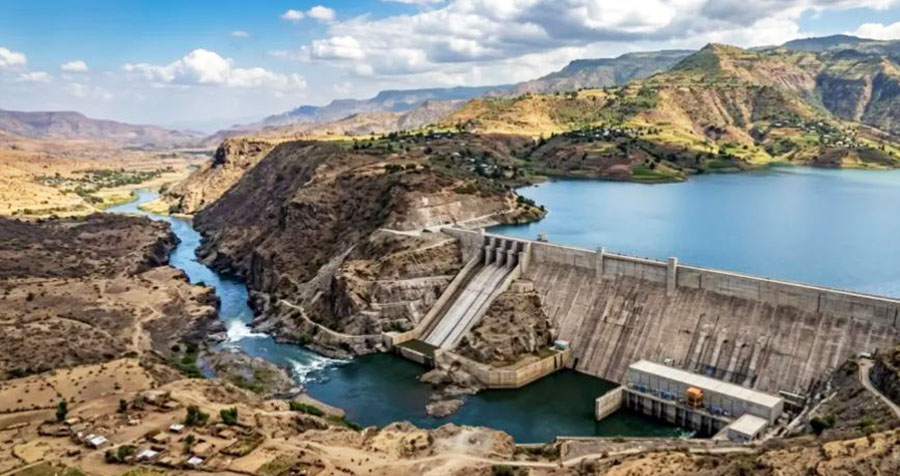
This highlights the importance of Sudans share of the Nile waters. Under the 1959 Nile Waters Agreement, Sudans share is approximately 18.5 billion cubic meters annually. However, Sudan does not fully utilize its allocated share of the Nile waters. This is due, among other factors, to its weak water storage infrastructure compared to Egypt, which possesses an extensive water storage system, most notably the Aswan High Dam.
According to the estimates in this analysis, Sudan utilizes approximately 12 billion cubic meters annually from its share, while an estimated 7 billion cubic meters continue their journey north to Egypt. If this estimate is accurate, the question should not be limited to the amount of water Sudan does not use, but should extend to the economic value this water could generate if used domestically.
In agricultural economics, the concept of "water productivity" is used, a measure that expresses the economic value that can be achieved from using one cubic meter of water. Various estimates and studies indicate that water productivity in Egyptian agriculture can approach 0.29 per cubic meter in some cases. Based on this figure, the theoretical value of approximately 7 billion cubic meters would reach about 2 billion annually. However, it is important to emphasize that this figure does not mean Egypt receives 2 billion in cash annually from Sudan, nor does it mean that every cubic meter of water is directly converted into exports or revenue. Rather, it represents a theoretical estimate of the potential economic value of water if used in a similarly efficient productive activity.
From this perspective, the issue becomes more complex than simply discussing a "water quota." Water is an economic resource that can be used in agriculture, food processing, textiles, and other activities. Therefore, the inability to utilize a portion of available water resources could mean missing an economic opportunity that could have contributed to increased production, income, and exports.
This underscores the need for a more transparent Sudanese discussion on the Nile water issue, not from a position of confrontation with Egypt, but from a position of protecting national economic interests. It is essential that the Sudanese public understands the extent of Sudans water resources, the amount it actually uses, the reasons preventing it from utilizing its full quota, and whether there are technical, political, or legal constraints affecting Sudans ability to establish new water harvesting and storage projects. It is also important to open a legal and economic discussion on whether the agreements governing the Nile waters allow for any form of cooperation or compensation for the economic benefits associated with untapped water, rather than treating water as mere numbers in political agreements.
At the same time, the problem should not be reduced to the relationship between Sudan and Egypt alone. Sudan possesses other water resources, including rainfall, groundwater, wadis, and seasonal streams, and these resources, along with the Nile waters, can form a massive foundation for rebuilding the agricultural sector.
Some estimates suggest that Sudans total usable water resources could reach tens of billions of cubic meters annually, although figures vary depending on the measurement methods and definitions used. If Sudan can improve the management of these resources, expand water harvesting projects, develop modern irrigation networks, increase productivity per cubic meter, and link agriculture to processing industries, the resulting economic value could far exceed simply selling raw agricultural products.
This is particularly important given Sudans need to rebuild its economy after the war and the opportunities for economic and investment cooperation with countries in the region, including Saudi Arabia. Sudan needs not only to increase cultivated land but also to build an integrated production system that begins with water and ends with manufacturing and export.
The debate surrounding the Nile waters should ultimately transform from a closed political issue into a national economic question open to public discussion, based on data, studies, and transparency. Water is not merely a natural resource; it is an economic asset that can generate wealth or remain wasted if the capacity to manage and invest in it is not present. Therefore, the most important question is not simply: What is Sudans share of the Nile waters? But also: What economic value can Sudan generate from each cubic meter of this water?
Countries aspiring to build strong economies do not measure their resources solely by what they possess, but by what they can transform into production, added value, job creation, and exports. In Sudans case, the water battle may, at its core, be a battle for the future of the agricultural economy itself.
