
Updated: 19 August 2026 19:50:04
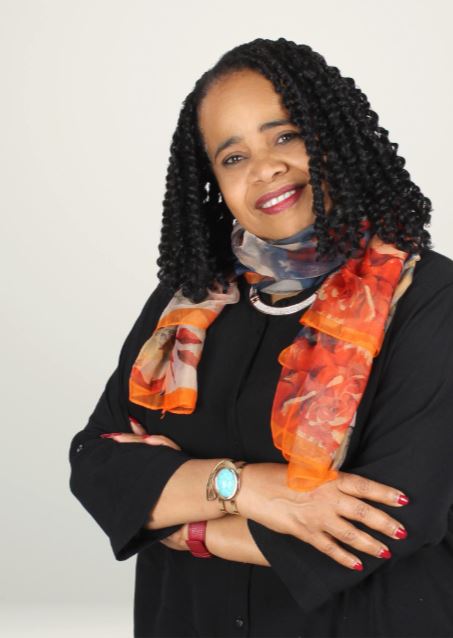
Dr. Ishraqa Mustafa to “Moatinoon”: The Homeland Sudanese Dream Of Should Not Cost Them Their Graves
Interview by: Musab Mohamed Ali
“Forced migration cannot be addressed by closing borders. It must be addressed by tackling the wars and violations that force people into displacement and exile.”
With this conclusion, Sudanese writer and researcher Dr. Ishraqa Mustafa Hamid, who has lived in Vienna since 1993 and is one of the prominent voices advocating for the rights of migrants, presents her perspective on the plight of Sudanese migrants stranded along the Balkan route.
Her reflections come after she took part in a field visit to Bosnia and Herzegovina as part of a delegation organized by SOS Balkanroute, an Austria-based organization that has been supporting refugees and people stranded in the region since 2019.
The visit came at a time when the number of Sudanese refugees and migrants stranded along the Balkan route had grown significantly, after the war that erupted in Sudan on April 15, 2023, pushed them onto one of the most dangerous migration routes to Europe.
In this interview, Dr. Ishraqa Mustafa Hamid discusses the reasons behind the visit and the testimonies and human stories she documented, including young men who lost limbs because of extreme cold, and migrants who said they had been subjected to pushbacks and abuses at the borders.
She also offers a critical assessment of European migration policies, stressing that sustainable solutions must begin with addressing the root causes of forced migration—foremost among them wars, coups and human rights violations—rather than simply tightening border controls.
What motivated your visit to Bosnia and Herzegovina, and why did it take place at this particular time?
This was the first time I participated in a visit with SOS Balkanroute, an Austria-based organization that has been working since 2019 to support refugees and people stranded in the Balkan region, particularly in Bosnia and Herzegovina.
When the organization began its work, the presence of Sudanese people in the region was extremely limited. But after the outbreak of war in Sudan on April 15, 2023, Sudanese became the largest group of refugees and migrants stranded there.
The purpose of the visit was to see their situation firsthand, listen to their testimonies, support the humanitarian efforts being made by the organization to meet their needs, and help bring their voices to the attention of the international community.
How was the visit planned, and what approach did you take in assessing the situation of the Sudanese?
The objective was not to conduct a formal assessment of the situation of Sudanese migrants as much as it was to provide support, particularly psychological and emotional support.
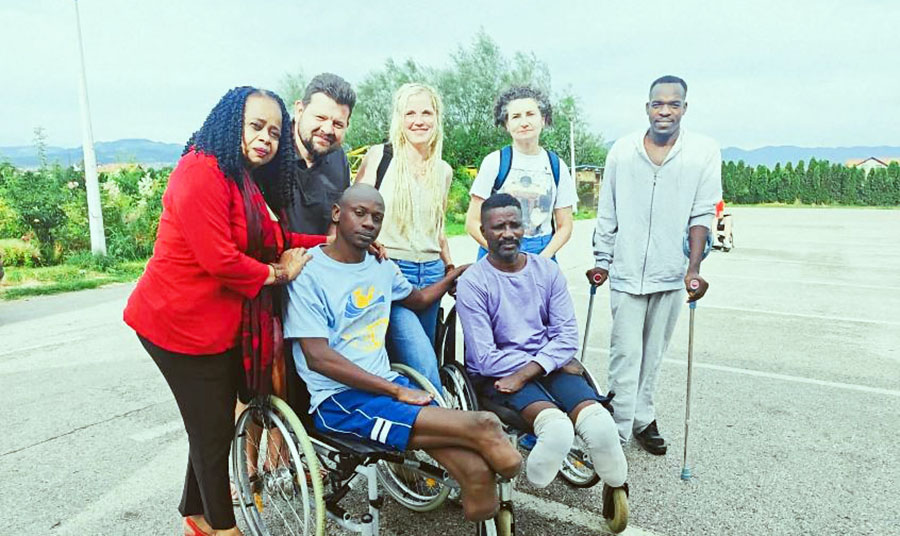
My presence as part of the delegation was important because I was the only Sudanese participant. This made it easier to communicate with those stranded in their own language, understand their needs, and give them the feeling that there was someone listening to them and willing to convey their suffering.
The delegation included a former Austrian Green Party parliamentarian, a German parliamentarian from the Left Party, a journalist, three members of the Austrian Left Party, and the head of SOS Balkanroute. He has helped build an extensive network of partnerships with organizations and individuals inside Bosnia and Herzegovina, strengthening efforts to deliver humanitarian assistance to refugees.
What surprised you most when you met those stranded along the route?
As the saying goes, seeing is not like hearing.
Although I have worked on migration issues for more than 30 years and have encountered many stories of displacement and forced migration, what I witnessed this time was different.
Perhaps this was because these were Sudanese people who had been driven from their homes by war after dreaming of a homeland based on freedom, peace and justice. But the war shattered the dreams of an entire generation and forced young people between the ages of 16 and 28 to undertake one of the most dangerous journeys of exile.
The stories I heard were painful, but seeing the physical آثار of the journey on their bodies was even more devastating. I saw young men who had arrived after spending long days walking through mountains and valleys along a route they call the “Ant Trail.” Some arrived barefoot, showing clear signs of hunger, exhaustion and prolonged walking.
That was when I realized that there is suffering that words can never fully convey.
What were the main issues that repeatedly emerged in their testimonies?
The most common themes were the harshness of the journey and the violations they experienced at the borders.
Many spoke about being forcibly pushed back from the Croatian border into Bosnia, having their mobile phones, shoes and the small amounts of money they carried confiscated, and then being forced to walk back without water or food.
Their suffering becomes even worse during the winter, when they are forced to cross mountains and forests in freezing temperatures and life-threatening conditions.
These were not isolated individual stories. They represented a repeated experience among many of the people we met.
Did you find a gap between the official narrative and reality?
Yes, there is a clear gap. The official discourse focuses on combating what authorities describe as “illegal migration,” while the reality shows that the real problem lies in the very causes of forced migration.
The crisis cannot be addressed simply by closing borders and tightening security measures while wars, coups and human rights violations continue to force people from their homes.
In my view, Europe also continues to deal more with the consequences of the crisis than with its causes, often overlooking the effects of a long history of colonialism and the support that was provided to authoritarian regimes in an effort to curb flows of forced migration.
What does the media fail to convey accurately about the situation of those stranded along the route?
That depends on the angle from which the story is covered. If coverage begins from the premise of combating migration, then the official policy narrative will naturally dominate.
But if coverage begins with an understanding of the causes of forced migration, it will give greater space to the voices of refugees themselves, because they are the ones best able to tell the story of what they experienced.
Ultimately, these are not numbers in reports. They are people who fled war, only to find many of themselves facing conditions that are no less harsh.
What images from the visit have remained most deeply engraved in your memory?
It is difficult to reduce the entire visit to a single image. What remains in my memory are their bare feet, and their faces marked by grief despite their young age, as well as the graves where some of them were buried without names.
Among the most painful scenes was that of three young Sudanese men who lost limbs after becoming lost for days amid snow and freezing temperatures during their journey.
I also cannot forget a girl from South Sudan who was wearing a shirt bearing the letters SPLA. She brought to mind John Garang’s dream of a homeland large enough to accommodate everyone—a dream whose echoes remain visible in the faces of generations born amid war.
Despite all this, I was deeply moved by their determination to hold on to life.
At the same time, the Bosnian volunteers left a profound impression on me. Among them were “Baba Asim,” Adhra, whom refugees call “the mother of refugees,” and Nihad, who has devoted his efforts to helping the injured and searching for the missing. There was also Stephanie, an Austrian retired nurse who chose to continue serving people exhausted by the refugee journey, as well as Saber from the Red Cross and his wife, who works inside the camp.
These people demonstrated that human solidarity is still capable of transcending borders.
What are the main obstacles to finding lasting solutions?
The most significant obstacles are European policies that approach the issue primarily from a security perspective, focusing on preventing migrants from arriving rather than addressing the reasons that force them to migrate.
Sustainable solutions begin by addressing the roots of the crisis and supporting the establishment of systems that guarantee security, freedom and dignity—not simply by closing borders.
What responsibility do governments and international organizations bear?
What is needed is a shift from managing the crisis to addressing its causes.
Governments must recognize that forced migration is a direct consequence of wars, violations and the absence of security. Their responsibility does not end with preventing refugees from arriving; it also includes contributing to addressing the conditions that force people to flee, while refraining from turning a blind eye to the exploitation of their countries’ resources or supporting regimes that produce displacement.
International organizations, meanwhile, must provide legal, humanitarian and psychological protection to those stranded, and work to ensure that migration routes do not become pathways to death and exploitation.
Has the visit changed your understanding of the issue?
The visit did not change my convictions, but it reinforced them.
What I saw confirmed to me that this is not a question of borders or numbers, but a question of human rights and dignity.
I am therefore even more committed to defending the rights of these people and even more convinced that defending human rights is a moral responsibility that should not be subject to political calculations.
What message did you carry away from those stranded, and who should hear it?
The message I carried with me was an appeal to the human conscience.
The world must look at these people as human beings who were forced to flee war, not simply as a migration file.
This message must reach governments, international organizations and policymakers, and encourage them to reconsider policies that focus on containing the consequences of the crisis rather than addressing its causes.
These people are not asking for pity. They are asking for recognition of their right to life, dignity and safety.
Behind every refugee is a story. Behind every journey of displacement are shattered dreams, families waiting, and a future that its owners have been forced to seek far from their homeland.
