
Updated: 16 August 2026 18:41:25
How Heat Waves and Drought in Europe Are Pressuring Food Supply in Sudan
Al-Asma’i Bashari
The heat waves and drought that struck large parts of Europe during the summer of 2026 are not solely a European crisis. Their repercussions could extend to global food markets, including Sudan, which relies heavily on imports to meet its basic needs. This scenario is exacerbated by the fragility of the Sudanese economy, declining agricultural production, uncertainty surrounding the rainy season, and the ongoing war, which has weakened supply chains and the ability of producers and consumers to cope with rising prices.
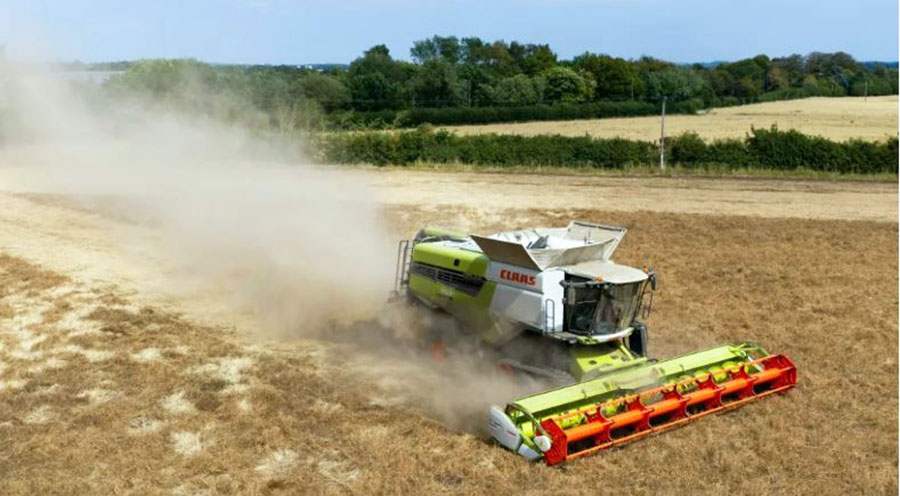
Data from the European Commission indicates that the repeated heat waves during June and July shortened the grain filling period in several European regions. High temperatures and a lack of rainfall depleted soil moisture and damaged summer crops. The European Union has lowered its forecasts for some winter crop production by 1 to 4 percent, while forecasts for maize and sunflower production have fallen by 6 to 7 percent. European monitoring reports also indicate that drought conditions persist across large areas of central, eastern, and western Europe.
These declines may not necessarily mean a severe global grain shortage, but they do increase market sensitivity to any further decrease in production or exports. Europe is a major agricultural producer and exporter, and any decline in its output could prompt some countries to increase their purchases from the global market to compensate for domestic shortfalls. With rising demand, prices become more vulnerable to shocks, especially if this coincides with disruptions in other production areas or increases in transportation, energy, and insurance costs.
These developments are particularly significant for wheat, a strategic commodity for Sudan, both for direct consumption and bread making. Global grain prices have fluctuated over the past few months, and the Food and Agriculture Organization (FAO) confirms that grain and vegetable oil markets remain highly sensitive to weather, supply constraints, and changes in global trade. For Sudan, any increase in global prices could be compounded in the local market due to currency devaluation, increased transportation costs, fees, and the costs of storage, milling, and distribution.
The risk is not limited to wheat alone. Climate change and global agricultural disruptions could also affect the prices of maize, vegetable oils, sugar, and other food commodities. In a country where millions live under the pressures of war, displacement, and declining incomes, rising food prices are not merely an economic problem, but are rapidly becoming a food security and humanitarian issue.
Within Sudan, another crucial factor is the irregularity of rainfall. Rain-fed agriculture is a cornerstone of agricultural production, and the Food and Agriculture Organization (FAO) confirms that erratic climate, soil degradation, and inadequate agricultural and water technologies pose major challenges to increasing agricultural productivity in Sudan. Furthermore, reliance on seasonal water sources makes large swathes of the country highly vulnerable to fluctuations in rainfall and drought.
The Nile River issue becomes even more critical in this context. Sudan possesses a strategic water resource, but its utilization requires investments in irrigation, water harvesting, storage, and more efficient resource management. FAO data indicates that rivers originating from the Ethiopian Highlands, primarily the Blue Nile, exhibit significant variations in flow, making water management and storage a critical factor for Sudanese agriculture.
Therefore, water harvesting should not be treated as a development project postponed until international funding becomes available, but rather as part of a national strategy for adapting to climate change. This strategy could include the construction of dams, reservoirs, and small tanks; the development of irrigation networks; the improvement of rainwater harvesting techniques; the rehabilitation of existing irrigation projects; and the development of early warning systems for agricultural seasons and droughts.
The University of Notre Dame’s climate adaptation initiatives warn that a country’s vulnerability to climate change is not solely related to its exposure to risks, but also to its capacity to prepare for and adapt. The ND-GAIN index measures this vulnerability across sectors including food, water, health, infrastructure, and natural habitats. Weak institutional and economic capacity to adapt, therefore, could make Sudan more vulnerable to the impacts of any global climate shock.
The problem, then, is not an isolated European heatwave, but a world heading toward greater climate and market volatility. If temperatures continue to rise and droughts become more frequent, food production will become more erratic, and competition for resources and markets will intensify. In Sudan, where war intersects with poverty, displacement, and low productivity, the effects of these shocks can be even more severe.
The solution lies not only in waiting for compensation or external funding, but also in building Sudanese resilience: increasing domestic production, diversifying food sources, improving water management, maximizing the use of available water resources within existing frameworks and agreements, expanding rainwater harvesting projects, and investing in climate-smart agriculture. The coming battle will not only be against rising wheat prices, but against a world where the climate is changing and the cost of food, water, and energy is simultaneously increasing.
