
Updated: 19 July 2026 09:28:43
Will El Niño and War Conspire Against Sudanese People This Year?
By Ameer Babiker Abdalla
On that night, a fierce dust storm descended, shrouding the land so completely that a man could scarcely see his own hand. Meanwhile, the Nile was at the height of its flood, rumbling and roaring like an enraged beast as people anxiously feared for their crops and homes. It was on that very night that Mustafa Saeed never returned home, marking the tragic end of the protagonist in Tayeb Salihs celebrated novel Season of Migration to the North.
Every year, Sudanese communities living along the Nile and its tributaries await the annual flood, which renews the land and replenishes water resources for the coming year despite the destruction it sometimes causes. Today, they are also waiting for another longed-for event: the end of a devastating war that has deprived them of normal life for more than three years.
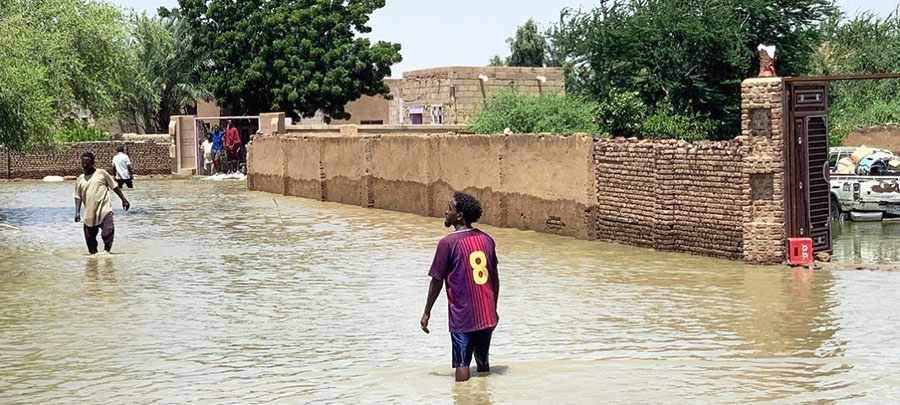
Instead, they awoke this July to an unprecedented recession in Nile water levels at the very beginning of the rainy season, raising widespread concerns about its implications for agriculture, drinking water, and virtually every aspect of life dependent on the river.
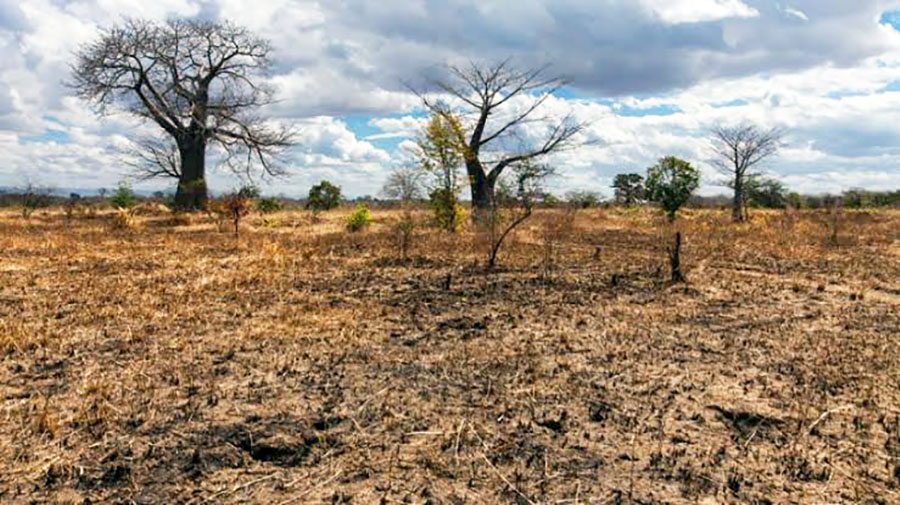
The worries do not end there. The rainy season, whose first signs traditionally appear in July, is already showing indications of below-average rainfall across much of the country. Rainfall has been delayed in Sudans mechanized farming areas, particularly in Gedaref State, while Blue Nile and Sennar have received lower-than-normal precipitation. In contrast, limited parts of Kordofan and Darfur have experienced heavy but highly localized rainfall.
Adding to these concerns are warnings issued by Tom Fletcher, the United Nations Under-Secretary-General for Humanitarian Affairs, who cited meteorological forecasts indicating that extreme heat, drought, and floods are expected to inflict severe damage on communities across Latin America, East and Southern Africa, Asia, and the Pacific. He noted that the previous El Niño episode (2023–2024) left tens of millions of people in urgent need of food, nutrition, clean water, sanitation, healthcare, agricultural support, and protection.
Fletcher warned that the outlook for this year could be even worse, as El Niño is unfolding amid widespread armed conflicts, growing displacement, soaring fuel, fertilizer, and food prices, and severe reductions in humanitarian funding—placing unprecedented pressure on the worlds most vulnerable populations.
A Sharp Decline in Nile Water Levels
The unusually low water levels observed this month in parts of Khartoum, River Nile, and Northern states have attracted considerable attention. In several locations, the river retreated farther than usual, exposing sandbanks and leaving water intake points for drinking-water stations, including the Al-Salha station, temporarily distant from the rivers edge.
Although Sudanese technical authorities have yet to issue an official explanation, experts have offered several interpretations. Some view the decline as a natural phenomenon that often precedes the arrival of the annual flood. Others point to dam operations—including Ethiopias Grand Ethiopian Renaissance Dam (GERD)—combined with the timing of reservoir management inside Sudan and the delayed arrival of the main flood wave.
Perhaps the single most influential factor affecting Nile fluctuations at the beginning of the rainy season in recent years has been Ethiopias regulation of water flows during the filling and operation of the GERD. Any temporary retention of water or adjustment of the dams gates immediately reduces the volume of water flowing into the Blue Nile, the Niles principal tributary, before flows are restored as floodwaters are released downstream.
At the same time, Sudans Ministry of Irrigation occasionally lowers storage levels at reservoirs such as Roseires, Sennar, and Jebel Aulia dams as a precautionary measure to accommodate the expected floodwaters arriving from the Ethiopian Highlands. This process temporarily reduces water levels upstream and downstream of these dams until the full flood wave arrives.
While fluctuations caused by dam operations are generally manageable, the more alarming development has been the unusually sharp decline in the daily inflows of both the White Nile and the Blue Nile—the two principal tributaries feeding the Nile River—during June and July.
According to available statistics, the White Niles daily discharge fell to around 90 million cubic meters per day, significantly below its historical averages. At the same time, flows from the Blue Nile also declined, reducing the combined discharge at the confluence of the two rivers in Khartoum to approximately 180 million cubic meters per day, compared with more than 300 million cubic meters per day during previous years. This sharp reduction largely explains the rapid retreat of the river from its banks.
Climate change has further complicated the situation by making weather patterns increasingly extreme and unpredictable. This year, Sudan experienced exceptionally high temperatures before the flood season reached its peak, accelerating evaporation from both the river itself and the reservoirs behind major dams. The result has been a temporary but highly visible recession of the Nile, accompanied by the emergence of extensive sandbars in the river channel.
El Niños Impact on Sudan
Globally, climate outlooks issued by the World Meteorological Organization (WMO) and regional climate centers for 2026 indicate a growing likelihood that El Niño conditions will strengthen during the summer and autumn months.
Historically, El Niño has had a direct influence on Sudans rainy season, which extends from June through October. Unlike equatorial East Africa, where El Niño often brings above-average rainfall, Sudan typically experiences below-normal precipitation, particularly across its eastern, central, and western regions. This usually results in a delayed onset of the agricultural rainy season in many farming areas.
El Niño also disrupts the regular distribution of rainfall. Instead of steady seasonal precipitation, farmers often face intermittent dry spells in the middle of the growing season, interrupting crop development. Conversely, heavy rainfall may fall within only a few days, generating runoff rather than effectively replenishing groundwater or benefiting agriculture. Consequently, many farmers reduce the area they cultivate, while yields of staple crops decline.
The impact extends beyond agriculture. Reduced rainfall diminishes natural grazing lands, forcing pastoralists to move their livestock over longer distances in search of water and pasture. Such movements frequently increase competition over scarce natural resources and heighten the risk of local conflicts between farming and pastoral communities.
This years El Niño arrives at a particularly difficult moment for Sudan. Its adverse effects on critical sectors of the economy and society coincide with more than three years of devastating war, whose consequences continue to deepen year after year. Concerns are growing that a poor rainy season, combined with severe shortages of humanitarian assistance, could push the country toward even higher levels of hunger.
According to Carl Skau, Acting Executive Director of the World Food Programme (WFP), Sudan faces the risk of sliding back into more severe food insecurity as the combined effects of ongoing conflict, reductions in humanitarian funding, and rising agricultural production costs—exacerbated by disruptions linked to the Strait of Hormuz—threaten to reverse the gains achieved in containing famine in parts of the conflict-ravaged country.
