
Updated: 18 July 2026 17:20:47
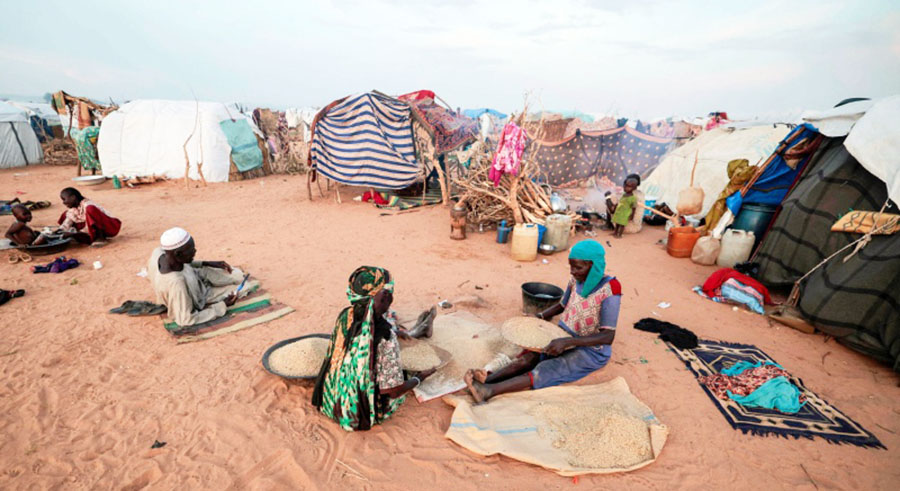
Hunger Worsens Among Displaced Families in El Obeid
Moatinoon
The World Food Programmes Country Director in Sudan, Abdallah El Wardat, warned that El Obeid is experiencing a state of extreme tension, with the availability of food, water, and fuel being a major concern.
El Wardat was speaking to journalists in Geneva via video link from Kosti, south of Khartoum, about his visit to El Obeid, the capital of North Kordofan State, to assess the humanitarian situation there.
The UN official said that the city, which once had a population of over half a million, now has almost double that number, as it is overflowing with internally displaced people.
He added: "The WFP was providing food assistance to more than 100,000 people in displacement camps within the city, but there are far greater numbers of displaced people sheltering in El Obeid who urgently need assistance."
He stressed that what is needed now is to plan for scaling up the response beyond the number currently receiving support, adding that the WFP is also providing food assistance to 17,000 children trapped in the crisis and living in camps.
The programs country director said that one of the most striking things he witnessed during his field visit was that, although the program doesnt provide the full food ration, "beneficiaries still share this reduced ration with other families because they understand they have no other source of income."
Among those he met was an elderly woman who relies entirely on the food rations provided by the program. But this was only part of her hardship, as she "was waiting to receive the food and was only thinking about how to transport it to her tent."
Al-Wardat said, "The woman wanted to transport it using a small tuk-tuk, so she was asking other families if they could share the cost of transporting the food to the tents."
He emphasized that they want to provide more, "but our resources are limited and under considerable pressure."
He added, "We have access; we can deliver food, we are present in the field, and we work with local partners. However, the lack of resources limits our ability to do so."
Al-Wardat noted the scarcity of commercial trucks and supplies heading towards the city, which is suffering from severe shortages of food, water, and fuel.
However, he emphasized that the World Food Programmes mission to Al-Abyad has helped alleviate the fuel shortage that had prevented humanitarian partners from delivering food to displaced people in recent days.
He confirmed that the program has continued to deliver food aid, successfully delivering supplies in recent weeks and establishing a two-month supply reserve.
He added, "As long as we have the necessary financial support, I believe we have the means and capacity to maintain this lifeline."
