
Updated: 15 July 2026 16:03:07
International Escalation Against Sudan’s War Economy
Moatinoon
The United Nations has warned that Sudan’s natural resources and strategic commodities are increasingly being used to finance the country’s ongoing war, saying control over land, trade routes and resources has created a “war economy” that is helping prolong the conflict.
The UN Human Rights Office said on Wednesday that, faced with the rising costs of military operations, Sudan’s warring parties are exploiting land, trade routes and commodities to generate revenue, creating an economic system that increasingly sustains the conflict.
The war, which erupted in April 2023 between the Sudanese Armed Forces (SAF) and the paramilitary Rapid Support Forces (RSF), has killed an estimated 200,000 people, according to some estimates, displaced more than 11 million and pushed parts of the country into famine.
The UN rights office called on the warring parties, as well as states and companies involved in buying and trading Sudanese commodities, to comply with international law and ensure their activities do not contribute to the conflict.
“Sudan’s vast natural resource wealth should benefit its people,” UN High Commissioner for Human Rights Volker Türk said.
“Sadly, what we are seeing today is quite the opposite. In fact, this wealth is only undermining human rights and fuelling conflict, causing pain and suffering on a massive scale.”
“This war economy must be dismantled, and the international community must pay much greater attention to the commodities and trade routes that sustain it,” Türk added.
Gum Arabic at the Heart of the War Economy
The warning came as the UN Human Rights Office released a report focusing on Sudan’s gum arabic trade. The commodity is a key ingredient in products ranging from soft drinks to cosmetics and pharmaceuticals.
Before the war, Sudan accounted for between 70 and 80 percent of global raw gum arabic exports. Although its export value is relatively modest compared with other commodities, gum arabic remains a vital source of income for millions of Sudanese and one of the country’s most important exports to global markets.
The report found that many people dependent on the gum arabic trade have been subjected to looting, extortion, arbitrary detention and threats, particularly by parties to the conflict and their allies.
In May 2025, for example, the RSF reportedly looted the gum arabic exchange and its warehouses, as well as part of the local market in Al-Nahud, West Kordofan State, at a time when stocks were full and ready for export.
The incident severely disrupted local trade and livelihoods, according to the report.
The UN Human Rights Office said Sudan’s gum arabic trade has become increasingly fragmented since the war began. Gum produced in areas controlled by the Sudanese Armed Forces is transported to Port Sudan for export, while large quantities from RSF-controlled areas are diverted to neighbouring countries through cross-border smuggling routes.
The report warned that smuggled gum arabic may subsequently be processed and traded as a local product in neighbouring countries, making it increasingly difficult to verify its true origin.
Türk urged states and companies linked to Sudanese commodity supply chains, including the gum arabic trade, to strengthen accountability, traceability and regulatory oversight and ensure that their business activities do not fuel the conflict or contribute to human rights abuses.
“Companies cannot continue with business as usual when importing from conflict-affected value chains,” Türk said.
EU Targets Sudan’s Gold Trade
The UN warning coincides with European measures targeting the financial resources sustaining Sudan’s war.
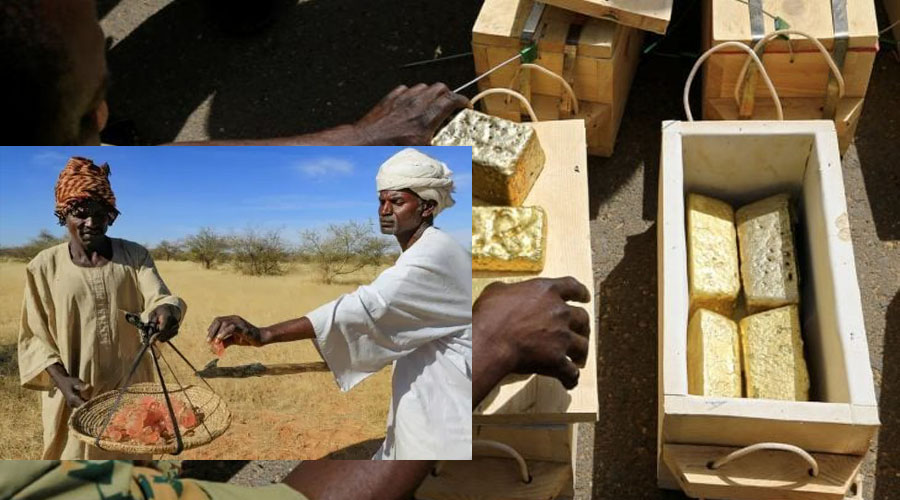
Earlier this week, the European Union imposed restrictions on Sudan’s gold trade and materials used in mining, saying the measures were intended to reduce sources of war financing and increase pressure on actors fuelling the conflict.
According to the Council of the European Union, the measures prohibit the purchase, import or transfer of gold originating in Sudan. They also ban the sale, supply, transfer or export of mercury and cyanide to the country, two substances widely used in gold mining and processing.
The restrictions also cover services related to these activities, including technical assistance, brokerage and financial support.
The EU said gold has become a major source of revenue contributing to the continuation of the conflict. Restricting Sudanese gold trade and limiting access to chemicals used in mining are intended to reduce the resources available to actors responsible for perpetuating violence.
The restrictions on mercury and cyanide do not apply to goods intended for humanitarian purposes, public health emergencies or disaster response.
The EU said the measures strengthen its sanctions regime by targeting key elements of the war economy that contribute to prolonging Sudan’s conflict.
EU foreign policy chief Kaja Kallas had earlier said, on the third anniversary of the war, that the bloc would continue to use all available tools, including sanctions, to press for peace.
The UN warning and the latest European measures place Sudan’s natural resources at the centre of growing international scrutiny over the war. They also reflect increasing concern that the conflict is sustained not only by military capabilities, but by trade networks, smuggling routes and commodity supply chains that provide the warring parties with the resources needed to continue fighting.
