
Updated: 1 July 2026 19:09:45
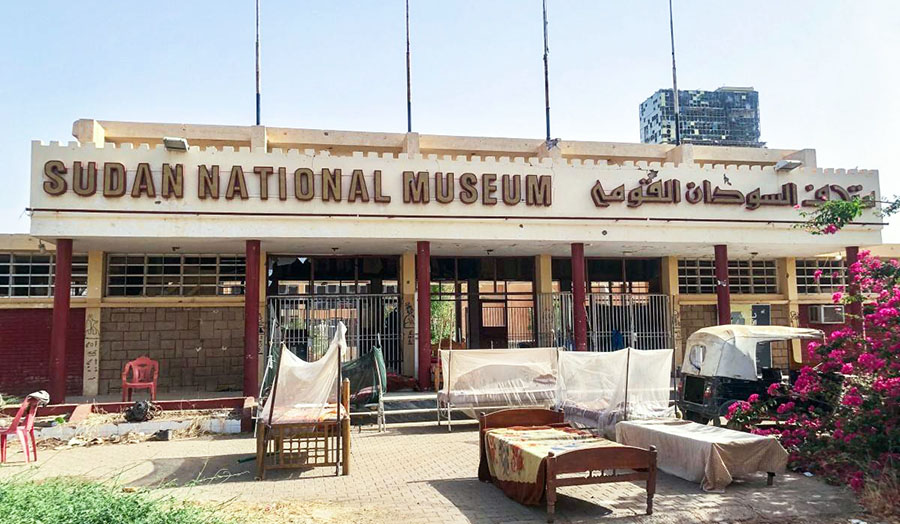
When professor Samir Hashem died alone in a museum in Sudan
Afaf Abbas Ahmed
Source: ukrant.nl
In the first weeks of the war in Sudan, our colleague Dr Samir Hashem—a university lecturer, zoologist and researcher at the Natural History Museum in Khartoum—found himself trapped inside the institution to which he had devoted his entire professional life.
As fighting engulfed central Khartoum, the streets surrounding the university became a battlefield. Friends and colleagues repeatedly tried to reach him or arrange his evacuation, but every attempt failed.
For weeks, Dr Samir remained alone among the animals he had spent years studying and caring for. As conditions deteriorated, he was forced to watch helplessly as many of the animals under his care died from hunger and neglect.
When friends finally managed to reach the museum several weeks later, they found his notes, in which he described the impossible choices he had faced during his isolation. They also discovered the remains of a man in a barrel of formaldehyde: a man who had witnessed not only the destruction of a scientific institution, but of an entire world devoted to knowledge, research and education.
Whether remembered as a scientist, a teacher or a victim of war, Dr Samir’s story symbolises a far greater tragedy. Across Sudan, universities, research centres, laboratories, libraries, students and academics have all fallen victim to a conflict that has profoundly disrupted one of the country’s most important foundations for future recovery: higher education.
Since armed conflict broke out on 15 April 2023 between the Sudanese Armed Forces (SAF) and the Rapid Support Forces (RSF), Sudan has experienced one of the worst humanitarian crises in its modern history. Tens of thousands have been killed, and millions have been displaced.
Higher education has been among the sectors hardest hit. Like much of Khartoum, the University of Khartoum suffered extensive damage during the conflict. Numerous buildings were damaged, laboratories and libraries became inaccessible, and teaching and research were brought to a near standstill for an extended period. Thousands of students and staff were displaced within Sudan or scattered across neighbouring countries and beyond.
Founded in 1902, the University of Khartoum is Sudan’s oldest and most prestigious institution of higher learning. For generations, it has played a central role in the country’s intellectual, political and professional development.
Yet the University of Khartoum has also become a symbol of resilience. Wherever possible, lecturers continued teaching remotely. Faculties developed emergency plans to keep academic programmes running. Students formed online study groups and remained connected despite unreliable internet access, power cuts and the psychological strain of forced displacement.
These efforts demonstrate that while buildings can be destroyed, academic communities often find ways to endure. For Sudanese students, the war transformed the pursuit of higher education into a struggle for survival.
Almost overnight, many lost access to lecture theatres, libraries and laboratories. Some were displaced several times. Others sought refuge in Egypt, Uganda, South Sudan, Ethiopia, Saudi Arabia and elsewhere.
At the same time, countless lecturers and researchers continued teaching under extraordinarily difficult circumstances. Some delivered online lectures from refugee camps or temporary shelters. Others supervised students while coping with displacement, financial insecurity and responsibility for their own families.
Although this could never replace normal university life, it enabled a degree of continuity in higher education despite exceptionally challenging conditions.
Even after the fighting has finally ceased, rebuilding Sudan’s higher education sector will require many years of sustained effort.
Universities will need to repair damaged infrastructure, rebuild research capacity, support traumatised students and staff, address severe financial shortfalls, and encourage displaced academics to reconnect with their institutions.
Equally important will be restoring trust, rebuilding academic networks, and reviving the sense of community that lies at the heart of university life.
The destruction of universities is often overshadowed by the immediate horrors of war. Yet higher education plays a crucial role in recovery, peacebuilding and sustainable development.
Universities educate the future teachers, doctors, engineers, psychologists, scientists and public servants on whom society depends. They generate new knowledge, foster critical thinking and offer hope in times of profound uncertainty.
The story of Sudan’s universities is therefore not only a Sudanese story. It reminds us that armed conflicts destroy not only lives and infrastructure, but also the institutions that shape a nation’s future.
The death of Dr Samir Hashem is just one tragic example among the thousands of lecturers, students and university staff who have lost their lives as a result of this devastating war. Behind his story stand thousands of students whose education has been interrupted, scholars forced into exile, and institutions struggling simply to survive.
Sudan’s future will depend, in no small measure, on whether its universities—and the people who sustain them—are given the opportunity to recover, rebuild, and continue their fundamental mission: advancing knowledge in the aftermath of destruction.
