
Updated: 26 June 2026 16:57:19
Kauda Events: Tribal Authority and the Fragility of Sudans Civil Forces and Armed Movements
Moatinoon
Originally published by Ultra Sudan
In his book *Guerrilla Warfare*, Ernesto "Che" Guevara, reflecting on the Cuban Revolutions experience with local communities, argued that a guerrilla fighter is a "social surgeon" operating within the body of society. If the fighter fails to respect that bodys social fabric and fundamental norms, society will ultimately reject him, leading to the downfall of both. Guevara maintained that attempts to abruptly alter a communitys beliefs, dismiss its customs and traditions, or disrupt its religious and social structure would inevitably alienate the population.
The recent events in Kauda, in the Nuba Mountains of South Kordofan, appear to illustrate this principle. They have exposed the enduring influence of tribal authority within Sudans political and intellectual landscape, extending not only to civil political forces but also to armed movements pursuing political and regional demands. While this is far from a new phenomenon, it has repeatedly surfaced—sometimes openly, sometimes beneath the surface—through the actual practices of these organizations, often overriding the constitutions, visions, and principles they publicly proclaim.
The Dominance of Tribal Identity
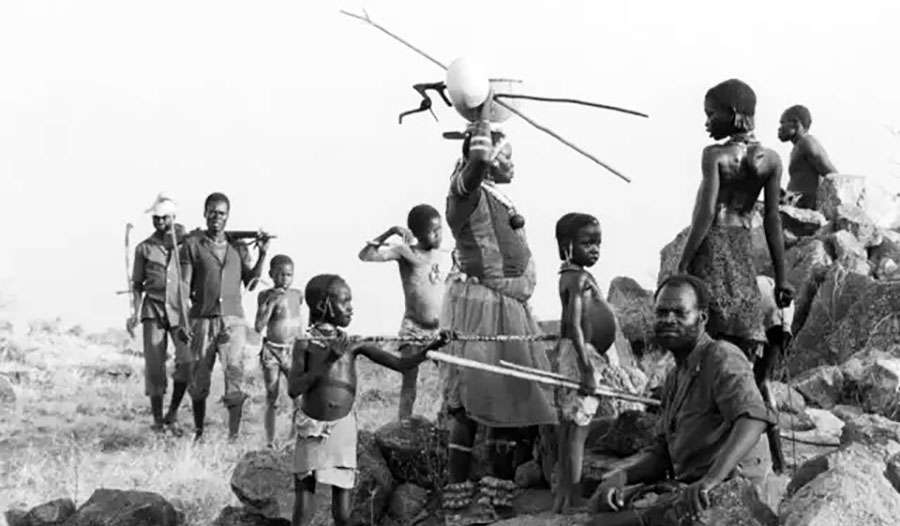
Against the backdrop of disputes over land and administrative boundaries, combined with internal political disagreements within the Sudan Peoples Liberation Movement-North (SPLM-N) led by Abdelaziz al-Hilu, Kauda—the movements historic political and military stronghold—has witnessed a rapid deterioration in security.
The situation escalated into armed clashes after members of the Otoro tribe, who serve within the SPLA-N military structure, seized control of large parts of the town and expelled the movements civilian administration.
According to accounts of the dispute, the immediate trigger was a decision by the SPLM-N leadership to demarcate tribal boundaries between the Otoro and Shawaya communities in an effort to resolve a longstanding land ownership dispute around Kauda. The Otoro tribe rejected the process outright, insisting that the disputed territory historically belonged to them.
Magdi Kodi, a member of SPLM-N, told *Ultra Sudan* that the conflict originated after the Otoro tribal conference formally rejected the principle of tribal boundary demarcation. The movements leadership reportedly viewed this stance as a challenge to its policies, particularly amid broader disputes over land, resources, and political influence.
Kodi said that although 57 other tribes had accepted the demarcation process, the movement chose to begin implementation in Otoro territory despite the tribes refusal to participate. He added that SPLM-N held consultations with neighboring communities—including the Shawaya, Tira, Lira, and Abol tribes—to move ahead with the project.
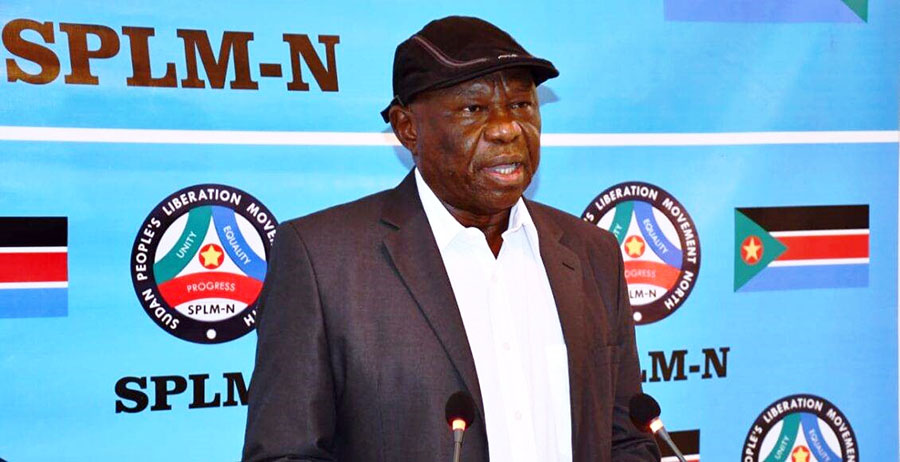
According to Kodi, tensions escalated after the demarcation committee allocated significant portions of Otoro land to neighboring communities. Members of the tribe responded by removing the boundary markers, viewing the move as a direct attack on their rights. The situation further deteriorated after SPLA-N forces launched operations in Otoro areas, triggering armed confrontations before senior military figures temporarily intervened to contain the violence.
A commission of inquiry was later established, but several officers from the Otoro tribe refused to appear before it, arguing that some commission members had either planned or participated in the attacks. The SPLA-N leadership interpreted their refusal as an act of insubordination, further deepening the crisis.
The conflict remains unresolved, with reports of significant human and material losses, allegations of widespread abuses against civilians, and growing fears of further escalation.
The Fragility of Sudans Political and Military Structures
According to reports by the Conflict Observatory, one factor fueling tensions among the Otoro—one of the principal tribal constituencies within the SPLA-N—is the movements political agreement with the Rapid Support Forces (RSF). Many residents fear that the alliance could facilitate the RSFs expansion into their areas, alongside increased gold mining activities and recruitment operations within Otoro territory, eroding trust between the local population and the movements leadership.
The deep-rooted nature of Sudans tribal system also helps explain why civil political forces have generally struggled to extend their influence beyond urban centers. Tribal structures continue to shape political and social life across much of the country, often proving more influential than the ideological programs advanced by modern political organizations.
This dynamic has historically been even more evident within Sudans armed movements, whether fighting against the state or aligned with official military institutions. The SPLM, the countrys largest insurgent movement before South Sudans independence, has consistently organized itself around tribal balances and alliances. Its internal splits and political coalitions have largely reflected ethnic and tribal calculations rather than ideological or political principles.
Numerous studies suggest that tribal loyalties have transformed many political parties from program-based organizations into entities dependent on traditional leadership, social influence, and identity-based mobilization. As a result, substantive debates on governance, economic reform, and development have often given way to identity-driven political rhetoric.
The entrenchment of tribal politics has also contributed to the emergence of regionally and ethnically based political parties and movements. Even parties founded on secular or religious ideologies have repeatedly experienced internal divisions rooted in social and tribal affiliations, making it difficult to build stable national political coalitions and undermining Sudans political stability.
Speaking to *Ultra Sudan*, writer Al-Sirr Al-Sayed argued that human societies do not follow a single path of development. Each society evolves according to its own historical and social conditions. Within this framework, he said, the tribe remains an authentic and longstanding social institution in Sudan, predating any political exploitation, whether positive or negative.
Al-Sayed argued that the dominance of tribal structures should be understood through the modern political ideas that reshape and reproduce them. Concepts such as the "center versus periphery" narrative and discussions of historical marginalization provide contemporary political meaning to tribal identities that did not originally exist within traditional tribal structures themselves.
He added that tribes do not enter politics solely through their own traditional institutions, but increasingly through narratives constructed by political elites. As modern political parties failed to represent public aspirations or achieve their objectives, many political actors turned to tribal affiliations as an alternative framework for political mobilization.
According to Al-Sayed, invoking tribal identity does not necessarily serve the interests of tribal communities themselves. Instead, it often advances the interests of emerging political and economic elites linked to domestic and external centers of power.
He agreed that this pattern is particularly evident within Sudans armed movements, many of which have built their political and military projects on specific tribal and social constituencies, making tribal affiliation a defining factor in shaping both alliances and internal conflicts.
