
Updated: 14 June 2026 13:03:07

Record Defeats Shake Sudan Women’s Football as Federation Faces Calls for Accountability
Khartoum – Al-Asma’i Bashri
A series of heavy and consecutive defeats suffered by Sudan’s women’s national football teams during June has sparked widespread criticism and outrage across sporting and media circles. The Sudan Football Association (SFA) has come under direct fire over allegations of poor planning, weak administrative and technical leadership, and a lack of strategic vision, while growing calls have emerged for accountability over what observers describe as an “unprecedented collapse” of women’s football in Sudan.
In recent days, Sudan’s women’s teams have recorded a number of alarming results. The senior women’s national team suffered two crushing defeats against the Comoros Islands in matches played in Rabat, Morocco, conceding a total of 30 goals across the two encounters—among the heaviest losses ever experienced by a Sudanese national team at the continental level.
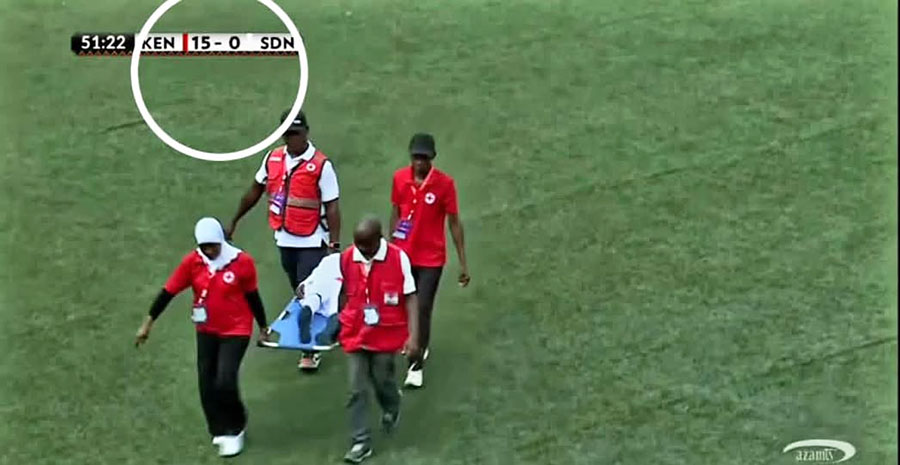
The situation has been no better for Sudan’s Under-17 women’s team, which is currently competing in the Council for East and Central Africa Football Associations (CECAFA) Championship in Kenya. The team suffered a 16-goal defeat in one match before the referee was forced to end the game in the 65th minute after several players experienced exhaustion, fatigue, and repeated injuries on the field. The incident raised serious questions about the squad’s physical and technical readiness to participate in the tournament.
Amid these disastrous results, several sports journalists and commentators have placed responsibility on Manal Al-Bashri, head of the Women’s Football Committee at the Sudan Football Association. Critics argue that she bears significant responsibility for decisions that led to the participation of Sudanese women’s teams in international competitions without adequate preparation or a strong domestic competitive structure.
Sports journalist Nahid Al-Bagir criticized the performance of the Women’s Football Committee, writing on her Facebook page that the decision to enter international competitions was made despite the absence of a solid local foundation for women’s football. She acknowledged Al-Bashri’s successes in other fields, particularly education and investment, but argued that her experience in managing women’s football has failed to deliver the desired results. According to Al-Bagir, the administration of the sector has been characterized more by media visibility than by sound technical and sporting foundations.
Meanwhile, sports writer and analyst Mustafa Eidrous directed sharp criticism at Sudan’s Ministry of Youth and Sports, describing it as a “silent ministry” that has failed to respond effectively to the country’s sporting crises. He also accused the Sudan Football Association of focusing primarily on securing financial support from the Fédération Internationale de Football Association (FIFA) rather than developing clear strategic plans to improve national teams or invest in long-term development and training programs.
Observers believe the current crisis extends far beyond poor results on the pitch, exposing deeper structural problems within women’s football in Sudan. These challenges include weak domestic competitions, a shortage of regular tournaments, the absence of talent identification and development programs, and insufficient technical and administrative resources needed to build teams capable of competing regionally and continentally.
On social media, the successive defeats quickly became a major topic of discussion among sports enthusiasts and the wider public. Online platforms were flooded with sarcastic comments and sharp criticism directed at the Sudan Football Association and the country’s football infrastructure as a whole. Many followers argued that the results were hardly surprising given the difficulties Sudanese sport has faced in recent years and the broader decline witnessed across multiple levels of competition.
Some commentators attributed the crisis to Sudan’s worsening economic conditions, arguing that limited financial resources and the failure to provide basic necessities for players—including proper nutrition, healthcare, and physical preparation—have directly contributed to the teams’ poor performances. These concerns intensified after images circulated showing players visibly exhausted during matches.
Others, however, urged the public not to place the full blame on the players themselves. They argued that the athletes are victims of a complex sporting and administrative reality and that the primary responsibility lies with those overseeing women’s football, who failed to create an appropriate environment for development and preparation before entering major international competitions.
The silence of the Sudan Football Association following these results has also puzzled many observers. Fans and commentators had expected official explanations or statements outlining the causes of the setbacks and the measures planned to address them. Instead, the absence of any formal response has intensified criticism and fueled calls for a comprehensive review of the women’s football program.
Experts argue that the next phase requires bold decisions, beginning with a transparent and scientific assessment of the current experience, a review of the criteria used to appoint technical and administrative staff, and the establishment of a genuine grassroots foundation for women’s football through support for domestic competitions and youth development programs. They contend that meaningful progress cannot be achieved by relying solely on international participation that repeatedly ends in damaging defeats and tarnishes the image of Sudanese football.
As public anger continues to grow, the recent defeats stand as a powerful warning signal for both the Sudan Football Association and the Ministry of Youth and Sports. The results have forced difficult questions about the future of women’s football in Sudan and the steps needed to reverse its current decline before these painful outcomes become a permanent feature of the game’s trajectory in the country.
