
Updated: 11 June 2026 10:34:25
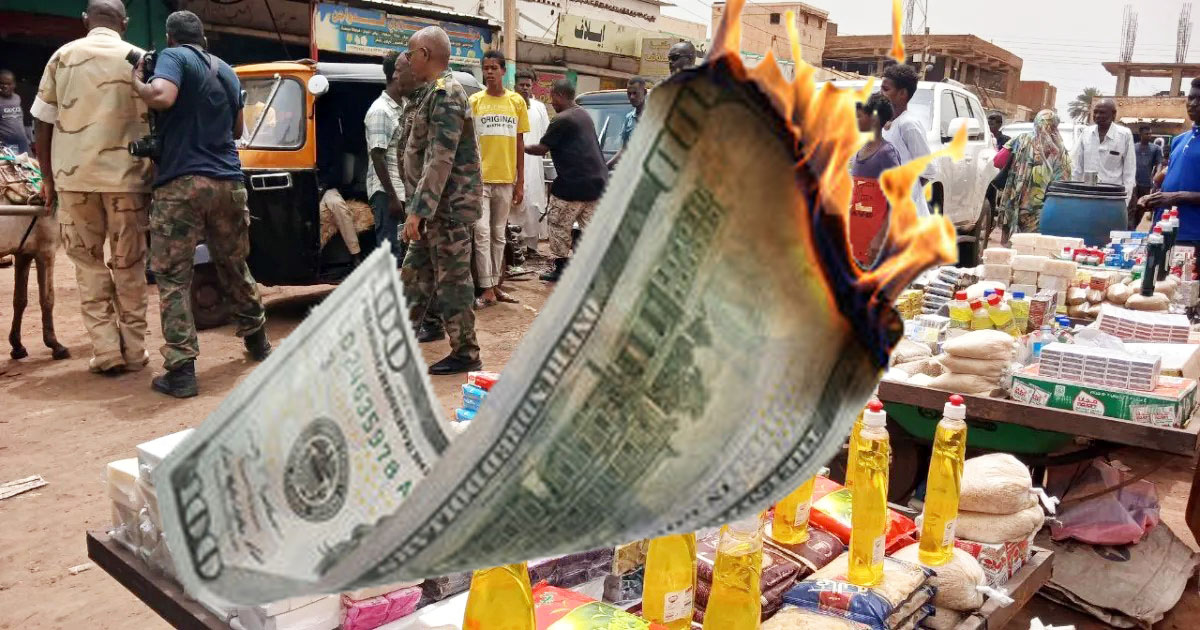
Soaring Dollar Fuels Price Hikes Across Sudanese Markets
Moatinoon
The rapid rise in foreign currency exchange rates against the Sudanese pound over the past two days has triggered a wave of price increases across Sudanese markets, raising concerns about worsening economic and living conditions at a time when household incomes are declining and liquidity remains scarce.
Prices of essential commodities have recorded significant increases. The price of a 50-kilogram sack of sugar rose from SDG 186,000 to SDG 210,000 within a short period, while meat and vegetable prices increased by approximately 13 percent, according to traders in the city of Shendi.
Trader Osman Fadl said markets have been gripped by uncertainty following the sharp surge in foreign exchange rates. He noted that several merchants temporarily suspended sales because of price instability and fears of losses resulting from market fluctuations and currency speculation.
In the foreign exchange market, the U.S. dollar climbed to around SDG 4,700, compared with SDG 4,300 at the end of last week. The Saudi riyal also rose to SDG 1,250 from SDG 1,100 during the same period. The increase has directly affected the prices of both imported and locally produced goods.
Citizens expressed frustration over the escalating cost of living. Intisar Al-Balla said she was unable to purchase a 10-kilogram sack of sugar in Omdurman after its price increased from SDG 40,000 to SDG 50,000 within days. She added that meat prices had also risen sharply, with a kilogram of lamb reaching about SDG 55,000.
Other residents voiced concerns that they would be unable to keep pace with the expected price increases in the coming days. Citizen Osman Abdeen attributed the surge in prices partly to merchants seeking larger profits in anticipation of further depreciation of the Sudanese pound, while also criticizing the lack of effective government oversight of markets.
Economic expert Amir Ahmed explained that the sharp decline in the value of the Sudanese pound stems from a combination of factors, foremost among them the consequences of the ongoing war. These include declining agricultural and industrial production, reduced exports and public revenues, shortages of foreign currency needed for imports, weakening confidence in the national currency, and the expansion of the parallel market.
He added that these factors have increased the costs of imports, transportation, and production, which has directly translated into higher prices for essential goods and contributed to rising inflation. He warned that if the trend continues, it could have serious consequences for the broader economy, including the erosion of citizens’ purchasing power, rising poverty and unemployment rates, declining investment and economic growth, the expansion of the informal economy, and further deterioration in living standards.
As the Sudanese pound continues to lose value and no signs of stability emerge in the foreign exchange market, fears are growing that additional waves of inflation and price hikes will place even greater burdens on citizens and deepen the country’s ongoing economic crisis.
