
Updated: 10 June 2026 20:19:15
World Cup 2026: Between Football Passion and Fears of Politicization
Moatinoon
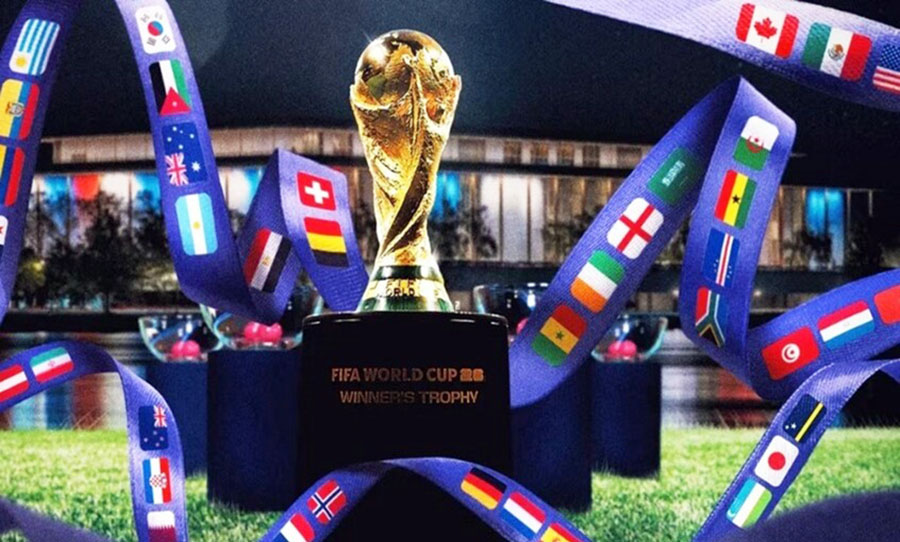
As the 2026 FIFA World Cup approaches, football fans around the globe are eagerly anticipating the tournament, which will be jointly hosted by the United States, Canada, and Mexico for the first time in the competition’s history. The event is expected to be exceptional in terms of both the expanded number of participating teams and the unprecedented influx of spectators traveling to the host nations. Yet, the excitement surrounding the tournament has been accompanied by growing human rights and political concerns over measures taken by U.S. authorities toward certain sports delegations and supporters from specific countries, raising questions about the neutrality and independence of the world’s premier sporting event.
In this context, Uzbekistan’s national team delegation was reportedly subjected to intensive screening by police dogs at New York airport, a move that drew criticism from members of the delegation’s administrative staff.
Reports and testimonies circulating in recent months also point to difficulties faced by several team officials, technical staff, referees, and supporters in obtaining entry visas to the United States. These challenges have reportedly affected the preparations of some national teams and sports bodies associated with the tournament. Cases involving Iraq and South Africa have attracted particular attention, alongside complaints from supporters of several African and Arab teams, including Senegal and Algeria. There have also been reports of delays affecting referees from African countries, among them a Somali official.
Human rights advocates view these developments as a troubling indication that a sporting event intended to serve as a global platform for cultural exchange and international understanding could become entangled in political considerations. They argue that hosting a tournament of the World Cup’s magnitude carries ethical and legal obligations to guarantee equal treatment and non-discrimination for all participants and spectators, regardless of nationality or political and cultural background.
Observers warn that continued visa-related obstacles could undermine one of the fundamental principles of international sport: equal opportunity. Delays in granting visas to technical and administrative personnel may directly affect teams’ logistical preparations, while restrictions on supporters’ ability to attend matches diminish the tournament’s global character and prevent thousands of fans from exercising their legitimate right to support their national teams from the stands.
Criticism has intensified because the United States is the principal host of the tournament and will stage the majority of matches, including the final. Activists argue that U.S. authorities should provide clear and transparent guarantees to all participants, ensuring that immigration and visa procedures are not used as political or security tools beyond normal administrative requirements.
For their part, U.S. officials have repeatedly maintained that visa decisions are based on established security and administrative standards and do not target specific countries or individuals. According to official statements, the measures are intended to protect national security and ensure the safety of major international events. Nevertheless, these explanations have not fully alleviated concerns, particularly in cases involving repeated delays affecting individuals directly connected to international sporting activities.
Attention has also turned to the International Federation of Association Football, commonly known as FIFA. The organization faces increasing criticism from those who believe it has remained largely silent regarding these concerns. As the body responsible for organizing the tournament and ensuring fair participation for all stakeholders, critics argue that FIFA should play a more active role in monitoring visa-related issues and ensuring that no team, supporter, or referee faces discrimination or unequal treatment.
Critics point to historical precedents in which FIFA intervened with governments to facilitate the movement of players and sports officials during major tournaments. They therefore question the absence of stronger and more explicit positions from the governing body in response to current complaints, particularly given that the success of a World Cup is measured not only by the quality of stadiums and organizational arrangements, but also by its adherence to the values of openness and inclusivity that FIFA has long promoted.
Sports analysts further warn that the growing intersection between politics and sport could damage the image of the World Cup itself at a time when FIFA is seeking to broaden participation by expanding the tournament to 48 teams. The success of this expansion depends on facilitating cross-border movement and ensuring that all participants can reach competition venues without unjustified obstacles.
Against this backdrop, the 2026 edition appears to face a test that extends far beyond the football pitch. While millions around the world look forward to a unique sporting spectacle, human rights advocates and international sports organizations continue to call for practical guarantees that preserve the tournament’s neutrality and protect it from politicization and discrimination. They emphasize that the World Cup should remain a global event that brings people together rather than divides them, embodying the principles of justice, equality, and mutual respect, free from political calculations and international rivalries.
As the opening whistle draws nearer, one question remains: Will the host countries and FIFA succeed in delivering a tournament that reflects the true spirit of global football, or will the growing controversy surrounding visas and freedom of movement continue to cast a shadow over the world’s greatest football celebration?
