
Updated: 8 June 2026 19:55:36
Broad Support for Ending Sudan’s War and Advancing a Civilian Political Transition
Moatinoon
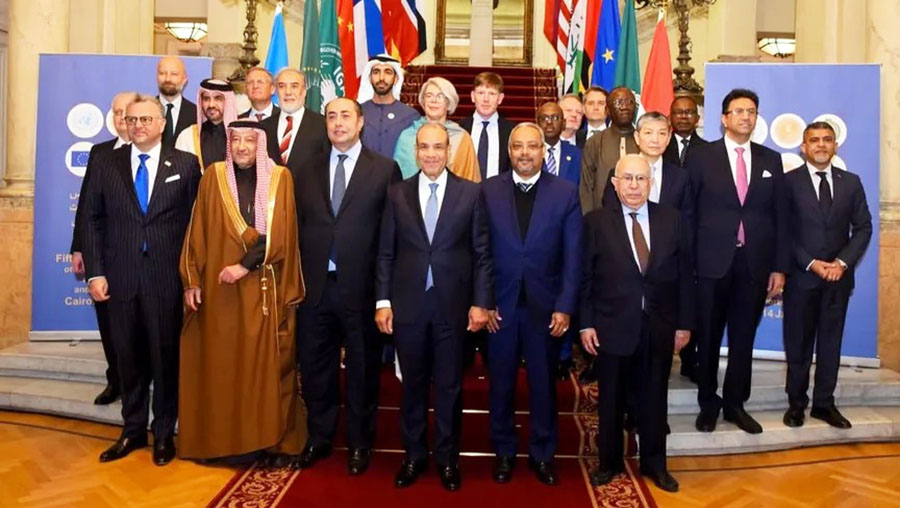
In the latest sign of growing international attention to the Sudanese crisis, the United States, Belgium, France, Germany, Greece, Italy, Norway, and the United Kingdom, together with the African Union (AU), the European Union (EU), the Intergovernmental Authority on Development (IGAD), the League of Arab States, and the United Nations (UN), have announced their support for ongoing preparations to launch an inclusive Sudanese dialogue led by civilian forces. The initiative aims to establish a political pathway capable of ending the country’s ongoing war and laying the foundation for a sustainable civilian transition.
In a joint statement issued following intensive international consultations, the signatories expressed urgent support for the efforts of the Quint Mechanism tasked with launching a broad Sudanese dialogue process in the coming weeks. The proposed dialogue is expected to include a wide spectrum of Sudanese civilian and political actors, including civil society organizations, women, youth, representatives of different regions, and diverse social groups. The process, according to the statement, should be conducted in a transparent, credible, and independent manner, free from coercion or external pressure.
The statement further affirmed the international community’s readiness to provide the necessary support to the Quint Mechanism to ensure that the dialogue is organized in a practical manner capable of producing clear outcomes within a reasonable timeframe, preferably not exceeding six months, in line with broader efforts to achieve peace and complete Sudan’s political transition.
Background of the Crisis
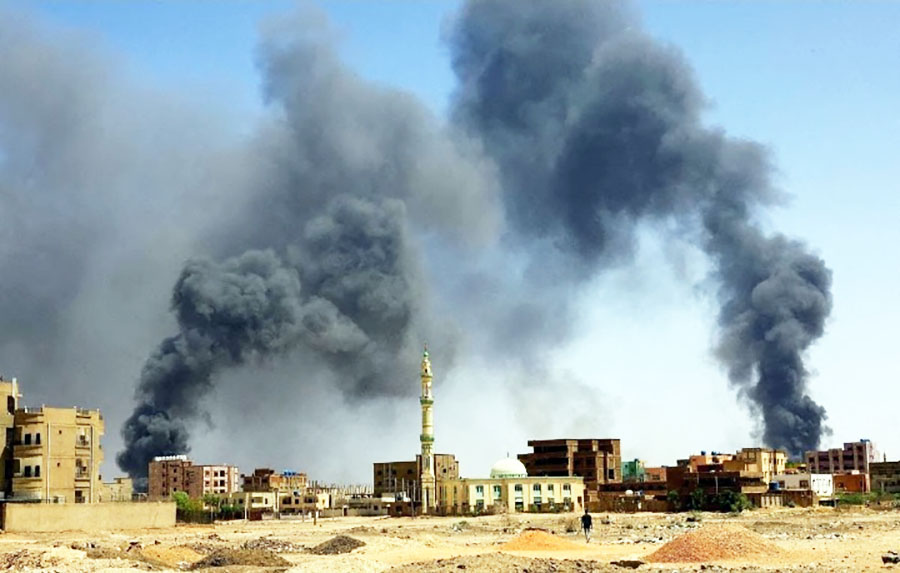
The renewed diplomatic initiative comes as Sudan’s war enters its fourth year after erupting in April 2023 between the Sudanese Armed Forces (SAF) and the Rapid Support Forces (RSF). The conflict has triggered one of the world’s largest humanitarian and displacement crises, according to United Nations agencies and international organizations.
The war began on 15 April 2023 following escalating disagreements between the military leadership and the RSF command over arrangements for integrating armed forces as part of the security and military reform process envisioned under the Framework Agreement signed between civilian and military actors in late 2022.
The clashes quickly evolved into a large-scale conflict affecting the capital, Khartoum, and several states before spreading to the Darfur region, parts of Kordofan, Al Jazirah, Sennar, and other areas. The fighting resulted in the collapse of essential services, widespread destruction of infrastructure, disruption of state institutions, and an unprecedented deterioration in humanitarian conditions.
Since the outbreak of the war, numerous regional and international initiatives have sought to halt the fighting, but none has succeeded in securing a comprehensive settlement or a lasting ceasefire.
Previous Mediation Efforts
Sudan’s crisis has witnessed several mediation attempts, most notably the Jeddah talks sponsored by Saudi Arabia and the United States during 2023 and 2024. These negotiations produced a number of humanitarian agreements and temporary ceasefires, but the arrangements quickly collapsed amid continuing military operations and mutual accusations between the warring parties.
The Intergovernmental Authority on Development (IGAD) also led several diplomatic initiatives aimed at bringing Sudanese stakeholders to the negotiating table, while the United Nations and the African Union worked through various coordination mechanisms to align regional and international responses to the crisis.
At the same time, numerous Sudanese civilian initiatives emerged calling for an end to the war and the restoration of the democratic transition. However, political divisions and differing visions among civilian actors limited their ability to form a unified front capable of influencing the course of events.
The Quint Mechanism and the Civilian Solution
The new international backing for the Quint Mechanism represents an effort to revive the civilian political track as the most viable pathway toward ending the war. The joint statement reflects a growing international consensus that a military solution has failed to resolve the conflict and that continued fighting threatens to further weaken state institutions while deepening the humanitarian and security crisis.
The signatory countries and organizations emphasized that the anticipated dialogue should lead to a clear transitional process culminating in the establishment of an independent civilian government founded on principles of legitimacy, accountability, and respect for human rights. They argued that such a government is essential for achieving sustainable peace and bringing the conflict to a durable end.
The statement also called for broader international and regional support for peace efforts in Sudan, stressing the importance of coordinating different initiatives and avoiding competing political and diplomatic tracks.
Challenges Facing the Initiative
Despite the international momentum surrounding the new initiative, observers note that its success will depend on several key factors, including the willingness of the warring parties to engage in a comprehensive political process and the ability of civilian forces to overcome their internal divisions and present a unified vision for Sudan’s future.
The initiative also faces challenges stemming from the complexity of the military situation on the ground, the multiplicity of centers of influence within Sudan, and the regional and international interventions that have shaped the conflict since its outbreak.
Nevertheless, many view the joint international statement as one of the clearest international positions since the beginning of the war, particularly because of its emphasis on the primacy of a civilian solution and the need to involve all segments of Sudanese society in shaping the country’s future.
As humanitarian suffering continues and the scale of destruction expands, attention is now turning to the coming weeks to determine whether the new efforts can break the political deadlock and open a genuine path toward peace, or whether the war will continue to dictate Sudan’s trajectory while the search for a more comprehensive and sustainable settlement continues.
