
Updated: 2 June 2026 15:58:50
Between the Paris Commune and the Khartoum Sit-in
A Comparative Reading of Revolutionary Space and Collective Identity
By Hafez Hussein
Revolutions and popular uprisings represent exceptional moments in the history of nations. They are not merely transient political events; rather, they become arenas in which societies redefine themselves and formulate new visions of power, identity, and human relationships. From this perspective, a comparison can be drawn between the Paris Commune of 1871 and the Khartoum General Command Sit-in of 2019, as two historical experiences in which ordinary people sought to create an alternative reality within a revolutionary space independent of the existing state authority. Despite the vast differences in their historical and political contexts, the two experiences share profound similarities related to the idea of a “temporary state” created by the masses during revolutionary moments, while also displaying important differences in objectives, outcomes, and historical circumstances.
The Paris Commune emerged in the aftermath of France’s defeat by Prussia in 1870 and the political and social collapse that followed. Feeling abandoned by the central government, the people of Paris rose up and established a popular authority that lasted for approximately seventy-two days. The Khartoum General Command Sit-in, by contrast, emerged within the context of Sudan’s December Revolution, which erupted in response to deteriorating economic and political conditions under a regime that had ruled for three decades. Following the fall of President Omar al-Bashir, the area surrounding the General Command headquarters became a massive revolutionary center where hundreds of thousands of Sudanese gathered to demand a democratic civilian transition.
In both cases, the notion of an “alternative society” emerged. The Paris Commune was not merely a protest against authority; it was an attempt to build a new model of governance based on direct popular participation. Similarly, the sit-in was more than a political pressure tactic. It evolved into a social and cultural space through which Sudanese people rediscovered themselves and their relationships with one another. The protesters succeeded in creating a miniature version of the Sudan they aspired to build, where diverse cultures, ethnicities, and religions coexisted in an atmosphere of solidarity and mutual respect.
One of the most striking similarities between the two experiences was the role of ordinary people in shaping history. During the Paris Commune, workers, artisans, and lower-level employees emerged as central political actors rather than followers of traditional elites. At the General Command Sit-in, youth, women, and resistance committees became the driving force of the revolution. Women played particularly significant roles in both experiences. In Paris, women participated in defending the Commune and organizing social services, while in Sudan the *Kandakas* became iconic symbols of the revolution and played leading roles in mobilization, organization, and protest activities.
The two experiences also shared a commitment to building new forms of social solidarity. The Paris Commune witnessed collective organization of services, food distribution, and education, reflecting a spirit of cooperation among residents. Likewise, the sit-in saw the emergence of communal kitchens, free medical clinics, libraries, discussion forums, and cultural and artistic activities. In both cases, participants felt they belonged to a new community governed by values of equality and mutual support rather than traditional hierarchies of power.
The fundamental difference between the two experiences lies in the nature of their political projects. The Paris Commune was a clearly defined revolutionary project aimed at rebuilding the state and society along socialist and radically democratic lines. It exercised direct political and administrative authority and effectively governed the city. The General Command Sit-in, however, was not designed to seize power or directly administer the state. Rather, it functioned as a mass pressure movement seeking to secure a democratic transition and realize the revolution’s slogans of freedom, peace, and justice. Consequently, the “State of the Sit-in” was more of a symbolic and moral model of the desired state than a fully developed political authority.
From another perspective, both experiences highlight the importance of physical space in shaping revolutionary consciousness. During the Commune, Paris itself became a transformed city, as citizens redefined its streets and public squares as spaces belonging to the people. Likewise, the General Command Sit-in transformed a specific geographic location into a powerful symbolic space for generating new national meanings. The sit-in brought together Sudan’s history, geography, and cultural diversity in a concentrated form, making it appear as the Sudan many hoped to see rather than the Sudan that actually existed.
This dimension is particularly evident in the question of identity. The argument underlying this comparison suggests that the issue of identity has long been a historical dilemma in Sudan due to the inability of political and intellectual elites to formulate an inclusive vision capable of transcending traditional divisions. The sit-in experience offered, albeit temporarily, a practical model of coexistence among different social and cultural groups. Within the sit-in space, identity was not merely a subject of theoretical debate but a daily practice embodied in interactions among people from diverse regions and cultural backgrounds. Here lies an important distinction from the Paris Commune, which was primarily concerned with class struggle and political power rather than questions of cultural or ethnic identity.
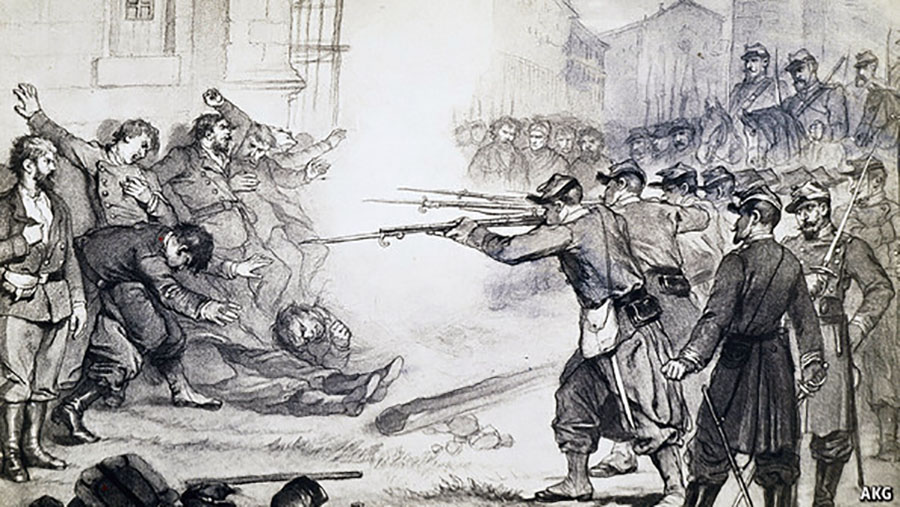
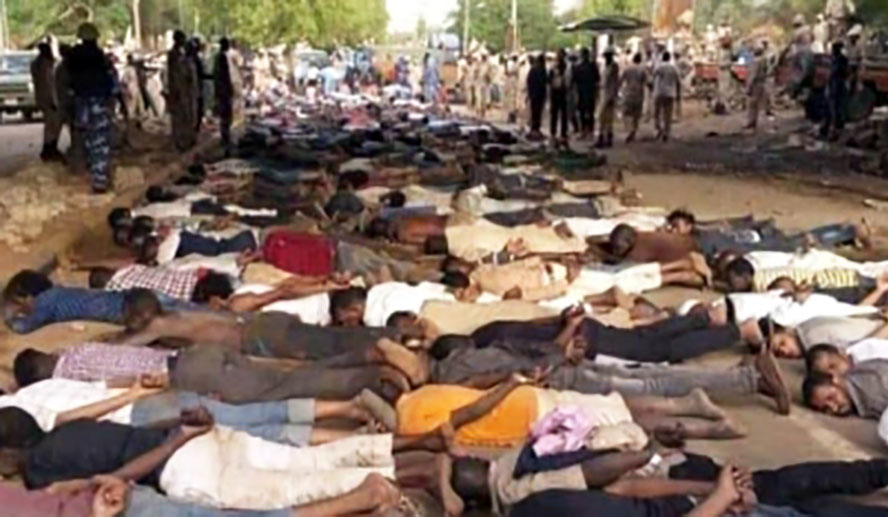
Another significant similarity is that both experiences encountered intense violence from opposing forces. The Paris Commune ended with what became known as the “Bloody Week,” during which government forces killed tens of thousands of Communards. The General Command Sit-in came to an end with the violent dispersal of June 3, 2019, an event that left a profound mark on Sudanese collective memory and resulted in the deaths of many protesters. In both cases, violence reflected the ruling authorities’ fear of the symbolic and political possibilities represented by these revolutionary gatherings.
Yet the historical outcomes differed considerably. Although the Paris Commune was militarily defeated, it became a global symbol for labor and revolutionary movements and a major intellectual and political reference point for socialist currents worldwide. The General Command Sit-in contributed to the establishment of Sudan’s transitional political arrangements, but it remained part of a turbulent political process that later faced significant challenges. Nevertheless, its symbolic and cultural impact may prove more enduring than its immediate political achievements, as it reopened debate about national identity and the possibility of peaceful coexistence in unprecedented ways.
The true significance of both the Paris Commune and the General Command Sit-in lies not only in what they achieved politically, but also in what they revealed about the latent capacities of society. Both demonstrated the ability of ordinary people to organize their lives collectively, create new forms of solidarity, and transcend divisions imposed by traditional structures of power. In this sense, the Commune and the sit-in can be understood as historical laboratories for exploring the possibilities of collective action and its capacity to reshape reality.
In conclusion, the comparison between the Paris Commune and the General Command Sit-in reveals a profound similarity: both were attempts to create alternative revolutionary spaces embodying popular aspirations for freedom, justice, and participation. The differences, however, lie in the nature of their political projects, their historical contexts, and their ultimate objectives. If the Paris Commune raised questions about power and social revolution, the “State of the Sit-in” raised, alongside demands for political change, the question of Sudanese identity and the possibility of building a nation capable of embracing its diversity. Both experiences therefore remain enduring testimonies to the capacity of ordinary people, even if only for brief moments, to imagine a different world and strive to bring it into existence.
