
Updated: 1 June 2026 14:55:18
Teachers’ Protests Expand Across Sudan as Inflation and Wage Erosion Fuel Strikes
Moatinoon
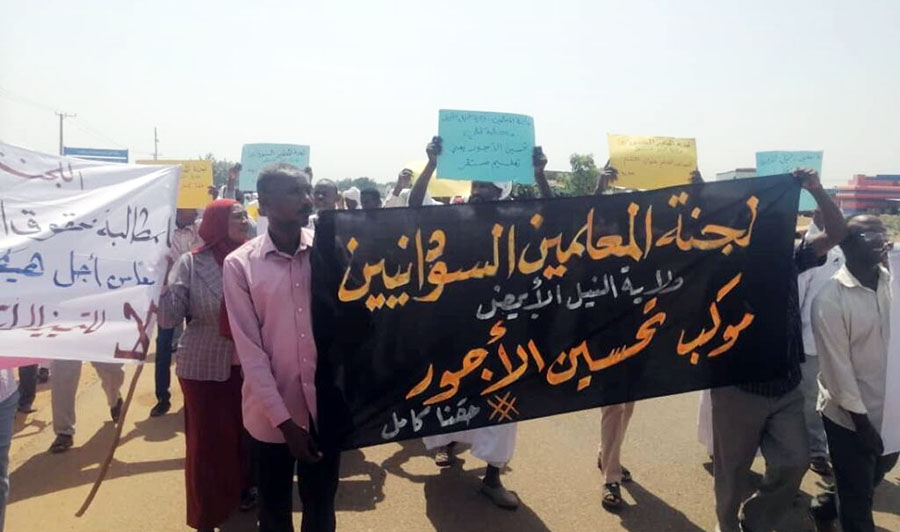
Several Sudanese states are witnessing a growing wave of strikes and protests led by teachers in what has become one of the largest labor movements in the education sector since the outbreak of the war. The protests are driven by low wages, delayed salary payments, accumulated financial entitlements, and worsening living conditions amid soaring prices and an ongoing economic crisis.
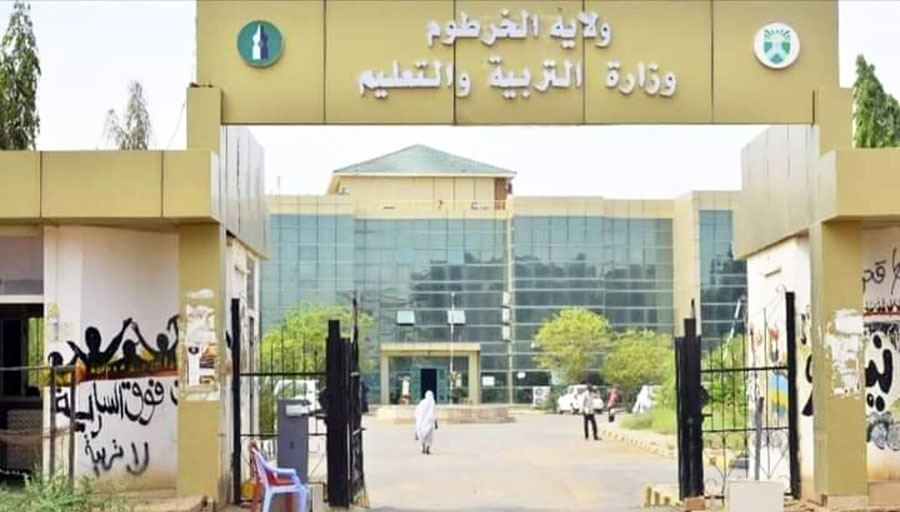
The Sudanese Teachers’ Committee announced that large numbers of teachers in Khartoum State have joined a work stoppage as part of a broader series of strikes and protests taking place across different states. In Kassala State, the committee declared a comprehensive strike in all localities beginning on June 7, while the Teachers’ Committee in Al Jazirah State linked the postponement of the remedial school year to growing unrest among teachers and the authorities’ failure to address their demands.
Years of Unpaid Entitlements
Teachers say their protests are the result of years of accumulated financial grievances, including unpaid 2023 arrears, four years of holiday bonuses, cash compensation allowances, clothing allowances, and salary adjustment differences for 2025 and 2026.
According to the Teachers’ Committee, the monthly salary of a first-grade teacher does not exceed SDG 156,000, an amount that no longer covers a family’s basic needs or even daily transportation costs to and from school due to rising fuel and transport prices.
Sayed Timba, head of the Teachers’ Committee in Kassala State, said teachers’ living conditions have reached unprecedented levels of hardship. He noted that the highest salary for a first-grade teacher is equivalent to roughly US40 per month, while teachers have been denied several benefits and financial entitlements for consecutive years.
He added that the erosion of purchasing power, coupled with soaring prices of basic commodities, fuel, and transportation, has rendered salaries insufficient to meet even the minimum cost of living. He described the current mobilization as an effort to reclaim teachers’ rights and secure equal treatment with other public-sector employees.
Inflation Continues to Erode Incomes
The protests come as Sudan’s Central Bureau of Statistics reported that annual inflation rose to 45.84 percent in April 2026, up from 40.84 percent in March, marking a five-percentage-point increase in a single month.
The rise reflects continuing economic pressures caused by the depreciation of the Sudanese pound against foreign currencies, which has driven significant increases in the prices of food, fuel, transportation, and essential services.
According to official data, Sudanese households spend more than half of their income on food and beverages, making any increase in prices an immediate burden, particularly for salaried workers such as teachers and other civil servants.
Observers argue that the crisis is not simply a matter of low salaries but also of the widening gap between wages and the actual cost of living. Public-sector salaries have lost much of their purchasing power over recent years due to persistent inflation, conflict, and economic decline.
Al Jazirah: Delaying School Does Not Solve the Crisis
In Al Jazirah State, the Teachers’ Committee said the real reasons behind the postponement of the remedial academic year until June 14 go beyond the official explanations and are directly linked to mounting frustration among teachers.
The committee stated that state authorities have failed to fulfill their obligations toward education workers, pointing to more than fourteen months of unpaid arrears, in addition to unpaid allowances, benefits, and bonuses that have accumulated since the outbreak of the war.
Thousands of teachers and their families, the committee said, celebrated Eid al-Adha under extremely difficult conditions after authorities failed to pay May salaries and holiday bonuses on time, further fueling protests across the education sector.
Calls to Save Education
Teachers continue to demand measures they consider essential to rescuing Sudan’s education system. Their key demands include raising the minimum wage from SDG 12,000 to SDG 216,000, paying all outstanding salaries, allowances, bonuses, and benefits, implementing overdue promotions, improving working conditions, and increasing government spending on education.
They also call for an end to forced leave policies and unfair dismissals, as well as the opening of serious dialogue with teachers’ representatives regarding professional and labor rights.
Teachers’ committees argue that the stability of the academic year and the continuity of education depend directly on improving teachers’ living and working conditions. They maintain that temporary initiatives, such as providing meals or transportation assistance, do not address the root causes of the crisis.
Education Under the Pressure of War
These developments come as Sudan’s education sector faces unprecedented challenges resulting from the conflict that erupted in April 2023. The war has displaced millions of people, destroyed hundreds of schools, and disrupted education across large parts of the country.
Education experts warn that the continued deterioration of teachers’ conditions threatens to deepen the country’s educational losses, particularly amid rising school dropout rates and widening learning gaps among children and young people.
While teachers’ committees stress their commitment to protecting students’ future and ensuring educational stability, they insist that these goals cannot be achieved without addressing teachers’ financial and professional grievances. As the committees emphasize, “There is no education without teachers, and there can be no stable education in the midst of hunger, poverty, and denied rights.”
