
Updated: 23 May 2026 10:16:32
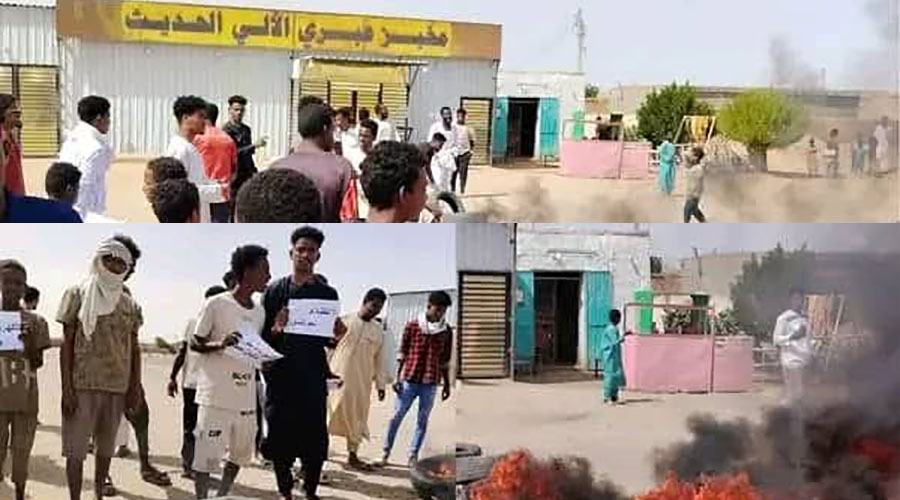
Power Outages Spark Protests in Abri, Northern Sudan
Moatinoon
Sudanese police dispersed protests in the city of Abri on Friday, May 22, 2026, using tear gas after residents demonstrated against what they described as “unfair electricity outage schedules.”
Eyewitnesses said the protests began in the city center before security forces and police intervened to disperse demonstrators amid growing tension across the area.
In a statement, the Abri Resistance Committees reported that several protesters were arrested and that demonstrators, including women, were assaulted during the crackdown. The committee added that protests continued in several neighborhoods and surrounding streets.
According to the statement, protesters delivered a memorandum to executive and security authorities in the state, stressing that electricity is a “lifeline” that cannot be dispensed with and holding authorities responsible for worsening outages and increasing blackout hours.
The committee said previous meetings with the acting executive director of the locality, as well as promises to arrange talks with the state governor, failed to produce concrete solutions, accusing authorities of merely attempting to “absorb public anger” without addressing the root causes of the crisis.
It also warned that the closure of the commercial road linking Wadi Halfa and Dongola could resume on a broader scale if what it described as a “security crackdown” continues and the electricity crisis remains unresolved.
Activists said violent confrontations erupted after Friday prayers, with security forces firing large quantities of tear gas inside residential neighborhoods while carrying out a broad arrest campaign against protesters.
Despite the crackdown, witnesses reported that protesters continued to gather in the city square and surrounding streets in what they described as an act of resilience against the security measures.
The developments come amid recurring protests across Northern State over the past two years, particularly in Abri, Dongola, and Wadi Halfa, due to prolonged electricity outages and their impact on trade, agriculture, and essential services.
Last Sunday, protesters blocked the road connecting Dongola and Wadi Halfa — a vital transport route between Sudan and Egypt — in protest against lengthy daily power cuts. Demonstrations also spread to the Secot region before security authorities intervened to reopen the roads.
Protesters said the electricity crisis had severely affected agriculture and essential services, pledging to continue escalation measures while allowing buses to pass until electricity supplies stabilize.
In a related development, a report issued by the United Nations Development Programme revealed that Sudan’s energy sector suffered losses estimated at nearly 3 billion due to damage to power generation and transmission networks during the war.
The report noted that thousands of households, businesses, and telecommunications companies have increasingly turned to solar energy despite its high costs, with imports of solar panels and related equipment rising significantly during 2024 and 2025.
It added that all solar energy system components are fully imported, leaving the sector vulnerable to currency fluctuations, shortages of foreign exchange, and rising transportation and logistics costs.
The UNDP stressed that financing remains the biggest obstacle to expanding solar energy use in Sudan due to high bank interest rates and short repayment periods, urging the Sudanese government and international partners to support supply chains, expand microfinance programs, and develop flexible renewable energy policies as part of the country’s economic and service recovery efforts.
