Updated: 13 May 2026 13:39:04

Sudanese Hold Firm to Their Land as a Lever for Peace and Justice
Al-Asmai Bashri
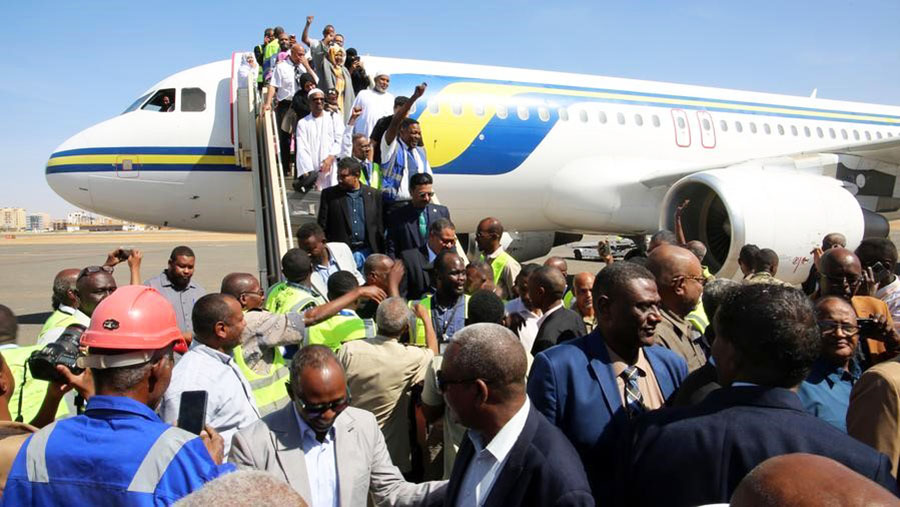
The announcement by the International Organization for Migration that around 4.1 million Sudanese have returned to their areas of origin, despite the ongoing war and the severe deterioration of basic services across several states, revealed the depth of the relationship between Sudanese people and their land.
The return now taking place cannot be explained solely through calculations of material gain and loss. Simple logic would suggest that fleeing danger for safety is the wiser choice. Yet the reality on the ground shows that Sudanese people see remaining on their land — even while it burns — as an existential act of survival that goes beyond securing food and medicine.
The motives behind this return are complex, driven by psychological, material, and social factors. Psychologically, land in Sudanese consciousness represents an extension of the self and of family and tribal history. It is not merely property to be bought and sold; it is the cemetery where parents and grandparents are buried, the palm tree planted by an ancestor, and the mosque where the neighborhood gathered for decades. Many displaced people therefore feel that exile in relatively safe cities is harsher than the sound of artillery, because it means separation from memory and from the social networks that give life meaning.
Materially, years of displacement have exhausted family resources. Camps are overcrowded, humanitarian assistance is declining, and rents in relatively stable cities have risen to unbearable levels. In this context, the faint hope of repairing a destroyed home becomes preferable to the certainty of living marginalized on the outskirts of an unfamiliar city.
Added to this is the urgency of the agricultural season, which cannot wait. In states such as Al Jazirah, White Nile, and North Kordofan, people’s existence is tied to the land they cultivate. Missing two farming seasons means economic collapse for an extended family for years to come. As a result, many farmers prefer to return and till their land under the threat of bombardment rather than lose it permanently.
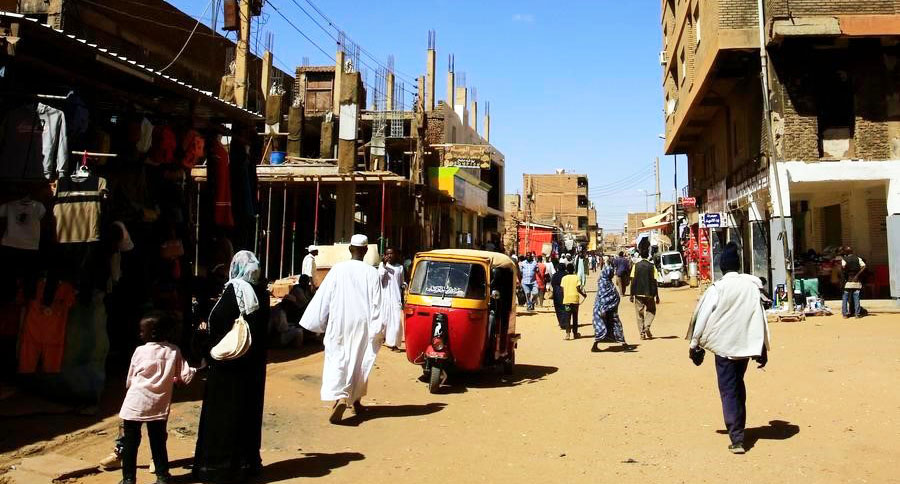
This attachment to land is rooted in deeply embedded Sudanese social structures. Legally and traditionally, land tenure systems rely more on possession and community testimony than on modern land registries. Leaving land abandoned for years effectively opens the door to encroachment or changes in its legal status. Returning, therefore, is not simply an emotional impulse but a defense of accumulated rights.
Socially, the village or local community represents the primary unit of solidarity through which mutual aid, communal labor, and customary support systems operate. Whoever leaves this environment steps outside its circle of protection and becomes an isolated individual confronting hardship alone. Returning thus means reactivating a social safety network that displacement camps cannot provide, no matter how organized they may be.
At the level of values, Sudanese popular discourse is filled with sayings such as “Dying in one’s homeland is dignity” and “Exile is misery.” These are not passing expressions but reflections of a moral framework that places dignity above comfort. People are willing to take risks on their own land while rejecting humiliation even in relative safety.
The important question is whether this attachment can become a driving force for peace and justice. The answer is yes — but not automatically. The return of hundreds of thousands of people to their home areas reshapes the demographic equation and imposes a new reality on the ground that no political settlement can ignore.
When people return and rebuild schools and markets with their own hands, they send a clear message to the warring parties: this land has owners and is not merely a bargaining chip. This grassroots pressure transforms return from a passive humanitarian crisis into an active reconstruction project — what the International Organization for Migration described as “a glimmer of hope.” The returning Sudanese are not merely asking for aid; they are demanding security, water, and justice for the crimes that drove them from their homes. This raises the stakes of negotiations and makes it impossible to discuss peace without addressing issues such as seized land, compensation, and accountability, because returnees will reopen these files in practice on the ground.
Yet this path also carries risks. If these returns are not matched by international and local support to protect civilians and restore essential services such as water, electricity, healthcare, and education, they could turn into a second humanitarian catastrophe. In that case, attachment to the land would become attachment to death itself, losing its moral and political meaning.
Ultimately, what is happening can be understood as a popular sovereign act declaring that states may fail and wars may drag on, but the right to land, housing, and livelihood does not expire with time or force. Holding firmly to this right alone will not create peace, but it will compel any future political process to seriously address the root causes of the conflict — including wealth distribution, local governance, and transitional justice. A peace that does not guarantee a safe and dignified return for those displaced is merely a temporary truce, and a justice that does not restore people’s right to housing remains incomplete justice.
The returning Sudanese are placing everyone before a simple and clear test: will the international community and local actors treat them merely as numbers in displacement reports, or as rights holders whose demands must shape any future settlement? The answer to that question will determine whether this return becomes the beginning of rebuilding the country on new foundations, or merely another chapter in Sudan’s prolonged cycle of displacement and crisis.