
Updated: 9 May 2026 16:15:15
Sexual Violence in Sudan – Shocking Testimonies and Long-Term Consequences
Monitoring Desk – Moatinoon
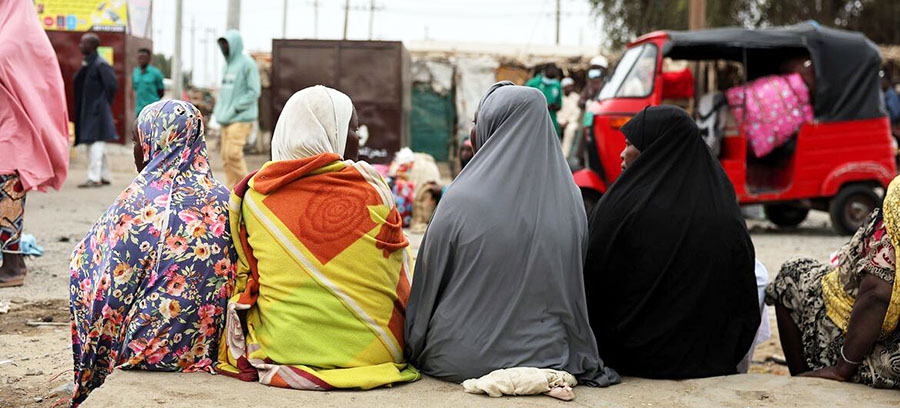
“She was gang-raped at gunpoint by four members of the Rapid Support Forces and left abandoned in a dark alley.” This is yet another painful story of a young Sudanese woman among countless victims of sexual violence that has become a defining feature of Sudan’s conflict, now entering its fourth year.
The story was recounted by Pramila Patten, the United Nations Secretary-General’s Special Representative on Sexual Violence in Conflict, during a briefing before the UN Security Council.
Instead of pursuing the hopes she once held for a better future after graduating from university with a degree in international relations, the young woman now cares for a child conceived through rape and lives far from her family out of fear of social stigma.
Her child, along with thousands of other children born as a result of conflict-related sexual violence in Sudan, faces a profound dilemma. This was highlighted by Tonderai Chikohwa, senior adviser in the Office of the UN Special Representative on Sexual Violence in Conflict.
Chikohwa said these children often lack legal status and identity because their parentage cannot be officially established. They also face exclusion and marginalization, as they are viewed as “children of the enemy.” In turn, these children and young people may become fertile ground for “recruiting the next generation of fighters into armed groups.”
He further warned that the consequences of such sexual violence undermine prospects for lasting peace, adding: “When sexual violence is committed against members of your family — including young children — the possibility of living peacefully alongside the perpetrators of these crimes becomes increasingly difficult and complex.”
“One of the Worst Sins”
The impact on social cohesion was also emphasized by Marwa*, a representative of one of the organizations working closely with local women’s groups in Sudan. She spoke specifically about the abduction and sexual enslavement of girls.
Marwa said: “It is a form of humiliation directed at families. In our conservative society, the abduction of a girl is considered one of the worst sins imaginable.”
In an interview with UN News in Geneva, she added that these practices are not solely intended for enslavement or sale, but are also “a way of defeating people from within, forcing them into surrender.”
Commenting on the gravity of the situation, Chikohwa stated that “sexual violence has become part of the political economy of war.” He stressed the danger of the way armed groups perceive women and girls, who are treated as spoils of war.
“They are used as incentives to recruit young men through promises of marriage or sexual slavery, or traded as commodities for money and weapons,” he explained.
According to the UN official, sexual violence is also being used as a tool for forced displacement.
Chikohwa added that the dangers continue even after displacement, as women and girls “often face severe risks inside sprawling displacement camps — such as Abu Shouk camp and others in Darfur — where security conditions remain unstable. They are also targeted when leaving camps to pursue livelihood activities.”
Exhausted Women and Girls
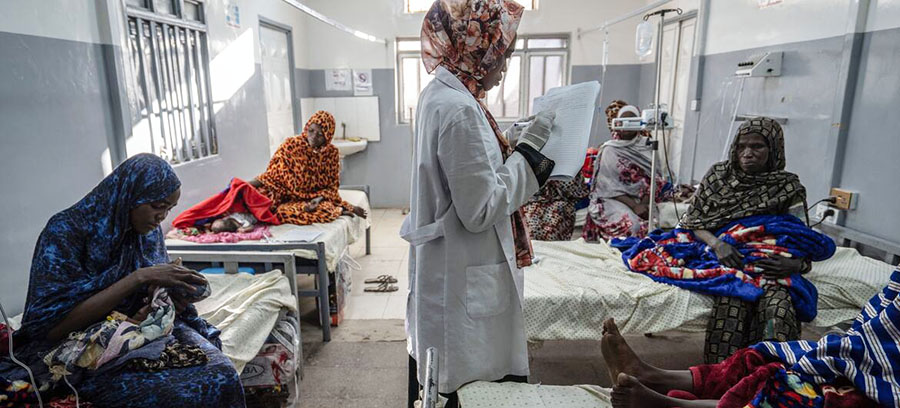
According to a study conducted by the United Nations Population Fund (UNFPA) in Sudan, 76 percent of women between the ages of 25 and 49 report feeling unsafe, both inside and outside displacement sites.
Whether victims of sexual violence, displacement, separation, or the loss of loved ones, women and girls share a common experience of suffering and trauma.
Among them is Alia, 27, who fled from Al-Debeibat in South Kordofan to Al-Muwahhid camp in El Obeid, North Kordofan.
After enduring beatings and humiliation, she said: “They killed my husband and my son. My husband was carrying our child on a donkey when they shot them both dead together.”
Salma Mohamed Bashara, 50, spent seven days fleeing with her family of nine from Dilling in South Kordofan to the same camp. All she dreams of, she said, is returning home.
“Women are exhausted by the war,” she said. “Many crimes have been committed against them, including rape.”
The trauma and stigma associated with sexual violence have driven some girls to suicide, while many women continue to live with deep psychological scars, according to Marwa, the civil society representative.
Others have chosen to speak publicly about their experiences, including a 23-year-old woman encountered in a displacement shelter by Laila Baker, Regional Director for Arab States at UNFPA. Thanks to services supported by the agency, the young woman was able to begin her recovery journey.
“A Survivor-Centered Approach”
The Office of the Special Representative on Sexual Violence in Conflict focuses on adopting what it calls a “survivor-centered approach,” beginning with ensuring the meaningful participation of survivors themselves.
Tonderai Chikohwa emphasized that despite the despair surrounding the widespread and relentless nature of sexual violence, “we are also witnessing extraordinary resilience among survivors, along with courage and determination to ensure that their voices are heard.”
That hope is shared by many Sudanese people affected by the horrors of war, including Ismailiya, a 16-year-old girl displaced to Al-Muwahhid camp in El Obeid.
“I hope to return to my city and my school,” she said. “Please help us rebuild our home and go back.”
* Marwa is a pseudonym used to protect the identity of the Sudanese woman and her organization for security reasons.
