
Updated: 7 May 2026 13:58:53
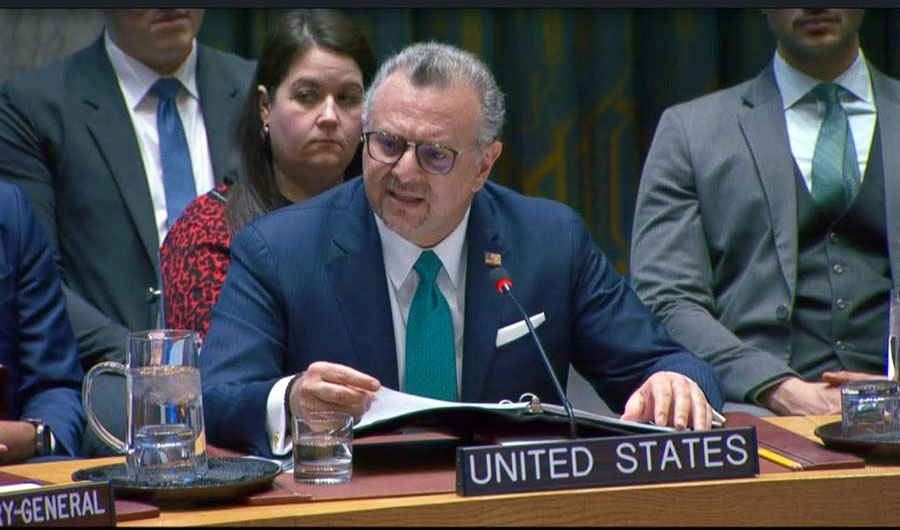
Massad Boulos’ Efforts… Can External Support for Sudan’s War Be Stopped?
By Al-Asma‘i Bashari
Following the drone strike targeting Khartoum International Airport earlier this week, Massad Boulos, senior adviser to Donald Trump on Arab and African affairs, stated that all external support for either side in Sudan’s conflict must stop immediately. His remarks came amid broad regional and international condemnations.
Discussion has increasingly focused on how foreign military and logistical support has prolonged the war. Since the outbreak of fighting in Sudan in April 2023 between the Sudanese Armed Forces and the Rapid Support Forces, the conflict has evolved from an internal power struggle into an open arena for regional and international competition, with outside actors providing varying forms of political, military, and economic backing to both sides. In light of statements attributed to Trump or his close advisers calling for an immediate halt to foreign support, it is important to examine the nature of this assistance, the actors behind it, and the practical possibility of stopping it.
Various assessments indicate that the Sudanese army receives political and military support from regional states, foremost among them Egypt, which views stability in Sudan as part of its national security. The army also reportedly enjoys political backing from Saudi Arabia as part of efforts to preserve state institutions, in addition to ties with other regional powers seeking to balance influence in the Red Sea area. In contrast, the Rapid Support Forces face accusations of receiving support from the United Arab Emirates, allegations officially denied by Abu Dhabi. The RSF is also said to rely on arms-smuggling networks across the Sahel region and to finance its operations through local resources such as gold, alongside reports of foreign fighters and mercenaries.
This support takes multiple forms, most notably direct military aid through the supply of weapons and ammunition, including modern technologies such as drones, as well as military training and expertise-sharing. Financial support includes funding combat operations through both official channels and informal economic networks, especially those linked to natural resource trade. Political and diplomatic support involves providing international or regional cover for one side and influencing negotiation tracks, while logistical and media support appears in facilitating supply chains and shaping public opinion.
The possibility of halting this support depends on a number of international mechanisms, though these face major political complications. Among these measures are economic sanctions targeting individuals and entities linked to the war, including asset freezes and travel bans — steps already initiated by some international actors. However, their impact remains limited unless they extend to the supporting states themselves. Arms embargoes could also be strengthened; although one already partially exists in Darfur, enforcement remains weak and violations frequent.
Diplomatic efforts also play an important role, whether through the United Nations, the African Union, or regional initiatives seeking to impose a ceasefire. Yet these efforts often falter due to conflicting interests among the sponsoring parties themselves. Another important tool is tracking supply chains, particularly the trade in arms and gold, while imposing oversight on companies and intermediaries facilitating the flow of support.
Nevertheless, these efforts face significant challenges, foremost among them conflicting regional interests. States involved in the conflict tend to view it through the lens of geopolitical influence and control over resources and strategic corridors, rather than purely humanitarian concerns. International will also appears divided; while there is broad rhetorical consensus on the need to end the war, this has not translated into decisive practical steps.
In addition, much of the support flows through informal channels that are difficult to monitor or control, such as smuggling networks and private companies. More importantly, both sides in the conflict continue to believe in the possibility of achieving military victory, reducing their willingness to accept an end to external support or engage seriously in a political settlement.
In light of these realities, calls to halt foreign support reflect growing recognition that the war in Sudan has become a proxy conflict. However, achieving this objective requires genuine international consensus that goes beyond political statements to concrete measures, including pressure on supporting states, strict monitoring mechanisms, and linking political and economic relations to compliance with ending interference. Until such political will emerges, the conflict is likely to remain open-ended, fueled by domestic calculations and sustained by regional power balances, prolonging the crisis and deepening the suffering of the Sudanese people.
