
Updated: 14 April 2026 19:40:32
600 Thousands Stories of Pain… Kiryandongo Camp Tests Sudanese Resilience
Source: news.un.org
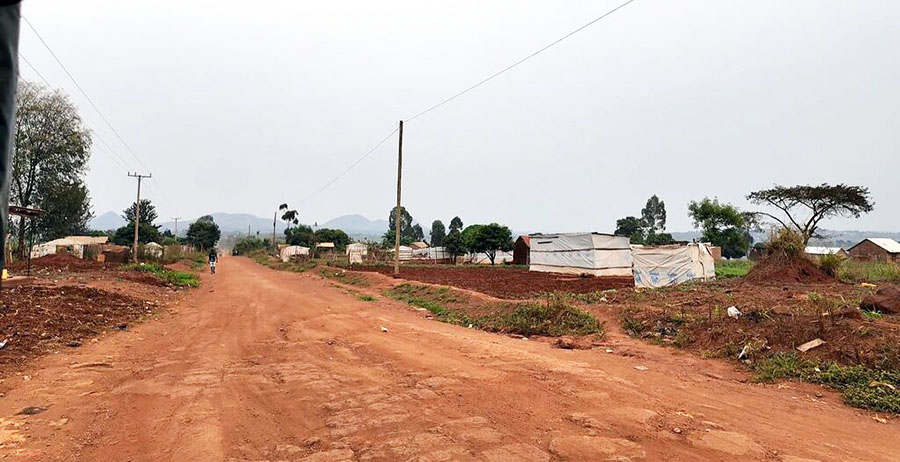
On the outskirts of Uganda’s Bweyale town, where tents are scattered and dirt roads meet open green spaces, Kiryandongo camp appears as a space suspended between a shattered past and a life being reshaped. In this remote corner of refuge, the story does not end with fleeing war—it marks the beginning of another phase, where days are not measured in hours and minutes, but by the weight of tragedies and immense challenges they carry.
Since the outbreak of war in Sudan in April 2023, local officials report that around 600,000 Sudanese refugees have arrived at the camp, some after long and exhausting journeys across multiple countries. They brought with them little luggage but many memories, now trying to rebuild the details of lives turned completely upside down.
Kiryandongo camp—about 275 kilometers from Kampala—is home to refugees from various countries, including Sudan, South Sudan, Burundi, Kenya, the Democratic Republic of Congo, and Rwanda, in addition to the host community. Yet what unites them is greater than what divides them: the shared experience of loss and the attempt to start anew.
In an effort to capture the reality as it is, UN News visited the camp to document daily life and highlight the most pressing challenges refugees have faced since fleeing the war.
From Engineering Halls to a Refugee Tent
Hussein Hashim Tayman lives a life he never imagined. A civil engineer with a master’s degree who once worked in the civil engineering department of the African Union–United Nations Hybrid Operation in Darfur (UNAMID), he now sits inside a tent, serving as head of the Sudanese refugee community in Kiryandongo camp—one of Uganda’s largest refugee settlements.
Tayman had been living in Omdurman before fleeing with his children in May 2023 to South Sudan and then to Uganda, in a journey he described as filled with fear, harassment, and violations.
He told UN News that the war left him deeply disappointed and devastated, taking everything from him. “Here, when you complain, you find someone whose tragedy is greater than yours, so you try to forget your own pain to ease theirs. We draw strength from each other. Sometimes we sit together as professionals and talk about our past and our achievements. We now live a reality completely opposite to what we had before. I now live in a tent—but this is the language of war and its consequences.”
Over time, conditions have not improved as many had hoped. On the contrary, challenges appear to be increasing. Tayman speaks of declining aid and of tents that were meant to last six months but have become the only shelter for more than three years.
Services are limited—almost nonexistent. There is insufficient healthcare, irregular education, and even water and food have become a shared responsibility among refugees themselves.
Tayman warns that the future of an entire generation is at stake, expressing hope that the situation of Sudanese refugees in Uganda will receive greater attention from the United Nations and the international community.
When Food Becomes a Matter of Life or Death
In the face of these harsh realities, simple initiatives have emerged—modest in form but profound in impact. Among them are community kitchens, which began as an urgent response to need and gradually became a lifeline helping to save Kiryandongo’s refugees from hunger.
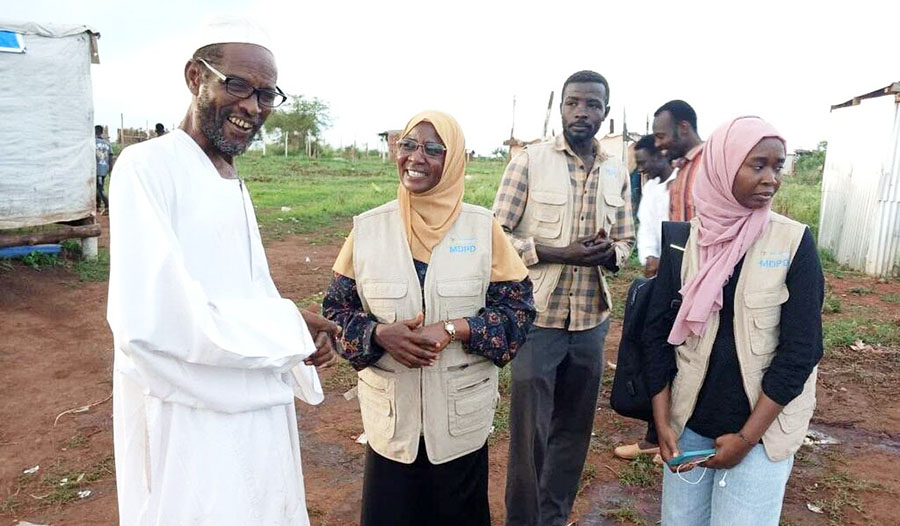
There are 20 community kitchens in the camp, which have helped reduce hunger among Sudanese refugees and foster social cohesion.
Moatasim Mohammed Ahmed, originally from Nyala in South Darfur, had been living in Khartoum and working in trade between Sudan, China, and Dubai before the war completely altered his life. Now a refugee in Uganda since 2023, he serves as secretary of the camp’s community kitchens.
He explains how the idea began: “These kitchens were established after the World Food Programme reduced food rations. We began to notice cases of malnutrition in the camp, and there were deaths and miscarriages due to hunger.”
Moatasim says the experience has changed him deeply: “Working in the community kitchens taught me to be human. You see people here hungry and without clothing—if you don’t have humanity inside you, you cannot feel this. I feel this deeply toward my fellow Sudanese—they are my own flesh and blood.”
“We Survived… So We Help Others”
From Kampala, where she now lives, Dr. Widad Makki makes long journeys to reach Kiryandongo camp—not because she lives there, but because she has chosen to stand alongside those who do.
Widad, a former university professor and director of special education in Khartoum State, saw her life completely transformed by war. She recalls fleeing her home under bombardment: “It was difficult to risk my children amid gunfire, rising smoke everywhere, burned cars, and bodies lying in the streets. My children suffered greatly from these scenes. I asked them to cover their faces so they wouldn’t see.”
Although she now lives in Kampala, her connection to the camp remains strong. She visits regularly to support refugees, particularly through her work with the Darfur Organization for Peace and Development.
She says the war has not only destroyed cities but also torn families apart. Despite everything, she chose not to remain a bystander: “We survived and reached Uganda safely, and now we extend a helping hand to our Sudanese brothers and sisters in the refugee camps. We support community kitchens and provide full meals to refugees here in Kiryandongo.”
She also expresses concern about the prolonged crisis: “Our greatest fear is that this war will continue. There are many challenges here in Uganda—from education to living costs and rent—and there are no sources of income or job opportunities. We dream every day that the war will end so we can return to Sudan.”
Refugee Doctors Supporting Uganda’s Health Sector
Away from the camps, the picture is somewhat different in Kampala, where some Sudanese have managed to reclaim parts of their professional lives.
In one of the city’s hospitals, Dr. Abdeljabbar Ahmed Adam stands in his white coat, treating patients and easing pain. A specialist in internal medicine who previously worked at Ibn Sina Hospital for Gastroenterology in Khartoum, he has followed a new path since arriving in Uganda in 2023 after the war began.
“I arrived in Kampala after the war broke out and began working at Gombe Hospital,” he told UN News, where he continues to provide care to patients of various nationalities—not only Sudanese. He describes the environment as welcoming: “Uganda received us warmly. Work here is good, and there is no discrimination… We feel as though we are in Sudan.”
He is not alone—many Sudanese medical professionals have joined him in Uganda, some even opening clinics that provide services. “There are many Sudanese doctors here, and some have established medical centers,” he said, noting that their presence has become a real contribution to the healthcare sector.
“Uganda has good hospitals, but the challenge is a shortage of staff. Sudanese doctors have helped improve medical services. Patients come to us from different nationalities.”
While some refugees rely on aid, Abdeljabbar emphasizes a broader picture: “Not everyone who comes depends on assistance… there are professionals, traders, and skilled individuals in various fields.”
“The White Heart”: A Story Beyond War
Ibrahim Zakaria Yahya, another Sudanese refugee, has settled in Bweyale near Kiryandongo camp. His story reflects years of displacement and attempts at stability.
He left Sudan in late 2007 from Gereida in South Darfur, first heading to South Sudan before arriving in Uganda in 2008, where he began a new and difficult life.
He recalls being “the first Sudanese to arrive in Bweyale with his family,” after spending about five years in Kampala before moving there 12 years ago. Early on, he faced many challenges, especially language barriers and limited resources. “I suffered greatly when I first arrived,” he says.
Over time, he gradually built a path forward—working in trade and agriculture, then investing in real estate until establishing his own business.
Three years ago, he opened a hotel called “The White Heart,” a name rich with meaning: “I chose this name as a call to purify hearts and consciences, to overcome the bitterness Sudanese people have experienced through repeated wars.”
He adds: “Anyone who wants to visit me here should come with a clean, white heart… We are refugees who fled war, and we need coexistence here so we can return home safely.”
Despite achieving some stability, Ibrahim expresses deep gratitude to Uganda: “They welcomed me with open arms. I never felt like a refugee. I am only a refugee on paper—I enjoy the same rights as citizens. I even own land here, something I could not achieve in Sudan.”
Yet despite the warmth he has found, he does not hide his longing for Sudan. He hopes peace will soon prevail so he and others in Kiryandongo can return home.
For now, that hope collides with a complex daily reality in the camp, where the future remains uncertain, services are limited, opportunities are scarce, and anxiety persists—especially among children and youth.
Still, people hold on to a glimmer of hope that the war will one day end and they will return to their homes. Until then, life goes on here—between simplicity and hardship, carrying stories that never end.
