
Updated: 4 February 2026 21:04:30
Eastern Sudan: A State Trapped Inside the Tribe
Onor Hamad
I sip my morning coffee and open my phone as if I am opening a small gateway to a world far larger than its size. I let Khojali Othman flow through my headphones on SoundCloud as the first song in my playlist, while Facebook and TikTok timelines pile up in front of me—two platforms that, in the absence of a real media infrastructure, have effectively become the primary political and social reference points in eastern Sudan.
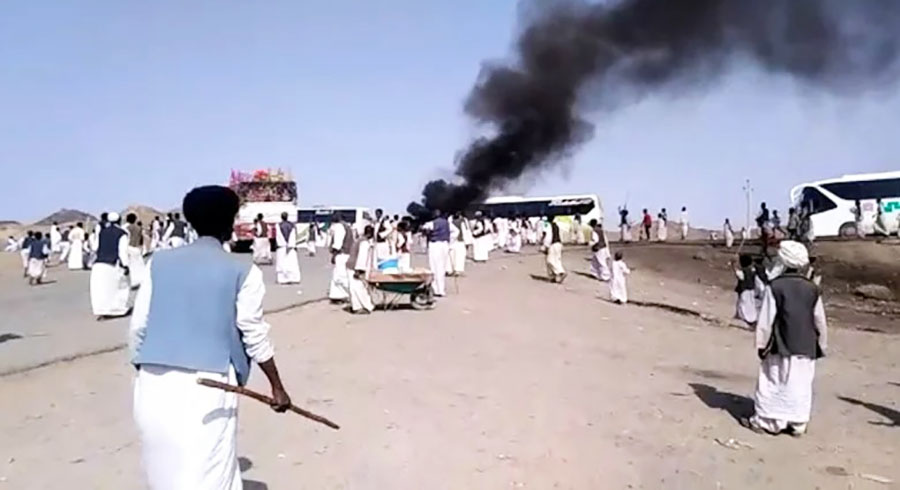
I scroll through news, posts, and short videos: Al-Kardinal, Aqiq Port, the governor’s visit, a conference led by Musa, another led by Turk, honoring a social figure, leadership disputes—an endless chain of events that appear political on the surface, but in essence are nothing more than the recycling of the tribe in the form of a state.
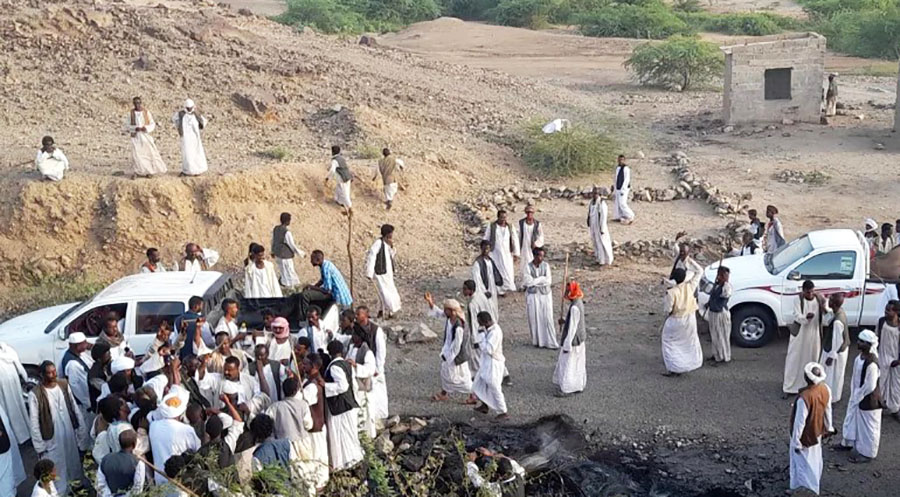
At that moment, the term “Budocracy” slips into my mind—from a book I once read and whose conditions I have lived through many times. I ask myself: does the book describe our reality, or are we the ones reproducing the book on the ground? Tribe, leader, sheikh, official, manager, activist—today all of them move as if they were analytical units in political sociology. Yet these units have lost their original meanings and transformed into an alternative power structure, filling the vacuum left by the state and reshaping the public sphere according to the logic of belonging rather than citizenship.
An East Shrinking Inside the Robe of the Tribe
The East today is experiencing a state of socio-political contraction, where civic identities recede in favor of primordial ones, and the public sphere turns into a “market of loyalties” rather than an “arena of demands.” This contraction is no coincidence; it is the outcome of historical accumulations: lack of development, weak education, policies of marginalization, and the role of Sufi orders—particularly the Khatmiyya—in slowing the formation of an educated class capable of producing modern political consciousness.
I recall the story of Taha Balia, and how he died shouting: “School! Revolution! Federalism!” It was a battle over consciousness. And whoever loses consciousness loses the ability to produce a political project that transcends the tribe.
The December Revolution and an East That Stood Aside
When I compare today’s scene with the December Revolution, I remember how the counter-revolutionary movement began after the announcement of a government that was the weakest link of the revolution, and how innocent blood was spilled over the rejection of the Eastern Track and the appointment of a civilian governor in Kassala.
Eventually, we saw Turk—representing the weakest link of the former regime—sit at the table with Amin Dawoud, who represented the Eastern Track. It became clear to me that the East did not enter the revolution as a single bloc. There were revolutionary youth, yes, but there were also traditional leaders who watched from afar, sniffed the direction of the wind, and negotiated with the regime until the very last moment. The sad and even comical exit of Musa Mohammed Ahmed from power was not a revolutionary act so much as it was an escape from a ship that had already sunk.
This duality produced what political sociology calls “suspended consciousness”: a consciousness that desires change but is trapped within a social structure that does not allow it to move. This suspended consciousness explains the weakness of the social base and the theoretical foundations of political and social leadership at the present moment.
A Dangerous Phase and a Narrow Window
The East is now in what can be described as a “formative phase”—a stage in which the prospects of cohesion or fragmentation are determined. Either a new bloc of consciousness emerges that transcends the tribe, or the East slides back into reproducing the same structure that has paralyzed it for decades.
There is a new generation—a generation of poets, intellectuals, activists, and researchers—shaped by harsh experiences, who have read more politics than school textbooks. Another generation grew up in university corridors, on the margins of freedoms and cultural-political movements, influenced by theories of national liberation, African leftist thought, and resistance movements in the Horn of Africa.
Yet this generation remains without an organizational carrier, without a framework, without a unifying project.
The Salvation Regime and the Islamic Movement understood the geopolitics of the region and exploited poverty and the absence of education. They invested in poverty, deepened the incentives of corruption, fragmented society for the sake of control, weakened both tribal and political leadership, set tribes against one another, and replaced party competition with tribal competition.
When I return to the book “Years of Embers” by Suleiman Onur, I clearly see that what armed struggle in the East lacked was not courage, but something else: clarity of purpose, coherence of vision, and a theoretical framework linking land, identity, and political project.
Conflicts, interventions, personalities, and loyalties were all expressions of the absence of an intellectual structure capable of transforming resistance from a temporary act into a historical project.
Begocracy… A Name for an Entire Phase
When I read the present through the lens of the past, I understand that “Begocracy” is not merely a sarcastic term. It is an accurate description of a phase in which everything is mixed together:
the tribe assumes the role of the party,
the leader becomes the state,
and politics turns into a chain of conferences, statements, and loyalties.
Yet amid this noise, there is a fragile but real opportunity for the emergence of a new project—one that redefines the East: a project based on consciousness, citizenship, culture, land, and the future the people there truly deserve.
I finish my coffee hoping to sense this project within the noise—to find it in a word, a post, a comment, or a recorded video by people like Mister No, my friend and brother Al-Babo, Shaiba, Samaha, Abu Noura, Ajaj, Haram Idris, Douma, Biko, Al-Amiq, and dozens of others—whom I hope will be given the chance to lead the East as a region organically and culturally connected to the rest of Sudan.
A political and social project led by conscious youth leadership, aware of the interests of Sudan and the region, rooted in place through presence, awareness, and responsibility—leadership that understands the danger of hidden landmines or settlement, and of diseases like tuberculosis, whose primary cause here is not hunger but food culture. For the region is not poor in resources; rather, its people suffer from ignorance and the absence of development.
