
Updated: 28 January 2026 20:26:50
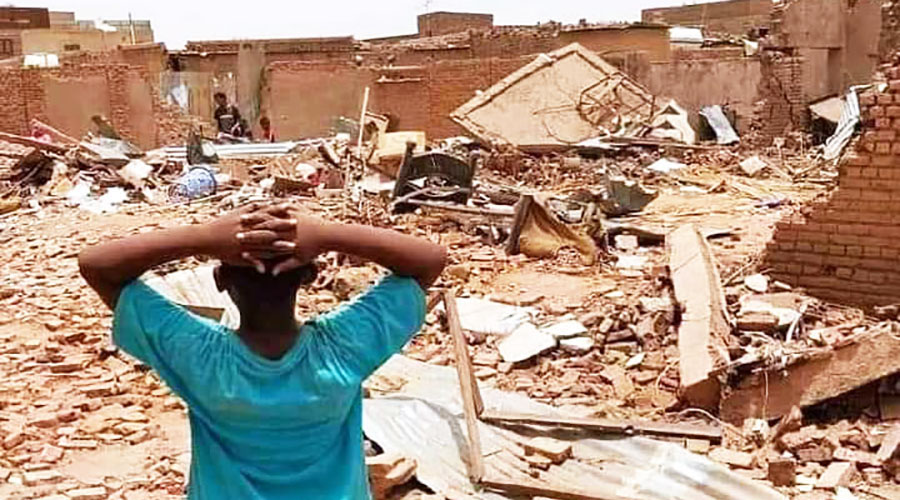
Why Aren’t People Returning to Khartoum?
Dr. Nahed Mohamed Al-Hassan
An Open Letter to the Leadership of the Sudanese Army
This letter is not written from a position of hostility, nor from fear, nor from outside the homeland. It is written from a position of listening to what people themselves have said when they were asked: Why aren’t you returning to Khartoum?
The answers collected do not belong to one political current, nor to a single social class, nor to a specific geographic area. Some have returned, others hesitated, and many refused. What stands out is that the reasons were repeated in different wording but with the same tone: realistic, exhausted, and free of slogans. That is precisely what deserves to be heard.
First: People are not rejecting return… they are rejecting risking their lives.
Many said clearly: “Going back isn’t just bravery… going back is a responsibility.”
In social psychology, when a society is exposed to prolonged collective trauma (bombardment, displacement, loss, death, continuous threat), return is not read emotionally but evaluated rationally:
Can one sleep in peace?
Is there a minimum level of law?
Can children, women, and the elderly be protected?
People did not leave Khartoum out of hatred for it, but to preserve their lives and what remains of themselves. Returning amid a war that has not stopped—politically or morally—is understood as a deliberate exposure to danger, not as a patriotic duty.
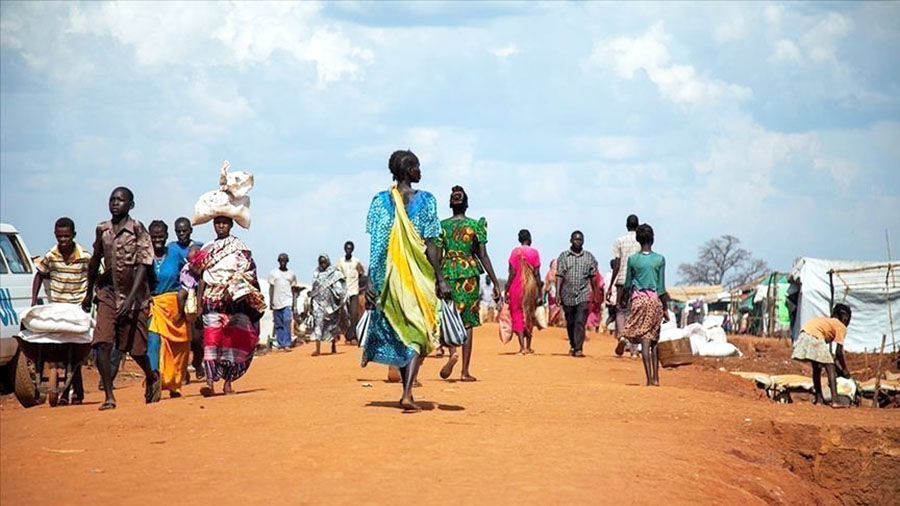
Second: The problem is not nostalgia… it is the absence of the state.
One phrase was repeated in many forms:
Absence of the state – law of the jungle – chaos – spread of weapons – multiple loyalties.
Here we are not only talking about a lack of services, but about the absence of a security system:
No trusted judiciary, no effective police, no accountability, weapons out of control in the hands of ideological and tribal groups.
In such a context, the citizen does not feel they are returning to a city, but to a vacuum of sovereignty. This explains why some said: “Not being able to sleep safely is reason enough not to return.”
Third: The war has not ended, even if its sound has changed.
Despite fluctuations in the intensity of fighting, people pick up political messages, not only military ones. The discourse of continuing the war, expanding mobilization, and the spread of new militias all create a collective certainty that this war has not been politically closed—it is multiplying.
In comparative history, societies return in large numbers after wars only when they feel that violence has lost its legitimacy, not when it merely recedes temporarily.
Fourth: Khartoum today is not a livable environment.
People did not embellish reality. They spoke frankly about the absence of healthcare, education, electricity, jobs, water, the spread of epidemics, and destroyed infrastructure.
One said simply: “The city is not fit for human habitation.” Another said: “We returned… and hardship killed us.”
These are not political positions as much as they are calculations of survival.
Fifth: The economy and daily life decide the matter.
Even those who said the problem “is not political” were clear: life outside Khartoum is easier, healthcare services are available, the cost of living is clearer, and the ability to plan is possible. This is natural—people do not choose cities by slogans, but by the ability to manage daily life with dignity.
Sixth: Children, women, and the elderly… are the measure of the decision.
Many testimonies mentioned children who lived through the terror of shelling, injuries, chronic illnesses without care; women subjected to systematic violence; elderly people who cannot endure a “second displacement experience.”
Here it must be said clearly: a society that cannot protect its weakest groups cannot convince its people to return, no matter how loud the speeches are.
Seventh: Khartoum has changed socially—and that frightens people.
Some answers were painful: “It’s not the Khartoum we know, nor the neighbors we know.”
War does not only destroy buildings; it changes relationships, charges emotions, and tears apart the social fabric. This kind of change is not repaired by agreements alone; it requires time, trust, work, and justice.
Conclusion of the Letter
People are not punishing Khartoum by not returning, nor are they maneuvering politically. They are saying, with a mature collective awareness:
We are not returning because the conditions for safe life are not yet available.
We are not returning because the state has not resumed its role as a guarantor of rights, not as a party to polarization.
We are not returning because weapons are outside the law and violent rhetoric is multiplying.
We are not returning because the war has not been politically closed, nor has its horizon been honestly declared.
When some said, “We will return when return means life, not a gamble in the name of nostalgia,” they summed up the entire position.
A Final Word to the Army Leadership
Cities are not reclaimed by force alone, nor do they thrive on statements. You will not be able to convince their people to return unless they feel that:
The law is above everyone.
Weapons are under the control of the state, not ideology.
Justice is possible.
War is a dead end, not an open destiny.
Only then will you not need to call on people to return. They will return because the city will once again be worthy of life.
Summary of Citizens’ Testimonies for Research: Why Aren’t People Returning to Khartoum?
Based on dozens of direct testimonies, the reasons for not returning can be summarized as follows:
Lack of security: spread of weapons and militias, absence of law, and constant fear of renewed fighting.
Absence of the state: loss of trust in security and judicial institutions, and fear of arrest or persecution because of opinion.
Collapse of services: near-total absence of electricity and water, a collapsed health system, shortage of medicine, and spread of epidemics.
Paralysis of livelihoods: lack of job opportunities, halted markets and banks, suffocating inflation without income.
Cost of return: inability—financially and psychologically—to rebuild, especially for the elderly, the sick, and people with disabilities.
Children and education: refusal to expose children to new terror, and the absence of a safe educational environment.
Social fragmentation: Khartoum is no longer as it was; loss of neighbors, support networks, and social fabric.
Trust gap: widespread skepticism toward the discourse of “stability” and calls for return that are not preceded by genuine preparation of the city.
Final Conclusion
Not returning is a responsible decision that does not reflect fear or a lack of patriotism, but rather a realistic reading of risks.
We return when return means life, not a gamble in the name of nostalgia.
