
Updated: 31 October 2026 16:16:18
Two Men Capture the Tragedy of Sudan’s War in the Price of Milk and Bread
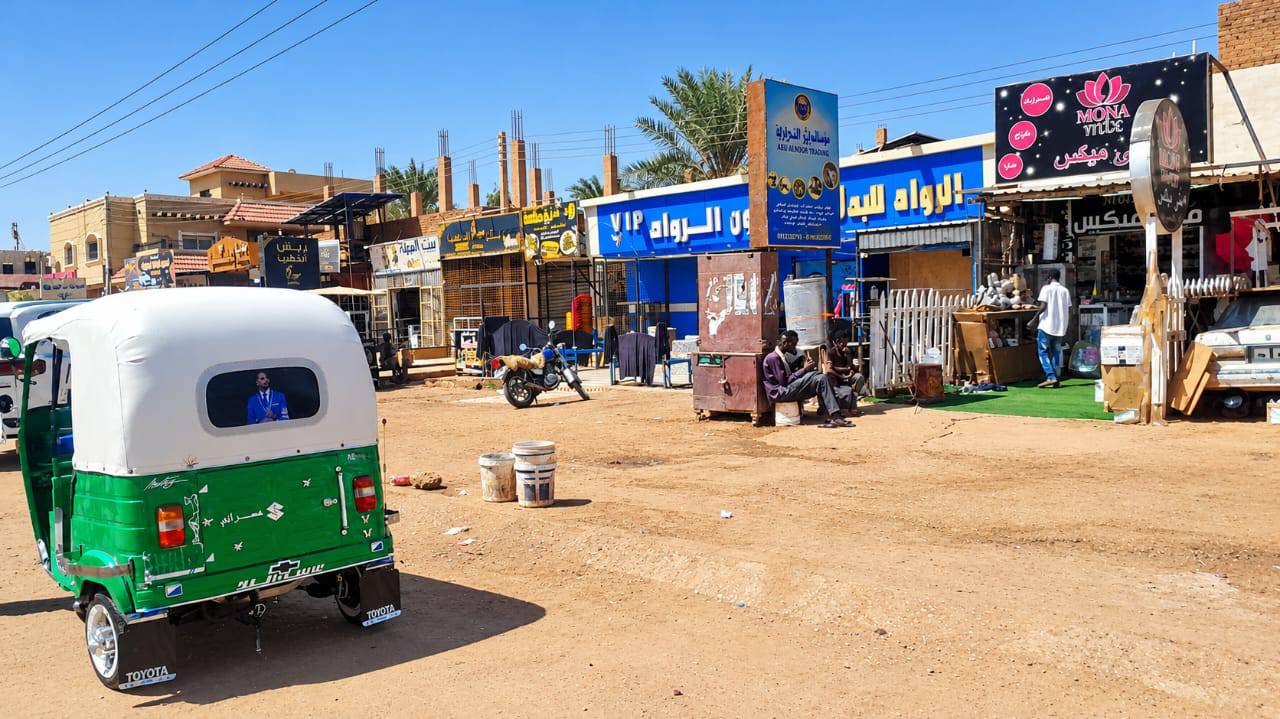
Two men and I, the third passenger, were travelling in a small rickshaw from the central market in Shambat to Al-Halfaya. It was a short journey, but one that captured something of the everyday hardships imposed by the war in Sudan.
There was no discussion of politics, battles or news from the front lines. The two men seemed preoccupied with concerns more immediate than another conversation about the war: the price of milk, a loaf of bread, medical expenses and what remained of peoples ability to make ends meet.
The first man spoke about the price of fresh milk and how it had become a burden he could no longer afford, at nearly five pounds per pound of milk, particularly given his familys daily needs.
He described, in painstaking detail, how prices had changed and how buying milk had become a decision requiring careful calculations, despite being a basic food item that families, especially those with children, could hardly do without.
The second man interrupted him, turning the conversation to bread and the difficulties of providing it for his family. Two pieces, sometimes just one, for a pound.
Together, they discussed food expenses and how providing the days meals had become an exhausting exercise, extending well beyond the purchase of bread to whatever other food items could still be afforded.
One of them laughed bitterly at their circumstances, remarking that a quarter measure of flour for making kisra, Sudans traditional flatbread, had become more economical by comparison with bread, even though its price had reached 60 pounds.
His laughter was not an expression of amusement but an attempt to ease the weight of a reality in which there seemed little reason for optimism.
The other man was more concerned about what might happen if a member of his family fell ill.
Looking ahead at the road, he said "I pray that God does not test us with illness."
He added that the cost of malaria testing and treatment now exceeded 130 pounds. He wondered how much other illnesses would cost and how a family could possibly cope if someone needed more than a basic examination or medication.
That remark changed the nature of the conversation. It was no longer simply about food prices, but about the fear of illness and the possibility that it could bring another tragedy upon a family already struggling to meet its most basic needs.
Both men agreed that life could not continue this way. Prices were rising relentlessly, purchasing power was declining, and even essential food items were becoming increasingly scarce.
They needed no economic reports or official statistics to explain what was happening. The figures they encountered in the markets, and the things they were forced to give up each day, told the story of the crisis.
A War That Has Reached Peoples Tables
Since war erupted in Sudan on 15 April 2023, the economic crisis has become far more than a decline in income or a rise in prices. It has become a direct threat to millions of Sudanese peoples ability to secure food, medicine, shelter and other necessities of life.
The war has disrupted large sectors of the economy, destroyed production and service facilities, and interrupted trade and transport. Widespread displacement has forced families to abandon their homes and sources of income and seek safety elsewhere, often without sufficient resources.
In cities receiving displaced people, pressure on markets and public services has increased, while employment opportunities and sources of income have diminished. Families have been left relying on whatever savings remain, assistance from relatives or casual work that offers little certainty about tomorrow.
In northern Khartoum, where the consequences of war are compounded by the rising cost of living, the crisis is evident in markets and neighbourhoods.
Someone who once bought household necessities as a matter of routine must now reconsider the shopping list, remove some items, postpone others and perhaps settle for only the bare essentials.
The question is no longer: What shall we buy today? It is: What can we do without?
This calculation is repeated in households, affecting the quality of food, childrens needs and families ability to eat regularly.
As prices continue to rise, choices become increasingly limited, especially for people on fixed incomes, daily wage workers and those who have lost their jobs because of the war.
Bread and Milk: The Everyday Arithmetic of Hardship
In the two mens conversation, milk and bread were more than food items. They had become measures of a familys ability to carry on and symbols of how profoundly everyday life had changed.
Milk, once a regular household necessity, had become another burden on the family budget. Bread, long one of the simplest staples of the Sudanese table, now required calculations extending far beyond its nutritional value.
The first man said the problem was not simply rising prices, but the failure of income to keep pace with them.
As living costs increased, purchasing power declined, and the money people earned from their work became worth less than it had been before the war.
The second man added that a family could not simply stop eating or postpone its childrens needs. Yet it had no additional resources to absorb the relentless increases in prices.
Here, the humanitarian crisis reveals itself in its simplest form: a family struggling to put food on the table, forced to make difficult choices between essential needs and the limited means available to meet them.
And the consequences extend far beyond food.
Medical treatment, transport, electricity, water and school supplies all compete for the same dwindling household resources. As income falls, meeting one need increasingly means sacrificing another.
Fear of Illness: When Medical Treatment Becomes a Luxury
The second mans remarks about malaria perhaps revealed most clearly the fragility of peoples circumstances.
When he spoke of testing and treatment costing more than 130 pounds, the figure was more than a financial amount. It raised a larger question: What happens when someone develops an illness requiring more expensive treatment?
Amid the war, many families have found it increasingly difficult to access healthcare because of rising treatment costs, shortages of medicines, the disruption of health facilities and the dangers of travelling through conflict-affected areas.
As diseases associated with deteriorating public health conditions spread, fear of illness has become part of everyday life.
Families unable to provide food regularly are also struggling to afford medical care, particularly for conditions requiring tests, follow-up appointments or continuous medication.
For the two men, illness did not seem like a remote possibility. It was another threat added to a long list of anxieties.
The second mans prayer that God spare his family from illness expressed a fear extending beyond his own circumstances to the possibility that an entire household could be pushed into crisis by a medical emergency.
Nothing in their conversation suggested that either expected conditions to improve soon.
Both appeared to recognise that as long as the war continued, economic pressures would persist, prices might rise further and peoples capacity to withstand them would continue to erode.
Lives Suspended Between the Market and Home
The rickshaw continued towards Al-Halfaya. The two men kept talking while I listened, as the city around us appeared weighed down by the routines of life that must continue despite the war.
The journey was not long, but the conversation revealed something of the Sudanese peoples tragedy, far removed from battlefield scenes and reports of shelling.
War is visible not only in the destruction it leaves behind, but also in the helplessness people experience as they struggle to carry on with their lives.
Towards the end of the conversation, the two men returned to the same conclusion: life could not continue like this.
It was not an organised protest or a political statement. It was the conclusion drawn from the everyday experiences of two citizens trying to provide food and medical care for their families in a country exhausted by war, where peoples ability to cope with living costs has steadily diminished.
By the time the rickshaw reached Al-Halfaya, the conversation had ended, but the questions remained.
How can a family cope with rising prices when its income does not increase? How can someone afford both food and medical treatment? And what lies ahead for those who have exhausted their savings and have nothing left to give up?
In Sudan, war is no longer merely a struggle over territory or political power. It has become a daily test of peoples ability to survive.
Of everything that could be said about the countrys economic and humanitarian crisis, perhaps that short rickshaw journey from Shambats central market to Al-Halfaya tells the whole story: two men discussing milk, bread and malaria, and a third listening as everyday life slowly deteriorates under the weight of war.
It is a tragedy that needs no dramatic scenes to be told.
It is enough to hear a man praying that he does not fall ill, because he knows that, in wartime, sickness may mean more than physical suffering. It may mark the beginning of a hardship from which his family cannot escape.
