
Updated: 27 October 2026 18:09:50
Blue Nile: Expanding Clashes, Displacement and Human Rights Violations
Moatinoon
Sudan’s Blue Nile State is witnessing a rapid shift in the nature of the country’s armed conflict, as fighting spreads to new areas and its geographical scope expands, making the state one of the country’s most prominent security and humanitarian hotspots. The escalation comes amid a broader shift in the centre of military operations towards the Kordofan and Blue Nile regions in 2026, following a decline in the intensity of fighting in some parts of central Sudan and Khartoum. Recent estimates indicate a sharp rise in violence in Blue Nile during the first quarter of the year, while the prospect of fighting spreading to new areas, including Damazin and the strategic corridors surrounding it, has become a growing concern.
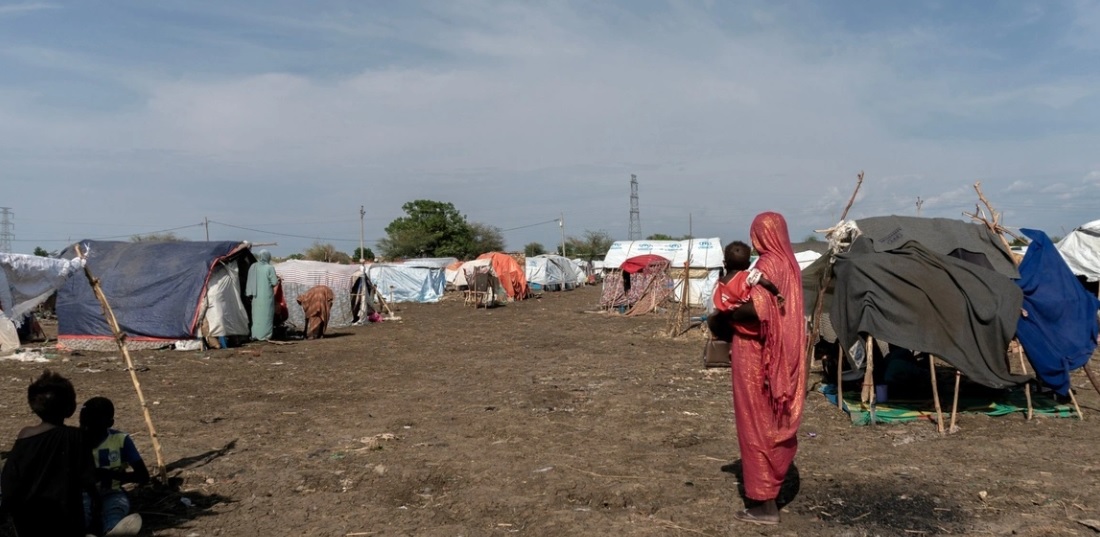
The consequences of the escalation extend beyond direct loss of life and property to undermine the basic conditions necessary for civilian life. Attacks and clashes disrupt markets, transport routes, healthcare and education services, and repeatedly force residents to flee their homes. Protection reports confirm that the escalation in fighting since late March has significantly worsened conditions for civilians, particularly at displacement sites suffering from overcrowding, inadequate shelter, and shortages of water and sanitation services. These conditions increase the risks of violence and exploitation, especially for women and children.
Displacement patterns reveal the scale of the transformation brought about by the fighting. The International Organization for Migration (IOM) estimated that approximately 99,277 people, or around 19,500 households, were displaced within Blue Nile State between 11 January and 23 August 2026, representing a 66% increase compared with the previous update. Geissan, Kurmuk and Bau localities were the main areas of origin, while Damazin received the largest number of displaced people. Notably, 58% of those displaced sought refuge in informal gathering sites, 33% stayed with host families, and the remainder were accommodated in schools and public buildings. Women account for approximately 56% of the displaced population, while nearly half are under the age of 18.
These figures indicate that displacement is no longer merely a temporary consequence of military operations; it has become a factor reshaping the state’s social and economic landscape. Host communities, already struggling with limited resources and services, face additional pressure on food, water, healthcare and housing. Meanwhile, displaced people arrive in host areas having lost their sources of income and agricultural assets, increasing their dependence on aid and heightening the risks of poverty, malnutrition and exploitation.
Gaps in the humanitarian response are becoming more alarming as the crisis escalates. Protection actors have warned that inadequate shelter, water and sanitation, weak coordination at displacement sites, and the approaching rainy season could further exacerbate the crisis. More broadly, Sudan’s humanitarian response continues to face a severe funding shortfall. By August, only 37% of the United Nations Population Fund’s (UNFPA) 129.2 million appeal had been funded, limiting the capacity to sustain reproductive health services and responses to gender-based violence.
Women and girls bear a disproportionate share of the risks arising from the combined effects of war, displacement and poverty. In unsafe displacement sites, the risks of harassment and sexual violence increase, while the collapse of healthcare services exposes pregnant women and survivors of violence to additional dangers. In Blue Nile in particular, midwives and healthcare workers have been forced to provide childbirth and emergency care under extremely difficult conditions. Meanwhile, fighting, damage to infrastructure and flooding have made access to essential healthcare virtually impossible in some areas.
As needs continue to grow, women’s organisations and civic space are playing an increasingly important role as a community-based line of defence. Women-led organisations, emergency response rooms and local initiatives do more than provide assistance: they also conduct community monitoring, protect women, refer people to services, document violations and support social cohesion. Recent studies indicate that these organisations enjoy community trust and have access to populations that international organisations often find difficult to reach. However, they face severe funding shortages as well as security and administrative restrictions. More than 91% of the women’s organisations surveyed in an earlier assessment reported having to suspend activities or lay off staff because of a lack of resources.
Preserving civic space in Blue Nile is especially important because the continuation of local initiatives is not a substitute for the state or international humanitarian organisations. Rather, these initiatives provide an essential link between people’s actual needs and official and international responses. Civil society initiatives in the state have also begun connecting relief efforts with the promotion of social peace, drawing on the region’s cultural and ethnic diversity.
Addressing the Blue Nile crisis should therefore go beyond increasing aid after each new wave of displacement. It requires an integrated strategy centred on protecting civilians, ensuring humanitarian access, supporting essential services in areas of displacement and host communities, providing direct and flexible funding to local and women-led organisations, and protecting civilian workers from intimidation and threats.
The current dynamics suggest that continued fighting will generate further displacement, displacement will place greater pressure on services, and funding shortages will weaken the local community’s capacity to respond. Breaking this cycle requires efforts to halt the fighting alongside renewed support for civic space and women’s leadership as essential components of civilian protection, community resilience and peacebuilding in Blue Nile State.
