
Updated: 26 October 2026 14:42:32
Atbara Under Pressure from Rising Prices: Protests Recall the Spark of Sudan’s December Revolution
Moatinoon
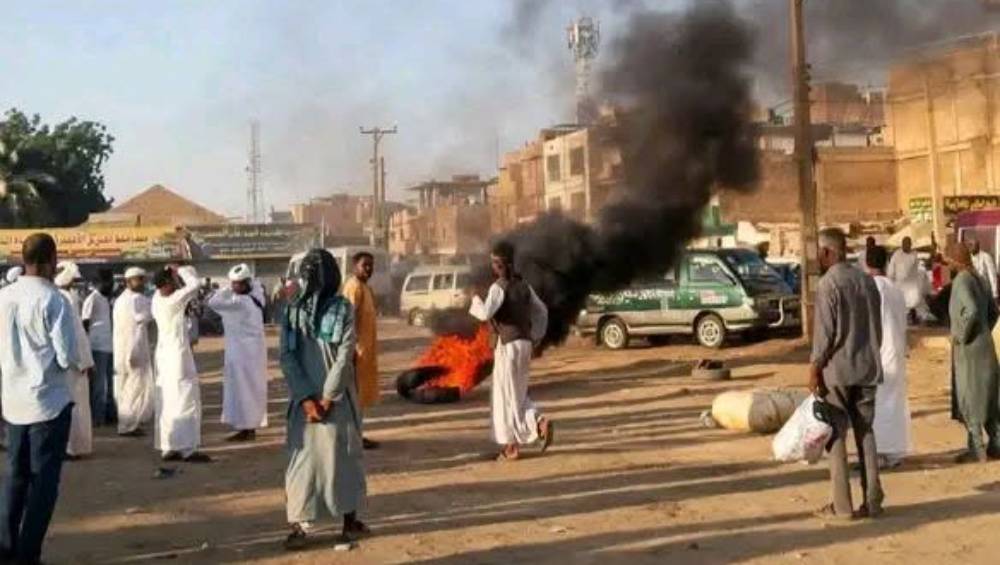
Residents of Atbara, in Sudan’s River Nile State, took to the streets today to protest against rising prices and deteriorating living conditions, amid a deepening economic crisis that has increased the hardship faced by Sudanese families as the war continues, purchasing power declines and the cost of essential services rises.
The protests come amid growing complaints about soaring prices of consumer goods, deteriorating public transport services and rising fares, alongside increases in school fees that have placed an additional burden on families and threaten some households’ ability to keep their children in education.
In a statement, the Atbara Resistance Committees Coordination said the deterioration in living conditions was linked to the continuing war and the consequences of the 25 October coup, arguing that ordinary citizens were bearing the economic and political costs of the ongoing crisis. It called on both parties to the conflict to end the war immediately, put the interests of the Sudanese people first, facilitate humanitarian access and work towards a civilian political settlement that would deliver freedom, peace and justice.
The coordination committee reaffirmed its support for citizens’ right to peacefully express their opposition to rising prices and worsening living conditions, stressing the legitimacy of demands for a dignified life, peace and justice.
Transport and Education: Additional Burdens on Families
The cost-of-living crisis in Atbara extends beyond rising food prices into everyday life, with increasing transport costs and school-related expenses at a time when families are becoming less able to meet their basic needs.
Transport has become one of the most pressing daily challenges. Higher fares and a shortage of available vehicles have increased the burden on workers and students, making journeys to workplaces, markets and educational institutions more expensive. Rising transport costs have also affected commercial activity, adding further pressure to the prices of goods and services.
On 25 October, press reports indicated that the passenger fare between Atbara and Ed Damer had risen to 7,000 Sudanese pounds, amid complaints of fuel shortages and disrupted supplies. The increase illustrates the financial pressures facing residents of River Nile State, particularly low-income households forced to devote a growing share of their earnings to daily travel.
Education has been similarly affected. School fees have risen alongside the costs of transport, uniforms, textbooks and educational supplies. These expenses are forcing families to make difficult choices between meeting essential living costs and keeping their children in school, amid concerns about a widening educational divide based on household income.
These pressures have been compounded by declining employment opportunities and the continuing war, which has weakened sources of income and disrupted economic activity across the country.
Market Traders’ Strike: Rising Costs and Levies at the Centre of Protests
Atbara’s markets have previously witnessed protests by traders against fees, taxes and local levies, reflecting the widening impact of the economic crisis on business owners and consumers alike.
During August and September, shops in the city closed and traders went on strike in protest against charges imposed on commercial activities, demanding a review of the fees and a reduction in the financial burden on businesses.
These developments reveal a complex crisis. Traders face rising operating costs, increased charges and declining consumer purchasing power, while customers bear the consequences of higher prices and falling incomes. Against this backdrop, markets have become places where economic grievances intersect with demands concerning public policy and the management of local resources.
Continued public discontent raises questions about the authorities’ ability to contain the crisis by reviewing levies, improving services and easing the financial burden on residents, particularly as economic activity declines and basic needs continue to grow.
Atbara and the Memory of the December Revolution
The protests in Atbara carry significance beyond their immediate economic demands, given the city’s central place in the outbreak of Sudan’s December 2018 Revolution.
On 19 December 2018, residents took to the streets to protest against rising bread prices and deteriorating economic conditions. The demonstrations subsequently spread to other Sudanese cities and developed into a broad political movement against the regime of Omar al-Bashir.
The economic crisis, rising bread prices and fuel shortages were among the main factors that fuelled public anger at the time. Demands initially centred on living conditions evolved into a wider movement calling for freedom, peace, justice and political change.
Nearly eight years later, economic hardship has once again become a central issue driving protests in the same city, but under far more complex circumstances shaped by the war that began on 15 April 2023. The conflict has brought economic deterioration, disruption to productive sectors, instability in markets and public services, and a widening circle of poverty and humanitarian need.
The similarities between the economic grievances behind the protests do not necessarily mean that the political events of 2018 will be repeated. They do, however, highlight the continuing relationship between social stability and people’s ability to meet their basic needs, as well as the risks of overlooking economic grievances while the war continues.
The current protests present the authorities with challenges involving the cost of living, improvements to transport services, a review of fees that burden traders and families, and ensuring that children can continue their education. They also underscore the need to provide an environment in which citizens can peacefully express their demands.
As the crisis deepens, the Atbara Resistance Committees Coordination’s calls for an end to the war, unhindered humanitarian access and a civilian political settlement remain part of a broader picture in which economic demands intersect with Sudanese aspirations for peace, justice and a dignified life.
