
Updated: 22 October 2026 16:54:01
Sudan’s Economy: Conflicting Policies and the Dollar’s Surge to 10,000 Pounds
Moatinoon
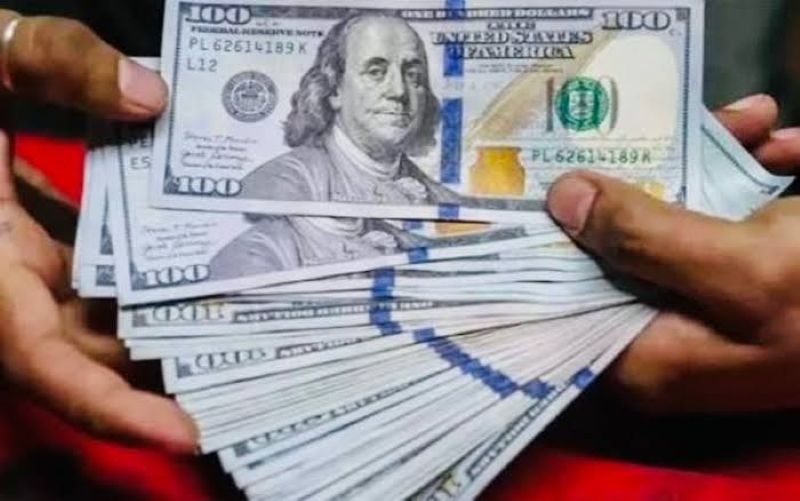
Sudan’s economy has entered a new phase of acute deterioration, with the US dollar reaching an unprecedented level of around 10,000 Sudanese pounds on the parallel market. The collapse reflects deep-seated monetary, fiscal and productive imbalances that have plagued the country since the outbreak of war. According to recent data, the Sudanese pound has lost around 60% of its value against the dollar since the war began. Meanwhile, the parallel-market exchange rate rose from around 8,000 to 10,000 pounds within a short period, while the official rate remained far removed from market realities.
The collapse cannot be viewed simply as a temporary fluctuation in the currency market. The latest surge is the result of a prolonged accumulation of factors, foremost among them the war, contracting production, declining exports, the loss of a substantial portion of the country’s foreign-exchange earnings, the expansion of the parallel market, and conflicting economic policies and multiple centres of decision-making.
Import Decision Exposes Economic Policy Crisis
Against this backdrop, came the latest directives by Sovereignty Council Chairman General Abdel Fattah al-Burhan, following his summons of the finance and trade ministers. The directives lifted previous restrictions on food imports and allowed vegetables, fruit, flour, rice, pulses and cooking oils to enter the country duty-free, while opening imports to companies and individuals without restrictions.
The decision runs almost directly counter to the policy pursued by the government in recent months, when it moved to restrict imports of dozens of goods in an effort to reduce demand for foreign currency, protect foreign-exchange reserves and support domestic production. In April, Prime Minister Kamil Idris announced measures to regulate imports and balance imports with exports, while stressing that essential goods and production inputs would continue to flow into the country.
The restrictions announced earlier also covered food, consumer and industrial goods, in an attempt to curb the import bill and ease pressure on the foreign-exchange market. However, the policy faced criticism from importers, who argued that the bans had distorted the market, driven up prices and reduced government revenue.
The problem is not the principle of allowing food imports. Increasing supply can be necessary to curb inflation and ensure that markets are adequately stocked. The problem lies in the absence of a coherent and consistent economic policy: a decision restricts imports today, then another opens the door wide tomorrow, without a clear strategy for managing foreign currency, protecting domestic production or setting import priorities.
Between Import Bans and Open Imports: Who Is Managing the Economy?
The contradiction between the two decisions raises a fundamental question about economic management during wartime: does the government have a unified economic policy, or are decisions being made separately in response to market pressures and the cost-of-living crisis?
The government has said that reducing imports is intended to ease pressure on the dollar. Yet opening food imports without customs duties or restrictions, at a time when Sudan is suffering from a severe shortage of foreign currency, will inevitably increase potential demand for foreign exchange unless it is matched by a corresponding rise in exports or other foreign-currency inflows.
Official bodies themselves had previously warned that exchange-rate stability depends on comprehensive economic reform, regulation of the gold sector, increased exports, ensuring that export earnings are repatriated, stimulating domestic production and reducing the import bill.
Opening imports without addressing the underlying foreign-exchange crisis could therefore produce the opposite result: greater demand for dollars, further pressure on the pound, and another increase in the prices of both imported and locally produced goods.
The Customs Dollar: An Indirect Tax on Citizens
One of the most serious developments has been the repeated increase in the customs dollar. Authorities raised its rate several times in 2026. The latest announced adjustment, in October, increased it by 29.5% to more than 5,600 pounds, coinciding with the dollar reaching record levels on the parallel market.
Earlier, the customs dollar rose from 3,960 to 4,346 pounds in September, an increase of 9% and the fourth adjustment of the year.
The overall direction is clear from this succession of increases: the state is attempting to keep pace with the pound’s depreciation by raising the exchange rate used to calculate customs duties. The problem is that, while this policy may increase government revenue in nominal terms, it also raises the cost of imported goods, production inputs, spare parts and everything else that depends on supplies from abroad.
This exposes a contradiction: the government raises the customs dollar to increase revenue, exempts some food items from duties to ease price pressures, and simultaneously opens the door to imports. These measures pull in different directions unless they form part of a comprehensive and publicly announced economic programme.
Citizens Bear the Cost of the Collapse
The most damaging effects of these policies are not reflected primarily in Finance Ministry or customs data, but in markets and in citizens’ purchasing power.
The pound’s decline from around 600 per dollar before the war to approximately 10,000 today means that the currency has lost most of its value, while incomes have not risen at a comparable pace. Recent reports have shown sharp increases in the prices of essential goods, while some traders have reported substantial declines in sales as consumers struggle to afford the new prices.
The dollar’s rise does not affect only goods imported directly. Its impact spreads to locally produced goods through the cost of fuel, transport, spare parts, raw materials, packaging and services. Inflation thus becomes a self-reinforcing cycle: the weaker pound raises import costs; higher import costs push up prices; rising prices increase demand for dollars as people seek to protect their purchasing power, placing further pressure on the pound.
The War Economy and the Erosion of Resources
The currency collapse cannot be separated from the war itself. The conflict has disrupted broad sectors of agriculture, industry and trade, while fragmenting the country’s production and export networks along geographic and economic lines. Reports indicate that a substantial share of resources from gold, livestock and cash crops has fallen outside the direct economic control of the central authorities, while the state’s capacity to collect revenue and secure foreign currency has weakened.
Gold smuggling, meanwhile, deprives the formal banking system of one of Sudan’s most important sources of foreign exchange—a resource that could otherwise help support the currency and finance essential imports.
The Problem Is Bigger Than the Dollar
The dollar’s crossing of the 10,000-pound threshold is more than a record in the foreign-exchange market. It signals a profound crisis of confidence in the economy and in monetary and fiscal policy.
The Sovereignty Council chairman’s decision to summon the finance and trade ministers and lift previous restrictions on food imports also exposes clear inconsistencies in the government’s approach to managing the crisis. This alone does not establish that conflicts of interest exist. Economically, however, the decision points to weak coordination among state institutions and a shift from trying to curb demand for dollars to addressing shortages of goods and rising prices.
The fundamental problem is that Sudan cannot escape its currency crisis through import decisions alone, whether by banning or liberalising imports. What is needed is a comprehensive policy that begins by stemming the outflow of foreign currency, regulating the gold market, ensuring that export earnings enter the banking system, restoring agricultural and industrial production, rationalising public spending, coordinating economic decision-making and providing the private sector with stable rules on which it can rely.
The market needs a policy it can trust more than it needs a new decision every week.
Without such a policy, raising the customs dollar will not halt the pound’s collapse, import bans will not bring prices down, and opening imports will not create more dollars. Ultimately, citizens will continue to bear the cost of the absence of a unified economic policy: through higher prices, shortages of goods, the erosion of savings and the declining value of their incomes.
The dollar reaching 10,000 pounds should serve as an alarm bell extending beyond the Finance Ministry, the Central Bank and the Ministry of Trade. It signals that Sudan’s economy has entered a zone in which further piecemeal policies are no longer sustainable, and that continuing to manage the economy through reactive measures could accelerate the currency collapse beyond the capacity of the state and society to contain it.
