
Updated: 20 October 2026 13:28:32
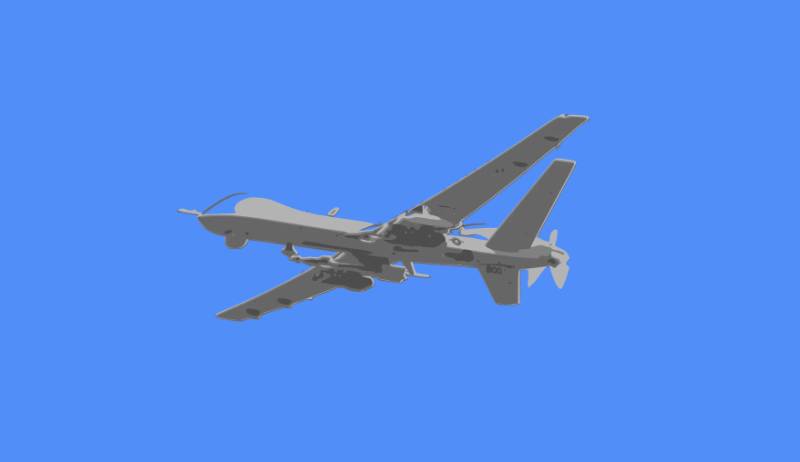
Anxiety and Fear as Drones Return to the Skies Over Khartoum
Moatinoon
The sound of drones and explosions has returned to the skies over Sudan’s capital, Khartoum, in recent days, reviving the fear and anxiety that have accompanied the war since it erupted. The renewed activity comes as some displaced families and refugees have begun returning gradually to the capital in the hope of rebuilding their lives and restoring a sense of normality.
Over the past three days, areas of Khartoum have come under drone attacks, concentrated mainly around Khartoum International Airport, according to local accounts. The attacks forced a suspension of air traffic for several hours before operations resumed, according to public statements by the airport director.
The attacks were not confined to the airport and its facilities. They also extended to residential neighbourhoods in eastern Khartoum, heightening fears among residents who had begun to regain some sense of security after a prolonged period of displacement.
Children Killed in Residential Home
One of the most alarming incidents involved a drone strike on a civilian’s home in an area of eastern Khartoum. According to local accounts, the attack killed three children aged between two and six.
The incident has renewed concerns that the scope of the attacks may be expanding beyond military targets and critical infrastructure to residential areas, leaving civilians, particularly children, exposed to danger even inside their homes.
In the East Nile area of Khartoum North, eyewitnesses reported hearing and seeing drones flying over the area before one of them crashed, adding to the tension among residents.
These developments come as families returning to Khartoum attempt to rebuild their lives, reopen their homes, send their children back to school and restore their sources of income and access to essential services disrupted by the war.
Dispute Over Explosions in Kadro
In northern Khartoum, explosions occurred on Sunday during the daytime in the Kadro military area. The Sudanese Armed Forces denied that they had been caused by drone strikes.
In a press statement, the military spokesperson said the explosions resulted from an electrical short circuit in warehouses belonging to the authorities. However, eyewitnesses in the neighbouring Al-Samarab district reported seeing a drone flying over the area and circulated a video purporting to document the incident, according to local accounts.
The discrepancy between the official account and residents’ reports highlights the difficulty of independently verifying some security incidents in the capital, particularly amid ongoing military operations and the circulation of information from multiple sources on social media.
Returning Amid Fear
As Sudanese families begin returning to Khartoum after spending months or years in displacement within Sudan or seeking refuge abroad, the sound of drones has become a new source of anxiety.
Ihsan Al-Tayeb, a resident of the Al-Darushab neighbourhood, said she had returned from Cairo about two months ago as part of the voluntary return movement. She had hoped that her family would be able to resume a normal life.
However, she said the return of drones had made her reconsider her decision, particularly because her children attend a private school some distance from their home.
She added that continued attacks could force her to return to Cairo, “at any cost”, out of fear that her children might become victims of attacks whose location and timing her family could not predict.
Ihsan’s concerns reflect a broader dilemma facing many families: whether to return to a city lacking security and essential services or remain displaced abroad, with the financial, psychological and social burdens that entails.
Warnings to Residents
As concerns have grown, the Bahri Observatory for Human Rights issued a statement warning residents about the dangers posed by drones and urging them to take precautionary measures. These included staying away from open spaces, remaining inside their homes and keeping away from windows, particularly glass windows.
Othman Fadl, who lives in the United Arab Emirates, said he had contacted his extended family in a Khartoum neighbourhood near the airport to check on their safety. However, he was hesitant to warn them to stay away from windows or remain indoors whenever they heard the sound of ground-based air defences, fearing that doing so might cause panic among them. He added that he remained deeply concerned about the situation in Khartoum.
Such warnings are particularly important because of the difficulty of determining drone flight paths or identifying the targets they may strike. As a result, residents remain on constant alert whenever they hear drones overhead or an explosion nearby.
For families who have only recently returned to Khartoum, security warnings add another burden to an already long list of daily challenges, from securing food, water and electricity to protecting their children and finding ways to keep education and work going.
Collapsing Services and Harsh Living Conditions
Security concerns are not Khartoum’s only problem. The capital is facing severe shortages of water and electricity, alongside rising prices for essential goods and declining purchasing power.
Despite these conditions, residents are trying to restore as much of daily life as possible, reopening markets and shops, sending children back to school and returning to neighbourhoods they were forced to leave at different stages of the war.
The return of drones, however, adds another layer of uncertainty to residents’ lives. A family that has only just begun repairing its home, enrolling its children in school or restoring a source of income may once again have to confront a fundamental question: can it remain in the capital if the attacks intensify?
Hope Amid Continuing Risks
Despite their fears, many Khartoum residents remain determined to stay, driven by their desire to return to their homes and rebuild their lives, as well as their hope that improved security will pave the way for more displaced people and refugees to come back.
Yet continued drone strikes, if they expand to residential areas, could undermine these efforts and force some families back to square one.
As Khartoum struggles to recover from the effects of war, it faces a series of interconnected challenges: fragile security, deteriorating services, rising prices, infrastructure in need of rehabilitation, and residents who want to return but fear that doing so may expose them to further suffering.
As drones continue to fly over the capital, their sound means far more to residents than a passing noise. It is a daily reminder that the war has not entirely left the city and that the road to stability remains fraught with danger.
While families cling to the hope of improved security and economic conditions, one question remains particularly urgent: can Khartoum provide the minimum level of safety needed for returning families to stay, or will the return of drones trigger another wave of displacement as residents seek safer places of refuge?
