
Updated: 19 October 2026 18:42:23
Double Displacement: Six Years in Search of a Home
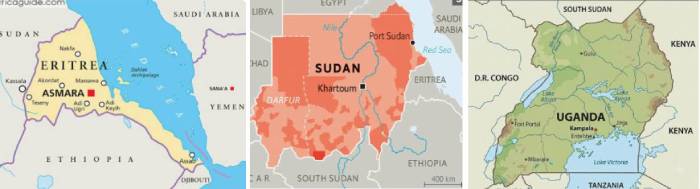
At a popular cafe in northern Kampala, Ugandas capital, I met Joanet and her sister, two Eritrean women who were looking back on a long journey that had lasted six years: from Asmara to Khartoum, then from Khartoum to South Sudan, and finally to Uganda.
They spoke about the cities they had passed through and the encounters they had along the way, bursting into laughter whenever they recalled a story or incident from their days in displacement. At first glance, the scene seemed ordinary. Yet behind their laughter lay a painful story of two young women forced to leave their homeland in search of safety, only to flee the country that had sheltered them for years when war engulfed it.
Over six years, the sisters experienced two successive episodes of forced displacement, paying a heavy price in money, effort and exhaustion, while the prospect of a stable life remained an ever-receding dream.
Their story did not begin with the war in Sudan on 15 April 2023. Years of life in exile had come before it, beginning when they left the Eritrean capital, Asmara, after living conditions in their homeland became increasingly difficult. Sudan was their new destination, and Khartoum was the city where they hoped to find an opportunity to build a more stable life.
Getting there, however, was far from easy. They crossed eastern Sudan as part of human smuggling convoys, undertaking a dangerous journey that required them to pay money and endure difficult travel conditions, with fear accompanying their first steps outside Eritrea. They knew little about what awaited them in their new country, but hoped that the distance between Asmara and Khartoum would give them the chance to begin a different life.
From Asmara to Khartoum: Six Years of Relative Stability
When they arrived in Khartoum, a new chapter of their lives began. They needed time to adjust to their surroundings, become familiar with the local community and organise their daily lives in a city they had never known before.
Over the years, the capital became part of their personal history. They grew familiar with its streets and neighbourhoods, developed attachments to the details of everyday life there, and gradually built the kind of stability they had sought since leaving Eritrea. They spent approximately six years in the city, long enough for a bond to form between people and a place, even when their arrival had initially been driven by the need to seek refuge.
Their years in Sudan were not without the difficulties associated with living abroad. Nevertheless, they managed to carry on with their lives until the morning of 15 April 2023, when war broke out in Khartoum between the Sudanese Armed Forces and the Rapid Support Forces.
That day, life in the city changed dramatically. Gunfire and explosions began to shape a new reality, making it dangerous to remain in many neighbourhoods. As the fighting spread, residents faced difficult choices, with displacement becoming the most urgent option for thousands of families.
Joanet and her sister followed developments during the first weeks of the war until leaving became unavoidable. About three months after the fighting began, they left the Al-Deim neighbourhood, where they had been living, and began searching for a safer place within Sudan.
Leaving Khartoum was not easy after the years they had spent there. The city had become part of an entire chapter of their lives, representing the effort they had invested in establishing a stable existence far from their homeland. Yet they had little room left to choose. The war that drove thousands of Sudanese people from their homes also forced the sisters to abandon the place where they had sought refuge years earlier.
This marked the beginning of another experience of displacement. Its causes and circumstances differed from those of their first journey, but it brought the same anxiety associated with leaving a familiar place and the same urgent need to find somewhere that offered at least a measure of safety.
From Al-Deim to Renk: Changing Cities, Renewed Fears
The sisters travelled to Wad Madani, hoping to continue their lives away from the fighting in Khartoum. At the time, the city had become a destination for large numbers of people fleeing the war and appeared to offer a suitable refuge within Sudan.
But developments in the conflict soon shattered that hope. After the Rapid Support Forces took control of the city, leaving became necessary once again. The question that had followed them since their departure from Khartoum returned: where could they go this time?
They left Wad Madani for Kosti, then continued towards Renk, in South Sudan. With every move, the costs of transport and accommodation increased, while the exhaustion caused by travel and waiting accumulated.
The journey required them to find money, cope with unstable conditions and make one decision after another, often with little time to think about the future. Nevertheless, they continued until they reached Renk, where their journey came to a halt for more than five months.
Those five months were more than a brief period of waiting. They followed their departure from Khartoum and their subsequent moves to Wad Madani and Kosti, as a war turned their lives upside down. They had spent considerable sums travelling between locations and endured physical and psychological exhaustion, while their next step remained uncertain.
Reaching South Sudan was not enough to secure the stability they wanted. The possibility of moving on therefore remained in their minds, despite the cost and hardship involved.
During their stay in Renk, the prospect of leaving once again became part of their daily calculations. They had left Khartoum when staying there was no longer possible, fled Wad Madani when the war reached the city, and arrived in another city in another country without any guarantees about what the coming days might bring.
After more than five months, they decided to continue their journey towards northern Uganda, entering another phase of displacement beyond Sudans borders.
From South Sudan to Kampala: Another Road to Safety
After leaving Renk, Joanet and her sister reached northern Uganda before continuing to Kampala, where they eventually settled, at least temporarily.
By the time they arrived in the capital, the sisters had travelled a long distance across national borders: from Asmara to eastern Sudan, then to Khartoum, and from there to Wad Madani, Kosti and Renk, before entering Uganda.
They carried with them memories of places where they had lived for years or months, as well as contrasting experiences of fear, waiting and attempts to adapt to unfamiliar circumstances.
At the café in northern Kampala where I met them, Joanet and her sister began recounting the details of their journey. Their conversation was not limited to painful moments. Humorous incidents also came up, and they showed a remarkable ability to recall some events with a sense of irony.
They laughed whenever they remembered something that had happened along the way, as though the passage of time had allowed them to look at certain experiences from a different perspective. Their laughter, however, did not mean that what they had endured was easy. Rather, it revealed a deeply human aspect of their ability to carry on with life despite their experiences.
The contradiction at the heart of their story is clear. When they left Eritrea six years ago, Sudan was the country they turned to in search of safety. Over time, Khartoum became a familiar place, associated with years of their lives, until the war forced them to leave.
The country that had offered them refuge thus became the starting point of a second displacement, taking them through several Sudanese cities before they crossed into South Sudan and eventually Uganda.
This was more than a change of residence. It reshaped their relationship with the future. The stability they had begun to establish in Khartoum ended with the war, and every new stage required them to find accommodation, meet the costs of daily life and adapt to different surroundings.
With every move, the life they had tried to build since leaving Asmara seemed to recede further into the distance.
A Home Deferred After Six Years on the Move
The story of Joanet and her sister reveals one dimension of repeated displacement: the experience of people forced to leave their homeland, only to find themselves later compelled to leave the country that had received them.
In their experience, borders were more than geographical lines separating countries. Each crossing involved a difficult decision, the loss of some measure of stability and another attempt to find a place where life could begin again.
Six years after leaving Eritrea, the sisters are still searching for a lasting stability they have yet to achieve. They began their journey hoping to reach a country that would offer them the chance of a better life. Instead, they found themselves caught up in a war they had not chosen and forced to abandon a place where they had spent years.
Now, in Kampala, they do not know whether the city will be their final destination or whether circumstances will once again force them to move.
Yet their story is not without hope. The laughter rising from the small café as they recall the details of their journey suggests that their experiences have not robbed them of their ability to engage with life, despite the hardships they have endured. They are trying to carry on with their daily routines and preserve some measure of peace of mind while waiting for the future to become clearer.
After everything they have been through, Joanet and her sister need fewer grand promises than the chance to live a stable life in a place where they can organise their affairs without fearing that they may suddenly have to leave.
For someone who has experienced displacement, home can mean a safe house, a familiar neighbourhood or simply a place where it is possible to plan for tomorrow without the threat of war forcing everything to change.
In Kampala, the sisters continue to tell their story, recalling the cities they passed through after leaving Asmara. Between one laugh and the next, the years of displacement remain present in their conversation, bearing witness to a journey that has yet to give them the certainty of a stable home.
They left Eritrea in search of safety, then fled Sudan when war broke out there. Now, after a long journey across borders, they face an uncertain future, holding on to a simple and clear wish: to find a place where they can live without having to leave again.
Perhaps the harshest part of displacement is not leaving ones homeland alone, but discovering, after years in exile, that the place chosen as a refuge can itself become the starting point of yet another journey.
