
Updated: 18 October 2026 11:25:49
Khartoum a Year After the Return: A City Searching for Its Soul
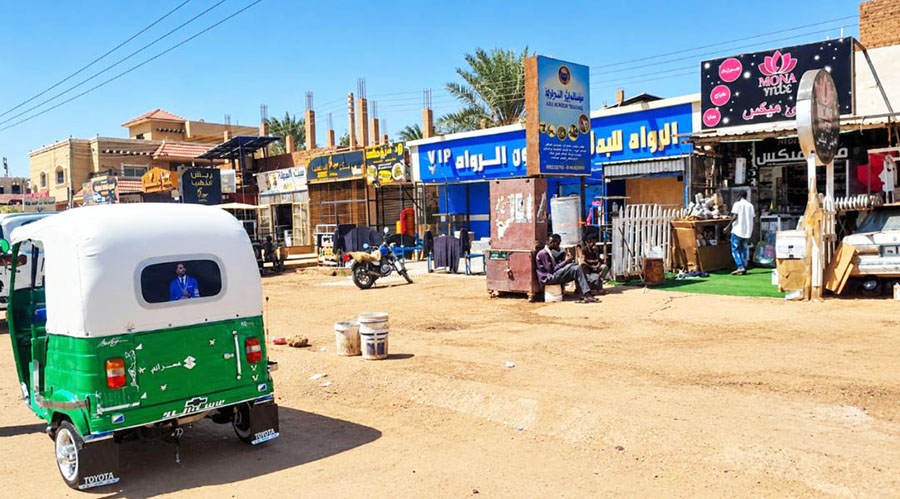
A year after the return to Khartoum, the capital appears to be attempting to regain its former rhythm; yet, the return of residents to their neighborhoods and homes has not necessarily meant a return to life as it once was. Today, Khartoum stands between a past burdened by war, a present weighed down by the psychological and social scars of that conflict, and a future that requires far more than the reconstruction of buildings, roads, and services.
Across the capital’s various neighborhoods, the social fabric appears more fragile than before. The war has left deep marks on interpersonal relationships and on how individuals perceive their surroundings and their local communities. In many areas, the concept of "neighborhood"—once defined by a cohesive network of acquaintance, mutual support, and cooperation—no longer carries the same meaning it held in the years before the war.
Years of displacement, fragmentation, fear, and loss have wrought profound psychological shifts across broad segments of society. Those who have lived through the experience of war do not return to the same place with the same personality or the same emotions they held when they left. They carry with them a heavy burden of memory, painful experiences, and an intensifying sense of caution and uncertainty. Consequently, simply returning people to their homes is not enough to rebuild society; what has been shattered within the human psyche and in social relationships requires time, effort, and deliberate initiatives to heal.
Most concerning is that the old social bonds—which once served as a form of informal protection for residents—have clearly eroded. Social gatherings, visits, mosques, marketplaces, community committees—and even casual encounters in front of homes—once played roles that extended far beyond their immediate functions; they fostered acquaintance, trust, and a sense of belonging to a place.
Today, however, these bonds have weakened in many areas, and with them, the sense of collective responsibility toward neighborhood issues has diminished. Addressing service-related or humanitarian challenges—once a shared public concern involving families, neighbors, and the broader local community—has, in some instances, become an individual and limited endeavor.
This reveals one of the most dangerous consequences of war: it does not merely destroy institutions and infrastructure; it can also strike at "social capital"—that invisible reservoir of trust, cooperation, and mutual support that enables a society to confront its crises. When this reservoir shrinks, even the simplest problems become more complex, and reaching collective solutions grows increasingly difficult.
The current landscape reflects this reality quite clearly. Neighborhoods that once boasted remarkable social vitality often appear, at times, stagnant and cold. People are present, yet the distances between them have widened. Families have returned to their homes, though some relationships are still struggling to find their way back to life. The streets are open, yet the "spirit of the place" has not yet fully recovered.
This reality should not be viewed as an immutable fate. Societies possess a profound capacity for recovery—provided that recovery is understood as a comprehensive undertaking, rather than merely a process of rehabilitating buildings and services. Khartoum is in as much need of rebuilding its people as it is of reconstructing its physical infrastructure.
This requires supporting local community initiatives, revitalizing neighborhoods, encouraging volunteer work, and restoring the role of religious, educational, and cultural institutions in bringing people together around common causes. It also necessitates providing safe spaces for dialogue and interaction—especially for the youth, who have borne significant psychological and social burdens throughout the years of war—burdens that cannot simply be ignored.
Addressing the social consequences of the war is no less important than addressing its physical destruction. While a repaved road can be measured in meters and a reconstructed building in stories, the restoration of trust among people—and the rebuilding of a sense of security and belonging—is a far more complex and time-consuming process.
A year after the return, Khartoum faces a new test. The question is no longer merely, "When will the city return to what it once was?" but rather, "How can it become a city better equipped for life, coexistence, and mutual support?"
The Khartoum we envision should not be merely a capital to which its residents have returned; it should be a society that has regained its capacity for coexistence, solidarity, and cooperation. Life does not return to cities simply because people return to them; it returns when people regain their trust in one another—when a neighborhood once again becomes a shared space for living, a source of security and belonging, and an environment capable of embracing the individual through both hardship and prosperity. Perhaps this is the most difficult task in the aftermath of the war: to restore Khartoum’s built environment, to revive its spirit, and to grant its residents a genuine opportunity to reclaim the sense of security, trust, and human bonds they have lost.
