
Updated: 7 October 2026 21:47:15

5 AI Platforms Place Sudanese Emergency Rooms Among Nobel Peace Prize Contenders
Moatinoon
"Moatin0on" asked five artificial intelligence platforms about the likelihood of Sudan’s emergency response rooms winning the Nobel Peace Prize this coming Friday, following their unofficial nomination by the Peace Research Institute Oslo (PRIO).
It is important to note that it is unknown whether the emergency response rooms are among the official nominees. The Nobel Committee does not disclose the names of candidates, nor does it confirm or deny the nomination of any individual or organization until 50 years have passed. All that is known is that there are 287 candidates for 2026—comprising 208 individuals and 79 organizations. The nomination by PRIO is not an official one and does not represent the Norwegian Nobel Committee, although the institutes list receives extensive media coverage.
Nevertheless, the emergency rooms have remained a fixture in broader international speculation. The Associated Press recently highlighted them in a report, and Reuters identified them as one of the less controversial humanitarian options that some experts believe the committee might consider.
The First Platform
The first platform stated that, contrary to expectations, the emergency rooms are not merely a name on the Oslo list; they are actually rising in the betting rankings for the 2026 prize, outpacing figures such as Pope Leo XIV and Donald Trump, according to the sports betting site Oddschecker. However, she warned that she faces fierce competition, given that the number of official candidates has reached 287. Furthermore, the decentralized nature of the "Emergency Rooms" and their lack of formal legal registration could complicate the presentation of the award should they win. Nevertheless, she noted that the possibility remains real; the Nobel Peace Prize Committee has previously honored humanitarian efforts, such as the World Food Programme in 2020. She suggested that the waning international attention on the war in Sudan might prompt the committee to select them, noting the Nobel Committee’s penchant for surprises. She remarked, "Last year, the odds favored Trump, yet the Venezuelan opposition figure María Corina Machado was announced as the winner."
The platform presented further arguments, concluding that the Emergency Rooms have a genuine chance. "I anticipate a strong possibility," it stated, noting that predictions often prove correct when the candidate is a humanitarian actor with no political enemies—a rare status that the Emergency Rooms indeed possess.
The second platform
It views the Sudanese Emergency Response Rooms as a contender with strong grounds for winning, though it does not predict a victory with a high degree of confidence. If forced to provide a numerical estimate of the probability of winning, it would place the figure between 20% and 30%, settling on 25% as a specific estimate.
This is a relatively high probability in a contest featuring 287 declared candidates, yet it does not amount to a prediction that the Emergency Rooms are the "frontrunners"—especially given that the names of the candidates themselves remain confidential, and there is no official confirmation that the Emergency Rooms are among them. The Nobel Committee does not reveal the names of nominees until 50 years have passed.
What makes "The Second Platform" cautious? First, the competition is extremely fierce. The list circulating this year includes organizations and figures associated with international law, child protection, press freedom, and international cooperation. Most importantly, we do not know the actual shortlist being deliberated by the Nobel Committee.
Second, the Peace Prize is not necessarily awarded to the entity that performed the greatest humanitarian work of the year. Nobel’s will and the Committee’s criteria place peace, cooperation between nations, disarmament, and peace-building efforts at the heart of the selection process. Consequently, the question facing the "Rooms" is: Will the Committee view their civilian and humanitarian model as an act of peace-building, rather than merely a humanitarian response to war? Statements made by the Committee’s secretary this week generally indicate an interest in initiatives, organizations, and new forms of cooperation that align with the prize’s objectives, yet they reveal nothing about any specific nominee.
"The Second Platform" estimates the final probability at 25%.
It notes that this does not imply a "slim chance." For a prize characterized by such secrecy and a vast pool of nominees, assigning a 25% probability to a single entity is, in fact, a high estimate. However, the platform lacks the informational basis to declare the "Response Rooms" the most likely winner.
The strongest argument for them winning the prize is that they offer the Committee a clear narrative: ordinary civilians who, amidst a devastating war, established local networks to save their communities without becoming a military party to the conflict. The most significant factor that might prevent them from winning is the possibility that the Nobel Committee could choose to highlight a different issue this year—such as the defense of international law and institutions, child protection, or press freedom—all of which feature prominently in current speculation.
The Third Platform
According to the official Nobel Prize website, the winner of the 2026 Nobel Peace Prize will be announced on Friday, October 9, 2026, at 11:00 Central European Time, at the Norwegian Nobel Institute in Oslo.
Indeed, Sudan’s Emergency Response Rooms are among the leading contenders for this year’s Nobel Peace Prize. The Peace Research Institute Oslo (PRIO)—a key authority on prize predictions—has included them in its annual list of top candidates.
Betting sites and prediction markets, such as Kalshi, place the Emergency Response Rooms at the top of the list of contenders, with their odds of winning reaching 16%—the highest among all candidates being traded. The British newspaper *The Independent* has also ranked them as a leading contender, with odds of 3/1.
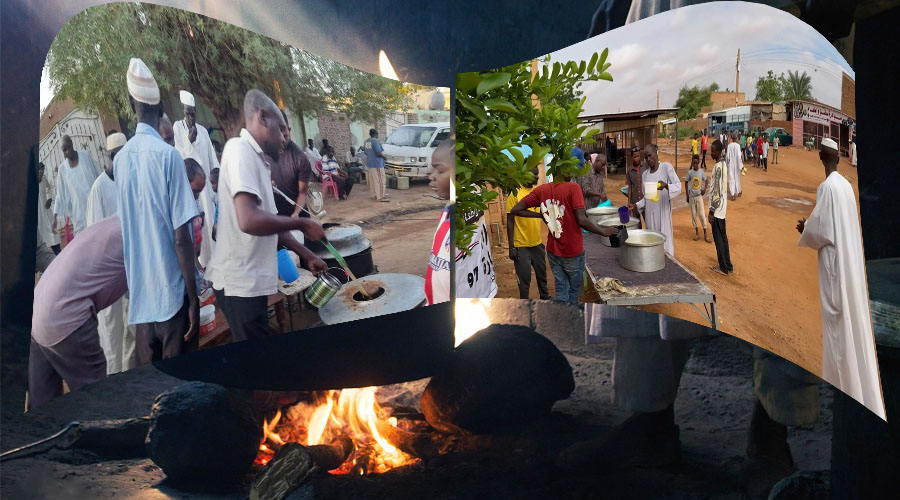
This strong standing stems from the vital role the network has played since the outbreak of the war in Sudan in 2023. Amid the collapse of state institutions and a reduction in international support—including cuts to USAID funding—this network of local volunteers stepped in to provide life-saving services, such as setting up communal kitchens, facilitating evacuations, delivering medical care, and repairing infrastructure.
The "Rooms" represent a unique model, operating through a decentralized structure in conflict zones where volunteers risk their lives under extremely dangerous conditions. The Peace Research Institute Oslo (PRIO) has described them as an embodiment of the power of ordinary citizens to serve humanity during times of crisis.
The Fourth Platform
It is a verifiable fact that the Peace Research Institute Oslo (PRIO) included the Emergency Response Rooms in its annual list of candidates deemed worthy of the prize. The institute highly commended the group for its role in providing food, evacuations, medical care, and essential services amidst the war in Sudan. The group has appeared on the institutes list multiple times in recent years.
However, there is an important point to note: the PRIO list is not the official Nobel list. The institute itself clarifies that its director provides an independent assessment and is not part of the Norwegian Nobel Committee; furthermore, official nominations remain confidential for 50 years.
If I were to evaluate the Emergency Rooms prospects based on the prizes historical criteria, I would identify both strengths and challenges:
Strengths
• Large-scale humanitarian work amidst one of the worlds greatest humanitarian crises.
• A grassroots civil network led by local volunteers—a model that typically garners significant international admiration.
• A highly symbolic narrative: ordinary citizens saving lives when international institutions fail to reach those in need effectively.
Factors that might make winning more difficult
• The Committee sometimes favors figures or organizations with a broader global profile and greater public recognition.
• Competition is usually fierce, with international organizations, tribunals, and prominent global figures often among the speculated contenders.
If you were to ask for a "prediction" rather than a "fact," I would say:
I believe the Sudanese Emergency Response Rooms possess qualities that make a Nobel Peace Prize win plausible and highly justifiable—perhaps even more compelling than the cases of some traditional candidates—though I would not classify them as a near-certainty. I view them as serious contenders capable of surprising the world with a win, should the Committee wish to highlight civic courage and grassroots humanitarian action in wartime.
Frankly, if a news report were written with the headline "Do the Sudanese Emergency Rooms Deserve the Nobel Peace Prize?"... It would be easy to build a very strong case for a "yes" answer. However, the question "Will they win?" is more complex, given the nature of the Nobel Committees decisions and their unpredictability.
The Fifth Platform
Yes, the Sudanese Emergency Response Rooms (ERRs) do indeed appear on the Nobel Peace Prize shortlist for 2026 compiled by the Peace Research Institute Oslo (PRIO)—an independent, unofficial list (the institute is unaffiliated with the Nobel Committee). They ranked second this year, following Mykola Kuleba and Save the Children, and had also held high rankings on the 2024 and 2025 lists.
The Norwegian Committee never publishes the official list of nominees, so we do not know if they are officially nominated. However, their repeated presence on the PRIO list, combined with their receipt of other prestigious awards—such as the 2025 Norwegian Rafto Prize, the 2025 Right Livelihood Award (often called the "Alternative Nobel"), and the 2026 Balzan Prize—gives them significant momentum.
Do I expect them to win?
The possibility exists, though in my opinion, it is not the most likely outcome.
Reasons supporting a potential win:
• Their tangible fieldwork amidst the worlds worst ongoing humanitarian crisis (involving millions of displaced people and famine).
• Their grassroots, voluntary, and decentralized nature; they represent a rare model of local humanitarian action that fills the void left by the state and international organizations.
• The Norwegian Committee sometimes prefers to honor quiet, community-based initiatives rather than prominent political figures. Reasons why a win is less likely:
• The committee often favors individuals or organizations with greater international political or symbolic weight.
• The presence of other candidates on the PRIO shortlist (such as child protection efforts in Ukraine, the International Criminal Court, or even the International Space Station) might attract more attention.
• She was a strong contender in 2025 but did not win (the prize went to María Corina Machado).
