
Updated: 5 August 2026 12:46:36
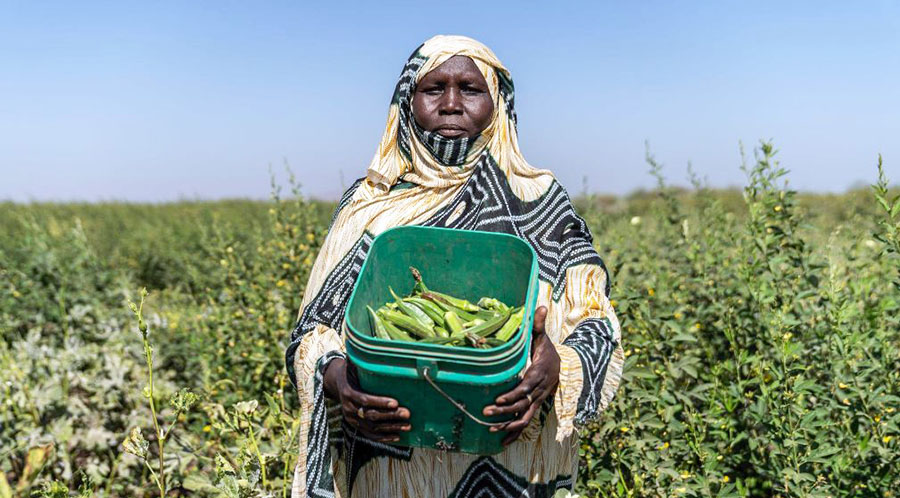
70% of Sudanese farmers are unable to secure the necessary financing for farming
Moatinoon
Sudan’s agriculture and food production have been devastated by three years of war but can still reduce poverty and food insecurity with the right support, says the Sudan Agri-food and Market Resilience Analysis, a comprehensive new study jointly conducted by the United Nations Development Programme and the International Trade Centre.
Drawing on the latest available data from multiple states, and more than 80 consultations with government, private sector, financial and development actors, the analysis provides the clearest assessment to date of the damage to Sudan’s agricultural and market systems since the outbreak of conflict in April 2023.
More than 70 per cent of farmers and small businesses are unable to secure financing for agricultural activities, and over 80 per cent of farmers report limited access to market information.
Almost 90% of farmers and producer groups report productivity falls compared to last year, ranging from 22 per cent in relatively stable states to 71 per cent in conflict-affected parts of Sudan More than half of farmers report being unable to harvest safely.
Transaction costs have risen by up to 40 per cent, contributing to an estimated 45 per cent decline in formal cross-border trade. Supply chains have fragmented into localized “market islands”, with food prices in some areas more than two times pre-conflict levels even as farmgate prices remain depressed.
“We cannot underestimate the scale of what’s needed to restore farming and productivity in Sudan,” said Luca Renda, UNDP Sudan Resident Representative. “But nor should we be overwhelmed. With urgent investment to support farmers, markets can still function and people can get food at a price they can afford.”
The report offers recommendations for development partners, donors and government institutions across seven priority value chains selected for their economic, export and employment potential (sesame, sorghum, soybeans, groundnuts, hibiscus, gum Arabic and livestock).
These recommendations include stabilizing and upgrading priority value chains; strengthening producer organizations and aggregation systems; improving market readiness and export compliance; reducing transaction costs and improving market connectivity; addressing trade and regulatory barriers; and strengthening coordination between humanitarian, development and private sector actors.
The analysis also underscores that the growing role of women, youth and displaced populations in informal markets requires interventions to remove barriers to finance, land, inputs and market access for these groups.
“Sudan’s farmers and traders have kept their markets alive, even through the worst of this war,” said Renda. “Our recommendations are about matching their resilience with the investment, financing and trade access they deserve. If we can mobilise support for these interventions, Sudanese producers and businesses can drive the recovery Sudan desperately needs.”
