
Updated: 27 June 2026 12:59:59

Does Burnham’s Program for Current Governance in Britain Suit Reforming the Situation in Sudan?

On October 29, 1956, Britain—with the assistance of France and Israel—launched a tripartite aggression against Egypt, which ended with a ceasefire on November 7 and the folding of the British flag from the Suez Canal Authority headquarters. On the very first day of that same year, the colonizers flag was lowered in Sudan and handed over, folded, to the British Governor-General, accompanied by a friendly handshake from both the Prime Minister of the national government and the leader of the parliamentary opposition. In 1898, Britain and Egypt had jointly launched an invasion of Sudan that claimed the lives of 11,000 Sudanese citizens. Yet, 57 years after that aggression, governance was handed over to a national government without shedding a single drop of blood. How can we explain that sinful assault in both cases, and the amicable agreement in the other? In our view, the answer lies in the economic interests that dictate retaining power, devolving a measure of it, or relinquishing it entirely—that is, when those interests cease to exist completely or when their wellspring gradually runs dry.
Our viewpoint is founded on one highly important matter: British interests did not lie within Sudanese territory, but rather outside of it. Specifically, these interests consisted primarily of guarding maritime navigation through the Suez Canal and securing British trade routes to and from India and Southeast Asia—exactly like the current situation regarding American and European intervention to secure the arrival of oil and petrochemical products through the Strait of Hormuz. Britain did not resort to undertaking a primary role in the invasion of Sudan except under diplomatic arrangements that ultimately led Egyptian nationalists to turn a blind eye to the French administration of the Suez Canal, and to the British Governor—who operated under the authority of the Sublime Porte—guarding his countrys economic interests by guaranteeing freedom of navigation in the Red Sea and through the Canal. For this reason, the British Colonial Office stepped back to allow the Foreign Office full supervision over this vital economic portfolio.
Because the British administration in Khartoum had no preconceived blueprint for governing and developing Sudan, it resorted to experimentation and a trial-and-error approach. It relied on the wisdom of provincial governors (most of whom were graduates of prestigious British universities), their sharp powers of observation, their accumulated experience, and the exchange of these experiences through regular correspondence among themselves. Among those governors was Douglas Newbold, who served as Governor of Kordofan Province and later held the position of Civil Secretary—a role equivalent to Prime Minister due to his supervision of the daily executive work of all ministries. In addition to his well-known interest in cultural affairs and his opening of a cultural center on University Street, Newbold was also famous for proposing that the government in Khartoum adopt the devolution or transfer of its powers primarily to the provincial level of governance. However, a group of Sudanese nationalists grew suspicious of his intentions. Despite welcoming his earnest interest in culture, they suspected that his proposal regarding the devolution of authority (using the term devolution rather than delegation) was intended to partition the country.
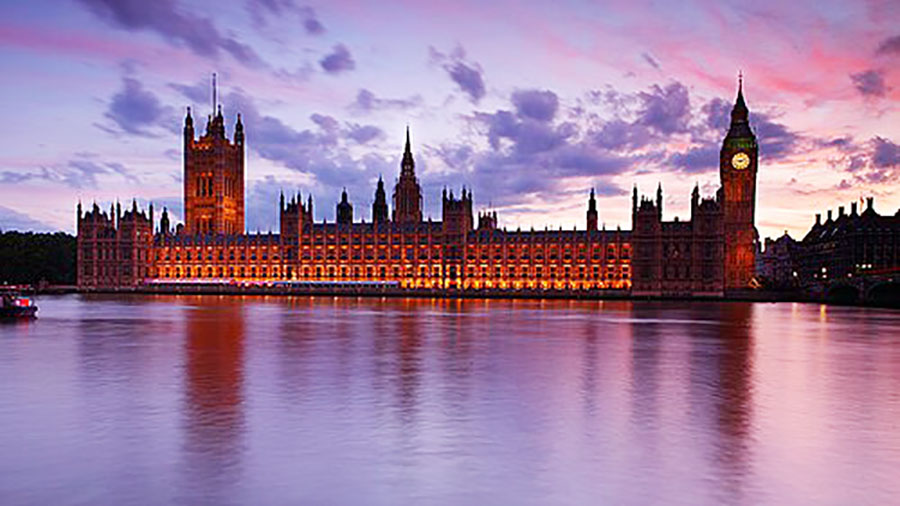
What entrenched the suspicions of some Sudanese nationalists regarding the "devolution" of those powers was that Newbold, despite his love for Sudan, was a fierce defender of the colonial system and a believer in its civilizing mission (hence his interests in cultural affairs). As for his successor, James Robertson, who witnessed the hand-off of the folded flag to the Sudanese nationalists, he arrived during the decolonization phase and at a time when the British administration in Khartoum was convinced of handing over governance to the Sudanese. Unlike Newbold, Robertson believed in maintaining a strong central government run by the Sudanese (and, of course, without unity with Egypt or Egyptian participation in ruling the country). However, after independence was achieved and the flaws of centralized rule from Khartoum emerged—along with its monopolization of national wealth at the expense of the regional peripheries—voices rose calling for decentralized systems of governance. The most famous of these was John Garang’s call for a confederation within the framework of a united Sudan, and the advocacy of Mohamed Ibrahim Dreige, whose voice grew hoarse demanding the implementation of federal rule in Sudan.
In contemporary Britain itself—a United Kingdom comprising four countries or regional nations: England, Wales, Scotland, and Northern Ireland—the prestigious Institute for Government defines devolution as the statutory transfer of powers from the British Parliament to Scotland, Wales, Northern Ireland, and parts of England. This creates regional governments with varying degrees of legislative and executive authority, allowing these regions to manage certain policy areas independently, while the Parliament at Westminster retains ultimate sovereignty and control over reserved areas, such as defense, foreign affairs, and immigration. The process of devolution began in earnest in the late 1990s, following referendums held in Scotland, Wales, and Northern Ireland. In England, the devolution of powers remains limited; the position of Mayor of London and the London Assembly were established in 2000, followed by the creation of combined authorities with directly elected mayors in regions such as Greater Manchester and the Liverpool City Region. The powers held by these regions are primarily executive rather than legislative.
British history preserves a famous quote by former Prime Minister Tony Blair, in which he stated that "devolution" had healed the wound of secession. Would the secession of South Sudan have been nipped in the bud if some central powers had been transferred to it, as John Garang had hoped? Would the talk of Darfurs secession be deemed reprehensible today if a sufficient amount of authority had been devolved to it, far from the Nile Valley belt? And will Andy Burnham’s current governance program in Britain suit reforming the situation in Sudan? This is particularly relevant when we consider that Burnham—the former Mayor of Manchester who won a by-election on Thursday, June 18, for the Makerfield constituency to contend for the leadership of the Labour Party, and consequently for the British premiership itself—has placed the transfer of powers from Westminster to Manchester at the very top of his prospective governments priorities. As part of his program, Burnham also seeks to place public utilities into state hands and to assist impoverished families in earning a dignified livelihood.
Despite the gap in eras and the differing levels of economic development between the two regions, Andy Burnham’s political experience and administrative expertise do not differ much from those of his compatriot Douglas Newbold. The latter worked among the pastoralist Kababish people before moving to the central Nile hub, while the former worked in Manchester’s industrial sector as a prelude to his subsequent move to the seat of power at Westminster. Just as Newbold was influenced by his numerous friendships with notables of the Kababish tribe during his tenure among them, Burnham formulated his political philosophy, known as "Manchesterism," from the reality of his experience governing the capital of the English Midlands—the second-largest urban economy in Britain. This political philosophy can be summarized as bringing about greater state intervention in major economic affairs, thereby curbing the freedom of capital, which results in the central state taking control over public utilities such as water, electricity, gas, and transport.
In Sudan, a great deal of water has flowed under the bridge—or rather, hundreds of thousands of ships have passed through the Suez Canal on their way to and from India and Southeast Asia. Given the reality of the current bloody war in the country and a prevailing sense of despair regarding the return of civilian rule and the resumption of a healthy democratic era, two main planks of Burnhams political program seem entirely detached from the reality of the situation in Sudan. These are: changing the first-past-the-post voting system to replace it with a proportional representation system, and abolishing the role of the "Whip" or reducing their influence. The Whip is the Member of Parliament chosen by the Prime Minister to discipline the behavior of MPs from the ruling party and compel them to vote in favor of the sitting government to execute the party’s electoral program, lest they lose their party membership—unless the Prime Minister orders a free vote on a specific bill tabled before Parliament.
However, the two aforementioned planks are, in reality, the root of the affliction behind the country’s prolonged authoritarian rule and the faltering of its brief democratic experiments. As a consequence of the first item—direct election facilitated by the abolition of proportional representation—the presidencies of student unions at universities and higher institutes in Sudan were dominated sequentially by Islamist factions, which took total control over them and ignored the demands of over 40 percent of the student body. This prepared them to practice governance at the state level as a whole, as they viewed those unions as miniature governments. Worst of all, they transferred this student behavior and troubled lifestyle into the corridors of the central state and its remote regional peripheries. As for the second item—the abolition of the parliamentary position responsible for member behavior—establishing it, rather than abolishing it, is precisely what Sudans intermittent democratic periods needed. Those periods were characterized by MPs absenting themselves from sessions, remaining passive within them, and switching allegiances haphazardly between the major parties. Perhaps the anticipated democratic period will likewise need someone to maintain discipline within Parliament or enforce good conduct among the representatives of the people.

