
Updated: 6 May 2026 16:33:38
Its Fires Ignite the Region… Drones Return to the Skies of Sudan’s Capital
By Ameer Babiker Abdallah
It had seemed to observers that “all is quiet on the eastern front,” until the skies over Sudan’s capital, Khartoum, once again became a theater—this time extending beyond the armed conflict between the Rapid Support Forces (RSF) and the Sudanese Armed Forces (SAF), to include mutual accusations among Sudan, Ethiopia, and, between them, Egypt.
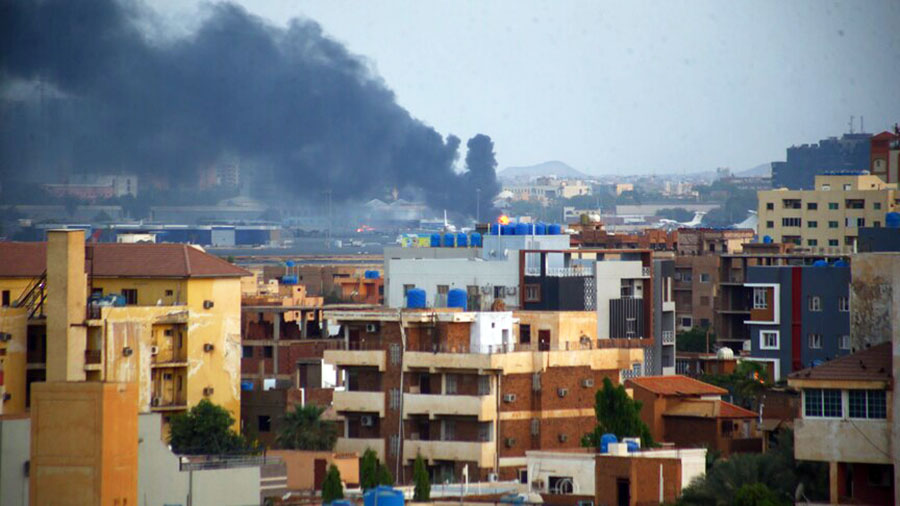
What happened yesterday, when strategic drones bypassed surveillance and monitoring systems to reach the heart of the city—only to be intercepted by air defenses as they approached the airport—further complicated both the domestic and international landscape. This prompted the UN spokesperson, Stéphane Dujarric, to state in the daily press briefing that the targeting of Khartoum Airport had led to the cancellation of flights.
Even before the smoke from the airstrikes had cleared, a war of official statements erupted. It was initiated by the Khartoum government through a press conference attended by the Minister of Foreign Affairs and International Cooperation, Mohi El-Din Salem, alongside the Minister of Culture and Information and the official spokesperson of the Sudanese Armed Forces. They accused Ethiopia and the United Arab Emirates of involvement in the attack on Khartoum Airport, describing it as part of a series of drone strikes allegedly carried out by Emirati drones targeting multiple locations across Sudan in recent months, with their launch point being Bahir Dar Airport in Ethiopia.
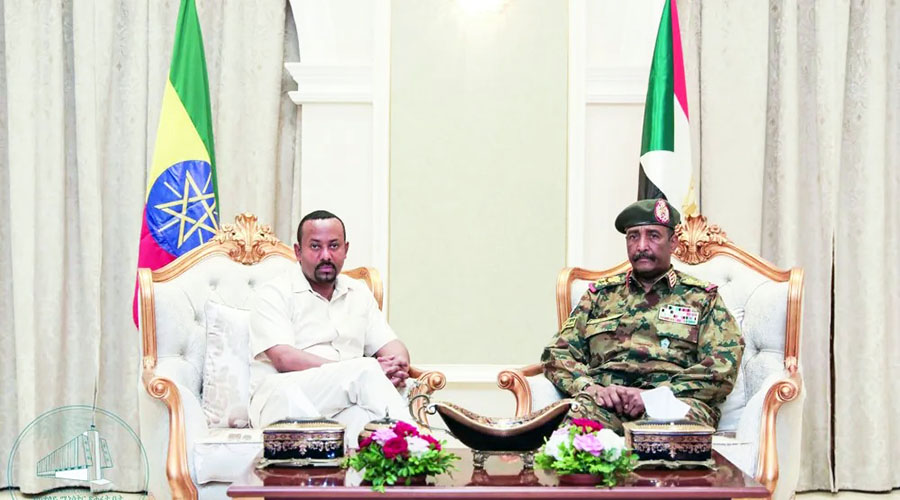
For its part, the Ethiopian government swiftly rejected Khartoum’s accusations, calling them baseless and reaffirming the historical ties between the peoples of Sudan and Ethiopia. It went further, accusing Khartoum of committing serious violations affecting Ethiopian territory, allegedly carried out by what it described as “some of the combatants” in Sudan’s civil war. In its response, Addis Ababa also pointed to the involvement of fighters from the Tigray People’s Liberation Front—opposed to the Ethiopian federal government—in Sudan’s internal conflict, suggesting that Sudan had become a hub for various forces hostile to Ethiopia. The Ethiopian government also accused external actors of standing behind Khartoum’s allegations, seeking to advance their own agendas.
In a development that further escalated the crisis and pushed it beyond internal boundaries, Egypt condemned the drone attack on Khartoum International Airport, describing it as a violation of Sudan’s national sovereignty and expressing concern that the drones had been launched from the territory of a neighboring country.
What happened on Monday morning?
Barely two days had passed since the Prime Minister of the “Government of Hope,” Dr. Kamil Idris, declared that Khartoum was safe and stable—a statement that appeared to echo the famous novel “All Quiet on the Western Front” by the German writer Erich Maria Remarque—when residents were startled by plumes of smoke rising near the main airport on the eastern side of the city.
The Prime Minister’s reassuring statements, despite the return of drones hovering over the outskirts of the capital, were not without justification. The capital had experienced a period of relative calm following intense ground and aerial battles across its districts, particularly after the Sudanese army announced in May of last year that Khartoum had been cleared of RSF presence following their large-scale withdrawal westward.
This relative calm over recent months had tangible effects, prompting significant numbers of displaced persons and refugees to decide to return to their homes in Khartoum and surrounding areas, particularly in Al-Jazira and Sennar states. The most powerful signal came when UN agencies decided to resume operations from their offices in Khartoum, even before many government ministries had completed arrangements to return from the temporary capital, Port Sudan, where they had operated for the past three years.
Although drones continued to be used as weapons by both sides in regions such as Kordofan and Darfur, as well as in strikes targeting areas in Blue Nile and White Nile states within the framework of daily military developments, the capital itself experienced an undeclared calm. What appeared to be a tacit agreement—under international pressure—to keep military operations out of the capital during recent months was shattered by drone flights targeting two locations on the city’s outskirts over the past week.
In the first incident, suicide drones belonging to the RSF targeted the Jebel Aulia area south of Khartoum, damaging a military vehicle without civilian casualties. In the second, drones struck the Salha area south of Omdurman, one of the three cities comprising the capital, hitting a civilian vehicle and killing five people on board.
A review of drone usage since the outbreak of war on April 15, 2023, shows that drones were not initially a primary weapon on the various battlefronts. Throughout 2023, combat relied mainly on ground clashes, artillery shelling, and conventional airstrikes—the latter being controlled exclusively by the Sudanese army.
In 2024, drones began to be used as a combat tool, but generally outside the capital’s operational sphere, particularly in Darfur and Kordofan. Khartoum witnessed limited drone strikes, but they were not decisive at the time.
The most significant development in drone warfare as an effective operational weapon in Khartoum began in 2025. Their primary impact was psychological rather than strategically decisive. In May of that year, following the RSF’s withdrawal from the capital, escalation began through attacks targeting infrastructure such as power stations and vital facilities, leading to electricity and water outages.
In September of the same year, the RSF targeted several military sites. The most notable escalation came in October, when drones struck Sudan’s international airport, delaying its reopening multiple times. This was followed by months of relative calm in Khartoum, contrasted with escalating fighting on other fronts.
Thus, what occurred on Monday, May 4, represents a major turning point in military operations. This time, suicide drones targeted the very core of the capital—its vital nerve center, Khartoum Airport. After more than three years of closure, activity had resumed at the airport, with life gradually returning to its runways. It had even witnessed its first commercial flight from Khartoum directly to Cairo—the first of its kind after international flights had previously been routed through Port Sudan.
This development can be interpreted from two perspectives. On one hand, it is likely to push the capital back into international isolation and raise fears among displaced persons, refugees, and investors about returning. The first interpretation suggests it may be part of increasing pressure on al-Burhan’s government to reach a political settlement swiftly, especially following recent internal shifts within the RSF, including the defection of key leaders. The second interpretation is that the war is far from over, and that no place—and no one—in Sudan is safe as long as strategic drones are capable of reaching any location.

