
Updated: 21 April 2026 20:24:21
Numbers That Tell the Story: Sudan’s War and the Struggle for a Future
By Ameer Babiker Abdalla
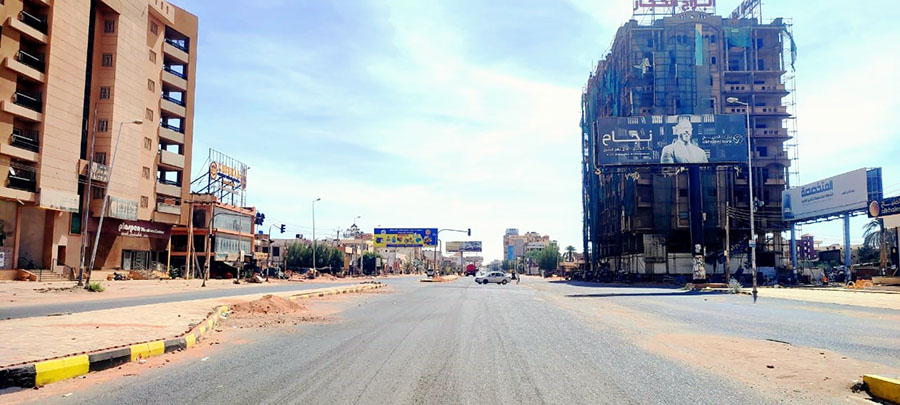
Three years into the war, Sudan is no longer merely a fragile state—it is a country facing systemic collapse. What began as an already weakened economy and strained institutions has deteriorated into one of the world’s most severe humanitarian and economic crises.
In 2023 alone, nearly 6.9 million more people fell into extreme poverty, while per capita income dropped to levels not seen in over three decades. These figures, tracked by United Nations agencies, reveal not just the scale of the crisis, but its accelerating depth.
A Nation Uprooted
The war has triggered one of the largest displacement crises globally. More than 14 million people have been forced from their homes, both within Sudan and across its borders. This mass displacement has shattered livelihoods, disrupted basic services, and driven hunger and poverty to unprecedented levels.
Estimates by the Food and Agriculture Organization indicate that 33.7 million people will require humanitarian assistance in 2026. At the same time, 41 percent of the population faces acute food insecurity, with famine conditions already confirmed in several areas.
Meanwhile, Sudan’s economy continues to contract sharply. Currency depreciation and soaring prices have made everyday survival increasingly difficult for most citizens.
Futures at a Crossroads
A recent report by the United Nations Development Programme, in collaboration with the Institute for Security Studies, outlines several possible futures for Sudan, depending on whether peace is achieved—and how.
Even in the most optimistic scenario, the cost of war remains staggering. By 2043, Sudan is projected to accumulate losses of 18.8 billion, or about 752 per person. The damage extends far beyond lives lost—it threatens the country’s long-term development trajectory.
The worst-case scenario envisions continued conflict until 2030. Under such conditions, Sudan’s GDP would reach only 23.1 billion by 2043—34.5 billion less than its potential without war. An additional 34 million people would fall into extreme poverty, a figure exceeding the current population of Ghana.
Even a peace agreement in 2026 without deep reforms—the so-called “current pathway”—offers limited hope. Per capita GDP would decline to 1,941 by 2035, rising only modestly to 2,384 by 2043, still below 2023 levels and even those of the 1990s.
Extreme poverty would affect around 60 percent of the population by 2030—roughly 34 million people—before declining slowly. Sudan would also fail to meet the Sustainable Development Goals, and its youthful population would not translate into the expected economic dividend.
Systems Under Collapse
The war has devastated Sudan’s health and education systems—two pillars of any functioning society.
Child mortality has reached 44.5 deaths per 1,000 live births and is expected to rise further. More than 70 percent of health facilities in conflict areas are no longer operational. At the same time, disease outbreaks—including cholera, HIV/AIDS, tuberculosis, malaria, and dengue fever—are spreading at alarming rates.
According to the United Nations Educational, Scientific and Cultural Organization, around 19 million school-age children are now out of education. This disruption represents a long-term demographic shock, with consequences for the labor market, public health, and civic life for decades to come.
Universities have been looted or destroyed, and training programs halted, depriving millions of young people of critical skills and opportunities.
A Path to Renewal
Despite the bleak outlook, the report suggests that Sudan still holds significant potential for recovery.
With vast agricultural land, rich water resources, a strategic geographic location, and a predominantly young population, the foundations for a national revival remain intact—if peace is achieved and reforms are implemented.
In a “Sudan Renaissance” scenario, combining peace with structural reforms in governance and investment, GDP could reach 58.2 billion by 2043—19.3 billion higher than under the current trajectory. Per capita income could rise to 3,176.
Such a path could lift 17.3 million people out of extreme poverty, increase life expectancy by more than four years, and sustain annual economic growth of 5 percent—more than double current projections.
Agriculture as the Engine of Stability
Agriculture emerges as a central pillar of recovery. The sector alone could lift 4.7 million people out of poverty, while governance reforms could help another 4.8 million.
These two elements are deeply interconnected: effective governance enables agricultural investment, while a revitalized agricultural sector strengthens economic and institutional stability.
The Food and Agriculture Organization reports that the sector—on which two-thirds of the population depends—has suffered extensive damage. Infrastructure has been destroyed, food stocks looted, and farmland and markets rendered inaccessible.
With the main planting season approaching in June, the window to restore national grain production is rapidly closing.
Although some areas have seen modest agricultural recovery, these fragile gains remain at risk without sustained and predictable investment.
A Defining Moment
Sudan today stands at a defining historical moment. The crisis it faces is not temporary—it will shape the country’s future for decades.
The stark figures presented by UN agencies underscore an urgent reality: without peace, humanitarian and economic efforts will remain limited to managing suffering rather than ending it.
Peace, however, is only the beginning. Without genuine political will for reform, even peace may fail to deliver meaningful change.
For Sudan, the challenge is not only to end the war—but to transform its aftermath into a foundation for a more stable, just, and prosperous future.

