
Updated: 13 April 2026 10:33:49
War in Sudan: Access to Food Becomes Deadly
Moatinoon
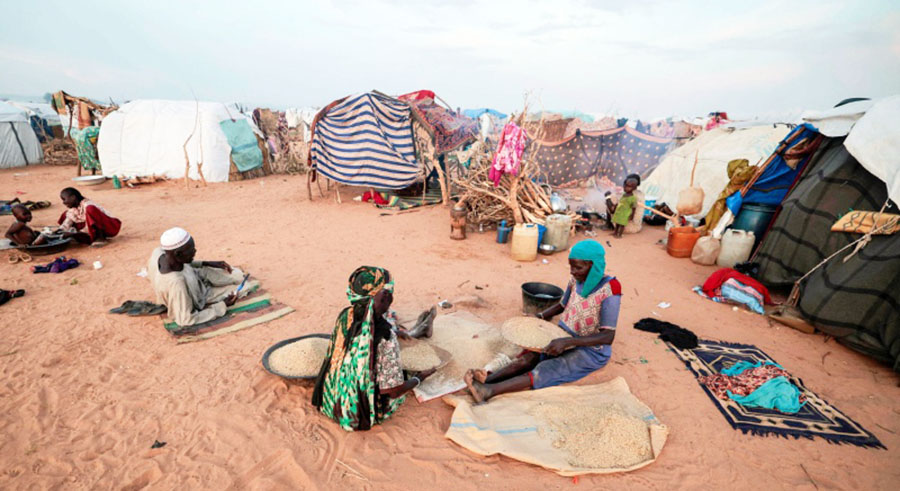
A new report released by leading humanitarian organizations, including Action Against Hunger, CARE International, International Rescue Committee, Mercy Corps, and Norwegian Refugee Council, reveals that the ongoing war in Sudan is pushing communities toward famine conditions. Families are surviving on meals made possible only by risking their lives crossing active frontlines to produce, trade, or access food.
The report highlights how three years of conflict and violations of international humanitarian law have turned the journey of food—from farms to markets to households—into a dangerous and often deadly process. Despite this, Sudanese communities continue to sustain a fragile food system through remarkable resilience and ingenuity.
It finds that millions of people in heavily conflict-affected areas, including parts of North Darfur and South Kordofan, survive on one meal a day or less. Families are skipping meals, reducing portions, and in some cases resorting to eating leaves and animal feed. Meanwhile, community kitchens—once a vital lifeline—are increasingly unable to meet rising demand due to dwindling funding and supplies.
One woman from North Darfur described the situation: “We no longer ask what we will eat. We ask who will eat.”
The Integrated Food Security Phase Classification (IPC) has already confirmed famine in parts of Sudan, with risks of further spread. More than half the population—28.9 million people—are now acutely food insecure, including over 10 million facing severe or extreme hunger, worsened by economic collapse and climate shocks.
The report also documents widespread violations of international humanitarian law, including the use of starvation as a weapon of war and attacks on civilians and civilian infrastructure. Farms have been destroyed, farmers killed, and markets disrupted by violence, closures, and exploitative taxation.
Women and girls are disproportionately affected, facing heightened risks of gender-based violence that restrict access to food and essential services, further deepening vulnerability.
Despite extreme challenges, local food systems continue to function under pressure. Farmers, traders, and community networks are still producing and moving food, while grassroots initiatives—such as women’s groups and community committees—help families survive, though they are increasingly overstretched.
The five organizations called on all parties to the conflict to immediately cease actions that drive hunger, ensure humanitarian access, protect civilians, and support local food systems and markets.
The report warns that without urgent and sustained action, Sudan’s food crisis will continue to deepen, with devastating consequences for millions.
