
Updated: 3 April 2026 00:40:48
Education in Sudan Should Not Be Viewed as Part of the Conflict

An Interview with Dr. Siddig Ambedeh on the National Emergency Initiative for the 2026 Sudanese Secondary School Examinations Crisis
On March 13, the National Initiative to Support the Sudanese Secondary School Examinations—established in February by a group of individuals concerned with education, including teachers, academics, and civil society actors—submitted a memorandum addressed to the Sudanese public. The memorandum called for postponing the 2026 secondary school examinations and seeking practical solutions to enable students who had been unable to sit for previous exams due to the war to catch up.
The initiative engaged with the government formed in areas under the control of the Sudanese Armed Forces, as well as with the government established by the Tasis Alliance in Nyala, in an effort to reach feasible solutions that would allow students in both territories to take their examinations. In addition, the initiative submitted several documents, including a civil society position paper, among others.
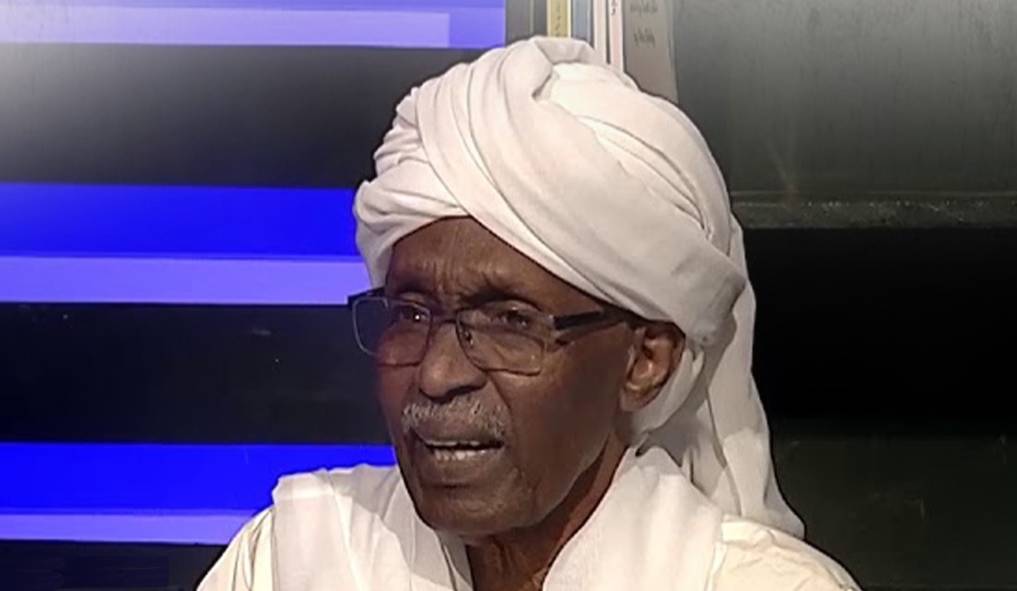
In this interview—published by the Sudanese Media Forum in conjunction with Ater Magazine—we spoke with Dr. Siddig Ambedeh, an economist whose research has linked issues of economy, development, and education in Sudan. We met him in his capacity as a member of the initiative to discuss its aspirations, the steps it has taken, and the future of education in Sudan.
Dr. Ambedeh obtained his PhD in Economics from the University of London in 1979. He is an Associate Professor at the University of Khartoum and a former Head of the Economics Department at the Faculty of Economic and Social Studies. He is also a researcher in education and development, with several publications in Arabic, including: “The Pen of Education and the Burden of the Educated – Essays on Education and Development” (2017), “The State of General Education in Sudan and the Challenges of Reform” (2015), “Development as the Key to Peace in Darfur” (2004), and “Higher Education Admission Policies in Sudan” (1988).
- You recently launched an initiative to address the crisis of the Sudanese secondary school examinations, particularly in Darfur, Kordofan, and other regions. What does this initiative seek to achieve at this time? How was it practically formed?
I can say that this initiative comes in the spirit of “better late than never.” Its primary goal is to shed light on the Sudanese secondary school examinations and on the students who were unable to sit for them in previous years—beginning with the first year of the war, and continuing through the two subsequent years, both of which were marked by significant challenges.
We believe it is crucial to enable students in Kordofan, Darfur, and Blue Nile to catch up with their examinations. Many of these areas are under the control of the Rapid Support Forces, leaving students with no option but to travel to areas under government control in order to sit for the exams. Naturally, they have already been delayed by two or even three years. These students were on the verge of taking their exams in April 2023, when the war broke out, and their examinations were subsequently postponed.
Therefore, the core objective of the initiative is to ensure that these deprived students are given a fair opportunity to take their exams and rejoin the educational path.
The initiative did not originate from any political body or formal organizational framework. Rather, it began as a group of individuals united by a shared concern for education and a deep sense of responsibility toward students under the current circumstances.
Over time, the circle of discussion expanded to include a large number of participants—likely exceeding one hundred in its early stages. What united them was a clear humanitarian motivation and a shared recognition of the real danger threatening the future of an entire generation if no intervention were made. It is important to emphasize that the initiative has never been associated with any political agenda or alignment at any stage.
In this context, the role of the Teachers’ Committee has been particularly pivotal, as they possess the most comprehensive technical knowledge related to examinations. They are not only part of the educational process but are also closely involved in its daily operations. They have detailed expertise in how the Sudanese secondary school exams are prepared, secured, organized, and supervised, as well as in the processes of marking and announcing results.
These are not matters that can be addressed superficially or theoretically—they require practical experience accumulated over many years. The inclusion of teachers within the initiative has therefore given it a strong practical dimension, helping to transform it from a purely intellectual discussion into a feasible and actionable proposal.
At its core, the initiative is based on a simple yet profound principle: education is a fundamental right and should not be disrupted or suspended because of war. Students bear no responsibility for what is happening, and it is unjust for them to pay the price with their futures.
Hence the need to find a practical solution that guarantees them a fair chance to sit for their exams. We are not speaking of a single cohort, but of an entire generation that must not be left behind due to circumstances beyond its control. Education is not a luxury that can be postponed—it is a necessity. If we can preserve it, even under these complex conditions, we will have laid an essential foundation for Sudan’s future.
- Have you opened communication channels with both parties to reach solutions? What level of response have you observed from them?
We have established communication channels with both the Al-Amal Government in Port Sudan and the Tasis Government in Nyala through two separate contact committees. We reached out to a number of individuals with varying degrees of influence within the Al-Amal Government, including Dr. Kamil Idris in his capacity as Prime Minister, as well as other figures. However, to date, we have not received a clear or concrete response. We continue to make efforts to engage with the authorities responsible for political decision-making on this matter.
On the other hand, we have also contacted the Tasis Government, and there is an ongoing attempt to arrange a meeting with them to discuss certain details or address any questions they may have regarding the initiative. In my view, if either side expresses reservations, we will seek to address them.
We have proposed the formation of a technical, non-political committee to handle issues related to administering the examinations—such as organizing the sittings, preparing the exams, ensuring their security, distribution, and supervision. We would present each party’s reservations to the other, so that the technical committee can propose solutions that are logically and practically acceptable to both sides, without compromising their respective conditions or concerns.
Ultimately, we are actors who present proposals, respond to questions, and offer solutions wherever possible. Despite some initial responsiveness from the government formed by the Tasis Alliance, the issue remains complex and cannot be resolved easily or in a short time. We must be realistic.
- How do you see the impact of the political factor on the issue of the secondary school examinations?
The political factor became more evident when the issue of holding two separate examinations emerged. One side announced an exam in April, while the other announced a separate exam in June. This development was not merely a difference in timing—it created a highly complex reality and raised fundamental questions:
Will there be two separate educational tracks?
Will both sets of results be recognized?
What will happen to students caught between these two systems?
In this context, the initiative became more clearly defined as an effort to prevent such fragmentation and to establish a unified framework that safeguards students’ rights.
The premise was simple yet principled: if the two sides can reach understandings on other issues—such as the flow of النفط (petroleum)—despite their political differences, then it should be even more feasible to reach agreement on education, as it concerns the entire society.
Ultimately, the success of any such effort depends on the availability of political will. If that will exists, solutions remain possible—especially given precedents where agreements have been reached in other sectors. This suggests that agreement is, in principle, achievable and could extend to education as well. However, in the end, we do not hold decision-making power; we present proposals and hope they are taken seriously.
- With the announced exam date in mid-April approaching, what practical proposal are you putting forward now? Are you suggesting postponement, reorganization, or another alternative?
As you know, the Al-Amal Government in Port Sudan has decided to hold the exams in April, while the Tasis Government is preparing for exams in June, according to its announcement. We are calling for a unified examination to be held across areas controlled by both parties.
At this stage, postponing the April exams appears extremely difficult due to time constraints and the challenges of coordinating with the relevant authorities. Our efforts began in mid-February, and we had hoped to quickly secure approval for postponement.
Therefore, the practical proposal now is to organize a make-up (alternative) examination at the earliest possible time for students who were unable to sit previously—held within their own regions.
There are precedents in the Sudanese secondary school examination system that can be drawn upon. The proposed solution is thus an alternative exam with the same standards and quality, scheduled at a mutually agreed time.
This proposal also depends on continued engagement with the relevant authorities and aims to allow delayed students to sit for exams in their current locations. It is the result of extensive discussions and past experiences.
In reality, the number of students deprived of sitting for the exams is very large—estimated between 250,000 and 280,000 according to some sources. Relocating them is extremely difficult, not to mention the associated security and financial costs.
Our goal is to ensure that students can take their exams while their families feel reassured about their safety, and within the environments where they currently live. We have consulted technical bodies with international experience, and we believe this is the most reasonable solution. It is simply not feasible to relocate such large numbers to a single location, especially given the security situation and the high cost of travel and movement.
- What are your expectations if the parties fail to reach an agreement?
If no agreement is reached, it is likely that each side will proceed with its own examination independently. However, this does not mean that the initiative will lose its relevance or cease to exist.
It could evolve into a broader framework addressing education issues more generally, as the crisis extends beyond examinations to include school closures, the situation of teachers, and the large number of students who have dropped out of the education system.
In such a scenario, the impact on students would be significant—especially if there is no mutual recognition of certificates. Students may find themselves with limited options, or holding qualifications that are not recognized in certain regions or institutions. This would deepen uncertainty and place them in an extremely difficult position.
For this reason, it is crucial to avoid this scenario—or at the very least, to mitigate its consequences as much as possible.
- What are the risks if students continue to be deprived of sitting for the exams?
The risks are extremely significant and extend far beyond the educational dimension. A student who is denied the opportunity to sit for exams for a year or more—through no fault of their own—may experience deep frustration. Over time, this frustration can accumulate and turn into a loss of hope. In some cases, it may push young people toward negative or unsafe paths.
Education plays a vital role as a form of social protection. It provides young people with a sense of direction and keeps them connected to a positive and productive trajectory.
- Some suggest relocating students to safer areas to sit for the exams. Do you see this as a viable solution?
This solution may be appropriate in certain limited cases, but it cannot serve as a general solution. There are numerous challenges, including high costs, security risks associated with travel, and major logistical difficulties.
There are also social considerations, particularly regarding female students, as families may not be willing to send them over long distances under unstable conditions.
Therefore, the most realistic option remains conducting the exams where students are currently located, rather than relocating them to other areas—although this option is not without its own challenges.
- Can international institutions and organizations play a role in this issue?
Yes, they can play an important role, particularly in logistical and technical aspects. Contacts have been made with entities such as UNICEF, the European Union, and some United Nations agencies, all of which have extensive experience in addressing education in conflict settings.
However, these organizations typically do not act unless there is a degree of consensus among local parties. Their role could include providing technical support, assisting in securing the exams, facilitating transportation, and contributing to organization and coordination.
That said, they cannot impose a solution, nor should they be seen as a substitute for national decision-making.
- Do you have statistics on where these affected students are located? For example, in Darfur or Kordofan, in areas under Rapid Support Forces control? Or does this also include those who have fled to neighboring countries such as Chad, Egypt, and Uganda?
The students in question are primarily those most affected by the war within Sudan, particularly in areas under the control of the Rapid Support Forces and other contested zones in Darfur and Kordofan.
As for students in neighboring countries, some of them have been able to sit for exams that were organized there, whether in Chad, Uganda, or elsewhere.
The core objective of the initiative, however, is to enable students inside Sudan who have not yet taken their exams to do so, according to an agreed technical framework. By this, I mean that the technical details are to be determined through dialogue with the relevant technical bodies capable of resolving the issue comprehensively.
As mentioned earlier, the initiative focuses on students within Sudan—particularly in areas under RSF control and other regions lacking sufficient security. Some of these areas include parts of Blue Nile State and West Kordofan.
- You mentioned that between 250,000 and 280,000 students have been deprived of sitting for exams. How did you arrive at these estimates given the difficulty of accessing certain areas? Are there details about where these students are located?
War conditions make it extremely difficult to verify data or access precise information. These figures are therefore estimates.
The number is based on the students who were unable to sit for the most recent examinations, as well as subsequent cohorts. While the initiative cannot confirm the exact accuracy of this figure, it is supported by multiple sources, including local committees such as emergency response rooms, education-focused groups, and teachers’ organizations, all of which have arrived at similar estimates.
In my view, although the figure is approximate, it is reasonable and consistent with the developments of recent years.
Given the large-scale and constantly shifting displacement across the country, the destruction of schools, and the transformation of some into shelters for displaced persons—as well as ongoing changes even in relatively safer areas—it is extremely difficult to pinpoint the exact locations of these students.
Under normal circumstances, such mapping would be straightforward. However, in the current situation, we rely on the relevant authorities—should they adopt the initiative—to undertake the process of identifying and locating the students.
- How do you respond to criticisms that the initiative is overly idealistic given the current realities?
At first glance, this characterization may seem valid, especially considering the scale of the political and military complexities involved. However, in my view, if we do not attempt to propose solutions—even those that initially seem difficult or far-fetched—we will never reach any outcome.
Many solutions that are considered realistic today began as ideas that once appeared impractical, and only became viable through discussion, experimentation, and gradual refinement.
The initiative does not claim to be a final or guaranteed solution. Rather, it represents a serious attempt that can be developed and built upon.
If there are reservations about certain aspects of the initiative, it is far more constructive to articulate them clearly and discuss them within a technical and methodological framework, rather than rejecting the idea outright. This is precisely where the role of the technical committee becomes crucial, as it is best positioned to translate such reservations into practical questions—and ultimately into workable solutions on the ground.
- What role can the technical committee proposed by the initiative play?
The technical committee represents a critical element in any potential solution, as it is the body responsible for handling the precise practical details. It is tasked with answering questions such as: How will the examinations be prepared? How can they be secured under current conditions? How will they be distributed across different centers? And how will the marking process be managed in a way that ensures integrity and fairness?
In previous experiences, practical precautions were taken—for example, preparing multiple versions of the exam so that an alternative version could be used in case of any disruption or leakage. These are highly technical matters that require specialized expertise and cannot be subject to direct political decision-making, as they depend on purely professional considerations.
- Can the initiative continue even if it does not achieve its primary objective?
Yes, it can continue—and may even evolve into a broader framework. While the initiative currently focuses on the issue of examinations, it essentially opens the door to addressing deeper challenges within the education sector.
It could expand to include reopening schools, supporting teachers affected by the war, and reintegrating students who have dropped out of the education system due to displacement or economic and security conditions.
These issues are inherently interconnected and cannot be addressed in isolation. In my view, society has a strong capacity to embrace such initiatives, as education is an issue that affects everyone without exception. Almost every household includes one or more students, making education not an elite concern but a public one.
Moreover, the diversity of backgrounds among those involved in the initiative demonstrates that it is not tied to any specific entity, which enhances its credibility and broadens its acceptance.
- In your view, is the initiative fundamentally about affirming students’ right to sit for exams and obtain qualifications that enable them to access higher education? What are the political implications of depriving these students—especially in light of concerns about deepening divisions or even the fragmentation of the country?
This is an important and legitimate question given the current circumstances. As you know, education is a fundamental human right, recognized and enshrined in international conventions to which Sudan is a signatory.
In my view, education is as essential as food, water, and air. What would a person be without education? Without it, no one can contribute meaningfully to their country, themselves, or their family and social environment. It is also self-evident that education provides opportunities for earning a livelihood.
This is where the critical importance of the Sudanese secondary school certificate lies, and the right of students to sit for it. In developing and low-income countries, education has historically been the primary pathway for people to move out of poverty into better socio-economic conditions. It opens up broader life opportunities and upward social mobility.
Therefore, it is imperative for society, official institutions, and the parties involved in the conflict to create the conditions necessary for holding these examinations. Doing so would provide students with access to higher education and broader livelihood opportunities.
This also means that investing in individuals ultimately strengthens the state’s capacity for development and progress, as among these students are future innovators and leaders in various fields. This brings me to the longstanding disparities in education and development that have existed over time.
There are indeed political dimensions to this issue. However, it is important to distinguish between the political implications of depriving students of education and exams, and the fundamentally humanitarian and ethical nature of this initiative, which is primarily concerned with ensuring students’ right to sit for exams.
These students bear no responsibility for the war, yet they are among its direct victims through displacement and forced migration. Denying them access to education sends troubling signals about Sudan’s future—signals that are deeply rooted in its past.
Most of these students come from geographically and ethnically marginalized regions. Historically, since independence, the Sudanese state has not provided them with equitable access to education compared to their peers in other parts of the country.
By “marginalized regions,” I refer to areas such as eastern Sudan, Blue Nile, Darfur, and what was formerly South Sudan prior to its independence. These conclusions are based on research I conducted nearly 40 years ago.
- Could you elaborate on the relationship between the disruption of the education system and developmental disparities in Sudan, especially given your research in this field?
In 1987, I went to the Ministry of Planning in Khartoum and was surprised to find that it had no indicators measuring developmental disparities between different regions of Sudan. To me, this was astonishing. How can you formulate national plans without assessing regional differences and establishing indicators to reduce those gaps?
For example, if you find that the ratio of schools to population is lower in certain states, then efforts should be made to bring those states up to an average level—without depriving regions that already enjoy higher ratios. This principle applies across all sectors, including health, transportation, electricity, roads, and policing. Of course, this depends on available resources, budgets, and prioritizing less advantaged regions.
In 1984—nearly forty years ago—the number of students admitted from Khartoum to the Faculty of Medicine at the University of Khartoum—one of the most competitive faculties and a key pathway for upward social mobility—was approximately five times greater than the combined number from Kordofan, South Sudan, Darfur, and the eastern region, despite these regions representing around 66% of the population.
By 2014, about 76% of nomadic populations remained outside the education system. These marginalized groups have since become part of the social reservoir contributing to current instability. I have cited similar examples in my book “The Pen of Education and the Illiteracy of the Educated.”
From this, I can say that continuing to neglect students in geographically marginalized areas will only deepen developmental inequalities in the country.
In a press conference held for the initiative, I stated that if people fail to recognize these disparities and the consequences of interrupting education, it will inevitably contribute to the استمرار الحرب (continuation of the war). Deprivation of education may push students toward dangerous alternatives, instead of opening pathways for progress, lifting their families out of poverty, and contributing to the rebuilding of Sudan.
- Based on the data and examples from your studies, do you believe these disparities are the result of deliberate policies, or rather systemic shortcomings in how the national state has approached education—and by extension other sectors?
Some may argue that this situation was intentional, but I do not believe there was a deliberate plan to create such disparities. More likely, it stems from short-sightedness, and perhaps from the underrepresentation of marginalized regions in positions of power. Had those regions been adequately represented, they might have drawn attention to these inequalities.
The persistence of these patterns across successive national governments—whether military or civilian—indicates a profound lack of strategic vision regarding the country’s peripheral regions. This can also be described as a form of neglect.
Ideally, anyone tasked with planning the education system should begin by identifying the problem—examining the criteria used to establish schools. It is evident that in many regions, the number of schools does not correspond proportionately to population size.
The colonial administration had established certain systems prior to Sudan’s independence, but successive national governments neither maintained those systems nor developed new approaches suited to the country’s realities and citizens’ needs. This pattern extended to many sectors, including relations between pastoralists and farmers in Darfur and Kordofan, as well as education, health, and security. All of this reflects inadequate planning.
In this regard, I recall that the budgets of regional councils such as South Darfur and Gedaref—despite being among the highest in revenue—had their surpluses transferred to the central government instead of being reinvested in local development, such as building schools or funding development projects. This reflects a lack of clear vision among national governments.
Nothing illustrates this more starkly than the slogan “Liberation, not development,” raised by some of the fathers of independence—an idea that speaks for itself.
- What is the main message you would like to convey?
The central message is that education must remain a priority—even in times of war. It should not be treated as part of the conflict, but rather should be insulated from it as much as possible.
Students are not responsible for what is happening, and we must ensure that they are given a fair opportunity.
We are talking about an entire generation. If this issue is not addressed seriously, it could have long-term consequences for society as a whole. Education affects not only individuals, but also the economy, stability, and the future of the country.
Conversely, preserving education—even under these difficult conditions—can serve as a critical entry point for reconstruction. This is not just about an examination; it is about safeguarding an entire future.
- The Sudan Media Forum and its member institutions publish this interview with education researcher Dr. Siddig Ambda, prepared by the Forum’s Newsroom, to shed light on the crisis affecting an estimated 280,000 students who have been unable to sit for the Sudanese secondary school examinations this year, and to explore practical solutions to mitigate the long-term consequences of this deprivation.
In the interview, Dr. Ambda warns of “negative indicators resulting from the exclusion of these students,” noting that these indicators are rooted in historical patterns. He emphasizes that most of the affected students come from geographically and ethnically marginalized regions, which have historically lacked equitable access to education since Sudan’s independence.
