
Updated: 30 March 2026 19:24:17
Drone Warfare Spreads Fear Among Civilians in Sudan
Agencies
Trader Hamed Humaidan constantly watches the sky in Kordofan, which has become one of the fiercest battlegrounds between the Sudanese army and the Rapid Support Forces, fearing drones that have come to instill terror in the lives of civilians.
Humaidan, 53, told Agence France-Presse in a text message from the city of Al-Dilling in South Kordofan—where the army managed to break a siege imposed by the RSF in January—that “drones never leave the city and have caused us constant fear.”
After three years of conflict, near-daily drone strikes are now killing dozens each time, targeting markets, homes, and hospitals without prior warning.
Both sides have increasingly relied on drones in their efforts to control territory, drawing repeated condemnation from the United Nations and exposing the continued flow of supplies from external backers.
The UN said this week that drone strikes have killed more than 500 civilians between January and mid-March, highlighting the “devastating impact of relatively low-cost, high-tech weapons in populated areas.”
In El-Obeid, the capital of North Kordofan—where RSF forces have been attempting for months to reimpose a siege—residents say they can now distinguish between different types of drones flying overhead.
Osman Abdel Karim, 46, a government employee, said: “Before Ramadan, drones never left the city’s skies,” adding to AFP, “but now they have decreased somewhat, and we can identify their types—suicide and strategic.”
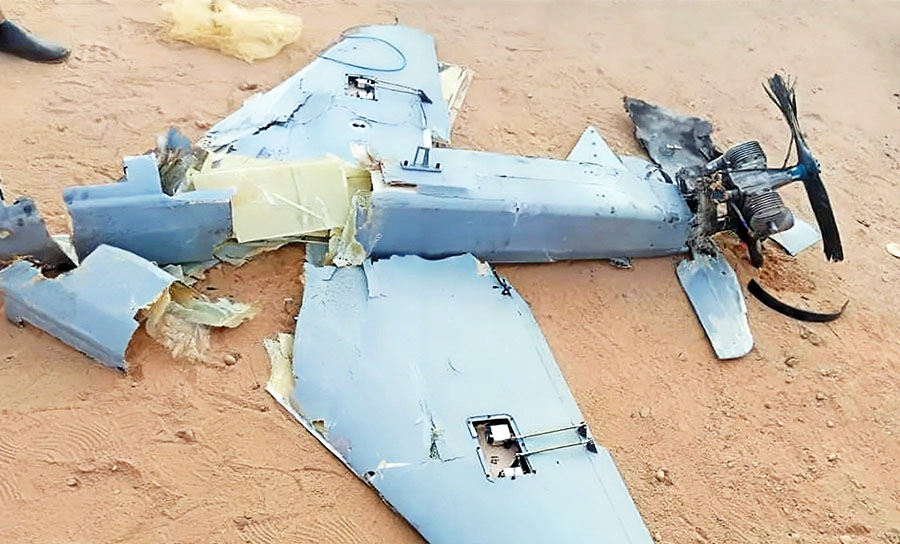
Both sides use two main types of drones: small, low-cost drones—some assembled from commercially available components and fitted with explosives—known as “kamikaze” or suicide drones because they explode on impact; and more advanced, “strategic” drones, which are more expensive, have ranges of hundreds of kilometers, can carry heavy payloads, and return to base.
Amnesty International says the RSF possesses Chinese-made drones obtained through its allies, including the United Arab Emirates, which denies the claim, while the army uses Turkish and Iranian drones.
This ongoing threat has caused widespread disruption across society.
Grace Wairimu Ndung’u of Mercy Corps, one of the few organizations still operating in Kordofan, said: “When these drones strike any location—a market, hospital, or school, as we have recently seen—the impact goes far beyond the immediate casualties.”
She told AFP that families “lose access to food,” as traders flee to safer areas and prices rise in cities already at risk of famine, in addition to increasing difficulties in delivering aid.
“Everyone is fleeing”
With neither side able to secure a decisive battlefield victory, both have turned to drones to inflict maximum damage with minimal risk to their exhausted forces, leading to strikes on areas that had been relatively spared from fighting.
In March, an explosion shook the village of Shukairi, west of Al-Duweim in White Nile State, east of Kordofan.
Hashem Al-Saleh said: “We thought the war had moved away from us—until that drone struck,” noting that he lost five relatives, including two children.
The strike hit a secondary school and a clinic, killing at least 17 civilians, according to the UN.
Al-Saleh added: “After what we saw, we fear the village may be targeted again.”
White Nile State has witnessed intermittent drone strikes this month, particularly in the city of Kosti, where an attack on a university dormitory injured seven students, while another strike targeted the Um Dabakir power station, causing a widespread blackout.
More than 700 kilometers to the west, in areas controlled by the RSF, a strike by the army last week hit Al-Daein Teaching Hospital in East Darfur, killing 70 people and injuring 146 others.
Farmer Mohammed Sayir, 63, who witnessed another strike two weeks ago that caused a massive fire in the city’s market, said via satellite internet: “I was nearby and saw the dead bodies, charred.”
In markets across the country, traders like Humaidan have grown accustomed to this recurring tragedy. He said: “As soon as drones appear, we gather our goods and customers disappear, fearing for their lives.”
