
Updated: 25 March 2026 15:22:30
Sudan: More Than 700 Kidney Failure Patients Without Dialysis in White Nile State

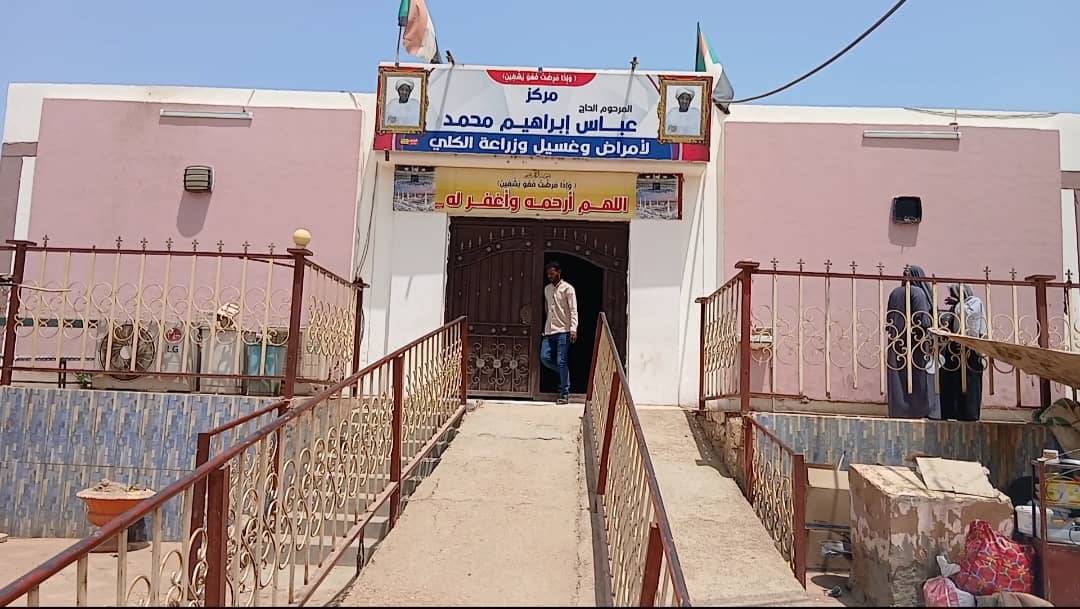
Kosti, March 25, 2026 (Sudan Media Forum Newsroom) — In the city of Kosti, in White Nile State, the phone of Dr. Mohamed Al-Nour Al-Sheikh, director of the Abbas Ibrahim Center for Kidney Diseases, Dialysis and Transplantation, never stops ringing. He receives calls from kidney patients or their families, all hoping for a chance to receive the life-saving dialysis services provided by this center, located in one of the southernmost cities of Sudan, serving thousands of patients.
Opening his notebook filled with names, Dr. Al-Sheikh says that the number of patients waiting for dialysis has reached 749, classified on waiting lists according to urgency. At present, he cannot promise them anything. He hopes to overcome shortages of medical consumables, address electricity problems, and rehabilitate and train his supporting staff in order to meet the needs of those waiting.
The building, constructed in 2016, with its limited number of operational rooms, reflects the center’s modest capacity compared to the growing pressure. It consists of a long ward alongside a few administrative offices, lacking a laboratory, a pharmacy, or even a resting area for patients and their companions. Inside the ward, 20 dialysis machines are lined up side by side.
So far, the center continues to receive support from the Ministry of Health, along with donations from charitable individuals keen to sustain its vital services in this remote city. In previous years, the center was recognized as the “first model center in Sudan,” and despite numerous challenges, it strives to maintain this status.
Dr. Al-Sheikh explains that the center receives, on average, five emergency dialysis cases daily, coming from across White Nile State and neighboring states. He notes that the Abbas Ibrahim Center is the only facility designated to handle emergency cases, unlike other centers in Al-Qutaina, Tendelti, Rabak, Al-Duweim, and Shabsha.
In addition to emergency cases referred by nephrology and urology specialists, the center provides dialysis services to 72 patients daily and operates throughout the week, except on Fridays, which are reserved for machine maintenance. Meanwhile, 749 patients remain on the waiting list, facing extremely difficult conditions, as the center is currently unable to meet their needs due to a severe shortage of machines. Out of the 20 machines, four are now out of service, according to Dr. Al-Sheikh.
Although precise statistics are lacking, available information suggests that Sudan previously had more than 100 dialysis centers across its cities. However, since the outbreak of war in April 2023 between the Sudanese Armed Forces and the Rapid Support Forces, this number has dropped to around 30 centers due to the destruction of hospitals. Approximately 70% of hospitals in key areas have gone out of service, forcing those who can afford it to seek treatment abroad.
In reality, Al-Qitaina has only six dialysis machines, Al-Duweim has 12, Shabsha just four, Tendelti 10, and Rabak 12. These numbers fall far short of meeting the actual needs of dialysis patients in White Nile State and nearby regions affected by the conflict.
Dr. Al-Sheikh points to a significant increase in the number of patients requiring regular dialysis, compounded by the arrival of patients from other states. This situation highlights the urgent need for rehabilitation of the center, including expansion of facilities, improvement of the water purification unit—which has lost efficiency due to sedimentation—and the installation of a solar power system to address frequent electricity outages, in addition to securing essential medications.
- The Sudan Media Forum and its member organizations publish this report, prepared by the Forum’s Newsroom, to reflect the reality of kidney patients and dialysis centers in the peripheral White Nile State. Estimates indicate that 749 kidney failure patients in Kosti alone are unable to access regular dialysis sessions and remain on waiting lists according to case severity. The Abbas Ibrahim Center hopes to overcome shortages in medical supplies, resolve electricity issues, and train its staff in order to meet the urgent needs of these patients.
