
Updated: 11 March 2026 17:08:08
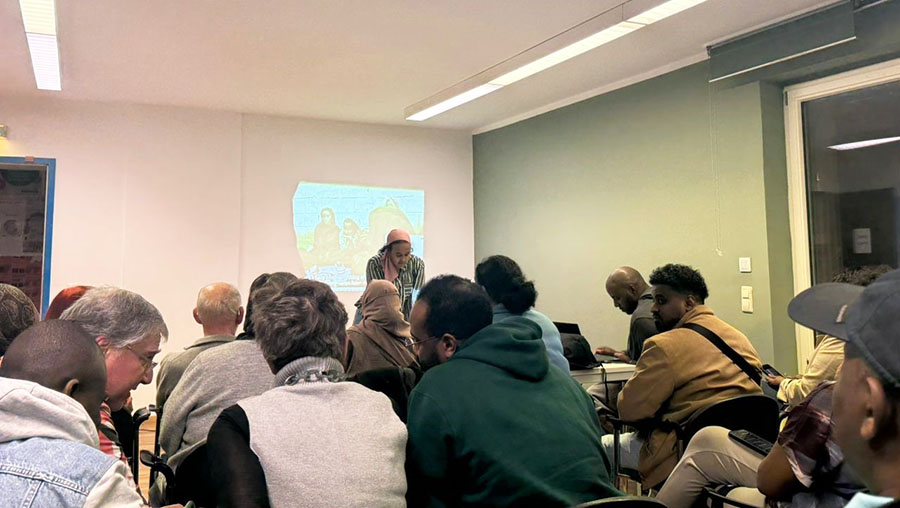
Berlin Celebrates Sudanese Women with the Screening of “Toknan”
Berlin – Khadiga Mustafa
The Sudanese Club in Berlin marked International Women’s Day by organizing a Ramadan evening that combined a communal iftar, a film screening, and a public discussion, highlighting the situation of Sudanese women amid the ongoing war in Sudan.
The event reflected the growing role of Sudanese diaspora communities in preserving collective memory, strengthening solidarity, and amplifying the voices of victims in international forums. In Berlin, the Sudanese Club has emerged as a gathering space for Sudanese men and women and a platform for dialogue and advocacy, particularly on women’s rights, as women continue to bear the heaviest burden of the conflict.
During the event, the documentary “Toknan,” produced by Fawi Films, was screened. The film documents a women-led initiative from eastern Sudan that has turned knowledge into a tool for social change.
In a statement, the Sudanese Club stressed that the war in Sudan has not only caused destruction and displacement but has also involved direct targeting of women’s bodies through systematic patterns of violence that constitute serious violations of international humanitarian law and human rights.
The statement noted that such violations are used as a tool of intimidation and to undermine the social fabric, emphasizing that protecting women and safeguarding their dignity must be a central part of any path toward peace and justice.
The film “Toknan” tells the story of Nafisa Ahmed Ibrahim, founder of the Toknan Association—“Toknan” meaning “knowledge” in the Beja language—and highlights her efforts to empower women while confronting cultural and administrative challenges in eastern Sudan.
Following the screening, the discussion focused on the role of women in safeguarding knowledge, building communities, and sustaining resilience in the face of harsh conditions.
Dr. Asia Ahmed, a member of the executive committee of the Sudanese Club in Berlin, said the club’s members and their German friends were pleased to watch the film on the occasion of International Women’s Day 2026.
She noted that the film provided an opportunity to learn about the work of women in eastern Sudan who demonstrate deep awareness and play an active role in their communities by spreading knowledge among women, which in turn contributes to raising awareness across society.
Despite the complex and difficult conditions in which they operate, she added, the film highlights their remarkable ability to confront challenges and overcome obstacles that hinder women’s active participation in society.
Dr. Ahmed also explained that the Sudanese Club in Berlin, founded in 1999, aims to promote Sudanese culture and showcase various forms of art while paying special attention to issues affecting Sudanese women and girls across the country.
She expressed hope that such events would strengthen cultural exchange and allow German society to learn more about the inspiring struggles of Sudanese women for a dignified life for themselves and future generations in a free and democratic homeland that embraces all without discrimination.
At the end of the evening, the Sudanese Club reiterated that stories like Nafisa’s demonstrate women’s resilience despite violations targeting their bodies and rights. Documenting such experiences, the statement said, is an essential step toward recognition of abuses, ensuring accountability, and enabling women’s full participation in rebuilding Sudan.
The club concluded that solidarity with Sudanese women is both a moral and human rights obligation, stressing that supporting their voices is an integral part of protecting human rights in Sudan.
