
Updated: 26 February 2026 17:30:16
The International Quartet for Peace in Sudan… Challenges on the Ground
Al-Asma‘i Bashri
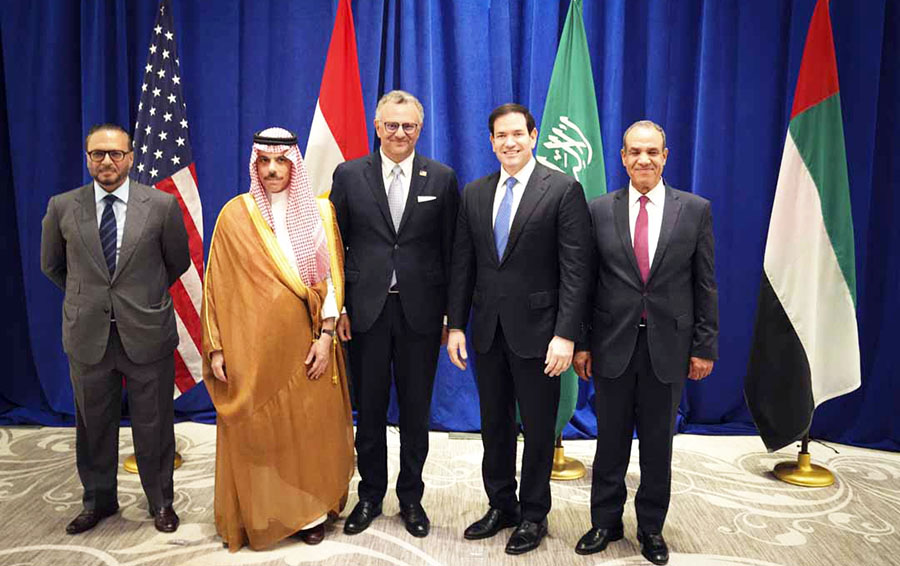
Amid the ongoing armed conflict in Sudan between the Sudanese Armed Forces and the Rapid Support Forces since April 2023, the International Quartet mechanism for peace in Sudan (the United States, Saudi Arabia, Egypt, and the United Arab Emirates) is working to formulate a multi-track initiative aimed at ending the war and addressing the humanitarian crisis. This process has now reached its final draft, prepared and revised by the Senior Adviser to the U.S. President for Arab and African Affairs, Massad Boulos.
The primary objective of this initiative, as expressed by the Quartet and particularly the United States, is to achieve a comprehensive ceasefire, a long-term humanitarian truce, and then an inclusive transitional political process leading to civilian governance. A final copy of the proposal has been delivered to the two warring parties (the army and the Rapid Support Forces), but acceptance and implementation remain a fundamental point of contention between the Sudanese sides.
According to statements from the U.S. State Department and international specialists, the initiative is built on five main pillars: an immediate humanitarian truce; ensuring aid access and civilian protection; a permanent ceasefire with credible security arrangements; a comprehensive civilian-led political transition process; and a long-term plan for reconstruction and stabilization.
The humanitarian truce is viewed as a preliminary step, since it would be difficult to move to broader phases without an immediate halt to fighting that alleviates the immense suffering of the population and creates space for political dialogue.
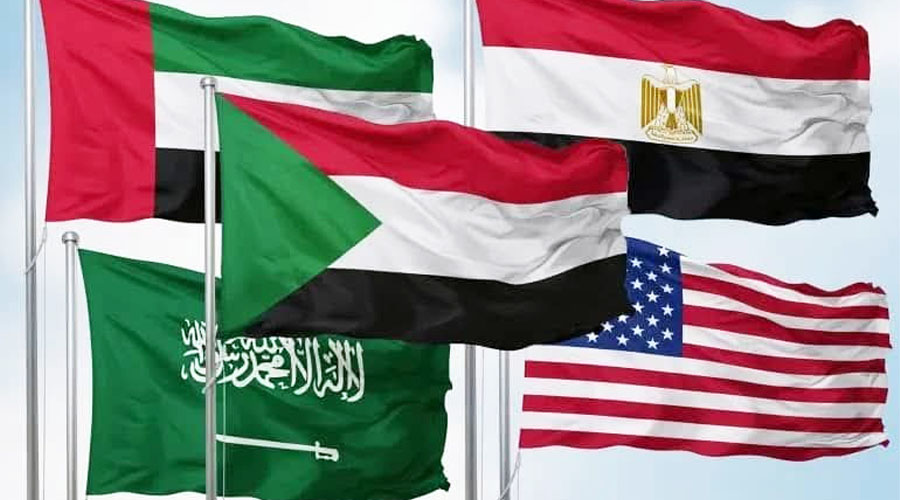
In dealing with the proposal, the Sudanese government led by the army has insisted that any initiative or plan must respect Sudan’s “supreme national interest,” national sovereignty, national security, territorial unity, and the integrity of its institutions. Sudan’s Foreign Ministry clarified that acceptance of proposals is not automatically guaranteed, and that any proposal that fails to consider the country’s supreme interests “will not receive government approval and will not find its way to implementation.” These conditions strongly indicate reservations within the military establishment about certain provisions or formulations of the initiative, especially regarding aspects tied to future political structuring or the army’s role in the state after the war ends.
For its part, the Rapid Support Forces have at different times adopted varying positions toward the Quartet. In November 2025, the RSF announced its approval of a humanitarian truce proposed by the Quartet and expressed readiness to engage in talks on arrangements for cessation of hostilities and the fundamental principles of a political track aimed at addressing the causes of the war and achieving a just and comprehensive peace. This suggests that some RSF leaders see the initiative as an entry point for easing international and domestic pressure, despite their field record of controlling multiple مناطق and seeking to consolidate political and military influence.
From the perspective of observers and political analysts, the Quartet initiative is seen as an important international diplomatic framework, but insufficient on its own unless its provisions are translated into effective implementation mechanisms. Published assessments stress a large gap between the language of the initiative and realities on the ground, emphasizing that the real success of any peace track depends on the Quartet’s ability to ensure parties’ compliance with ceasefire agreements, establish independent monitoring mechanisms, and ensure accountability for grave violations against civilians by all sides. Many argue that merely signing diplomatic texts without strict enforcement tools could lead to a fragile truce that military forces exploit to reposition or prolong the conflict, thereby worsening the humanitarian crisis rather than resolving it.
One recurring criticism in analyses is that the Quartet lacks full transparency in handling the interests of regional powers and major states. Moves by some countries within or around the Quartet are viewed as driven by broader strategic interests in the region (such as Red Sea security or geopolitical balance), which may reduce Sudanese confidence that the initiative prioritizes ending the war and protecting civilians as much as it serves major powers’ interests. Some analysts have also called for more effective involvement of international organizations, including the United Nations and the African Union, to ensure independent oversight and the achievement of transitional justice.
Overall, the Sudanese army’s stance tends toward caution and reservation regarding the initiative, emphasizing sovereignty and national interest without fully relinquishing its conditions; meanwhile, the Rapid Support Forces have shown provisional willingness to accept parts of the initiative, such as the humanitarian truce, but have not given final approval to the comprehensive political track. Thus, the Quartet initiative remains an important international text and a strong diplomatic lever, yet it faces fundamental challenges in implementation due to mutual distrust between the parties, fears about the impact of military conditions on the political future, and the possibility that truces may be exploited for new military tactics. The open question for analysts remains: can the Quartet strike a balance between international pressure and respect for national will in order to achieve a lasting end to the war and a political solution that preserves security, stability, and addresses the roots of the conflict?

