
Updated: 25 February 2026 19:52:28
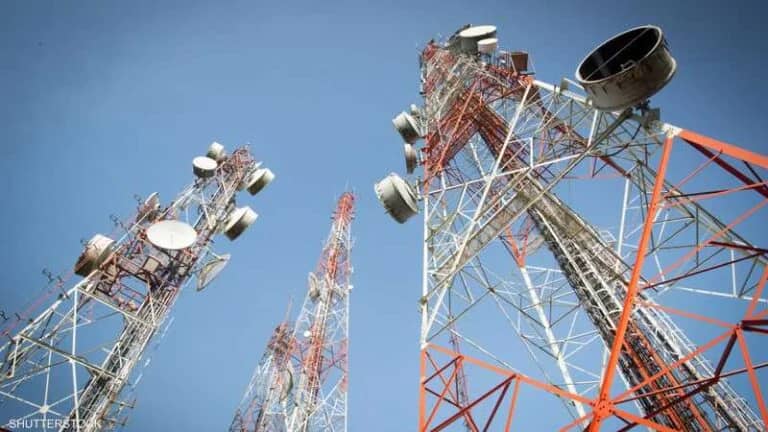
Darfur: Entire Lives Without Communications or Internet

Abdel Moneim Madbou, Kampala, 25 February 2026 (Radio Dabanga) - Adam Othman brought his wife home after she gave birth naturally in hospital. She was in stable condition. He then left for work. Hours later, her health suddenly deteriorated and she died. Neighbors and relatives tried to inform him, but communication networks were down. They waited until evening. Othman returned expecting to embrace his wife and newborn child, only to find that the funeral rites had already begun in his absence.
Adam’s story encapsulates the reality facing residents of several Sudanese states where communication networks were cut months after the war began. The shutdown of telecommunications has become a multiplier of the humanitarian tragedy, no less devastating than the war itself.
Hafiz Ahmed, one of Othman’s neighbors, describes how the communications blackout has affected daily life — from the difficulty of coordinating within families to the inability to notify relatives during emergencies, as happened with Adam, who was unable to bid farewell to his wife. Hafiz believes that maintaining communication blackouts in populated areas constitutes a direct measure against civilians and increases the social cost of war.
The Beginning of the Network Blackout
The suffering of residents in several states began in the early months of the war between the Sudanese Armed Forces and the Rapid Support Forces (RSF). Walid Abdelmajid, an employee of Zain Telecommunications, told Radio Dabanga that communication networks are currently completely offline in Darfur. Telecommunications infrastructure in the region has been damaged by approximately 40 percent due to looting of copper cables, generators, spare parts, and solar equipment.
He noted that Zain’s network had remained operational in West Darfur until recently, and residents from other states traveled to El Geneina to reactivate banking applications and social media accounts. However, he said RSF authorities in the state decided two or three months ago to completely cut services. He emphasized that the company is fully prepared to restore services if local authorities grant approval: “If we receive a green light, the company is ready to resume services today rather than tomorrow.”
Another telecommunications employee said infrastructure destruction in Darfur and Kordofan began at the onset of war, and that it is now rare to find a city or village whose networks remain intact. Equipment was looted, with some reportedly transferred to the Central African Republic and Chad. Destruction began in the early days with theft of fuel, solar panels, and batteries. He confirmed that restoring telecommunications infrastructure in Darfur and Kordofan would require millions of dollars.
Engineer Ammar stated that Kordofan, Darfur, and parts of Khartoum and central Sudan went offline in July 2023, at a time when these areas were under RSF control. In February 2024, Sudan experienced a nationwide communications blackout, with both sides publicly blaming each other.
In an article published in 2025, Ammar noted that amid mutual accusations, an analysis emerged — based on highly credible but unofficial information — suggesting that service interruptions in RSF-controlled areas were not technical failures but rather the result of military orders from the Sudanese Armed Forces.
An Information Vacuum
The near-total collapse of communications networks in Darfur since the early months of war created a “network blackout,” preventing the flow of information or reporting about humanitarian conditions or battles in El Geneina, Nyala, and Zalingei.
Under this digital isolation, civilians paid the price for fighting away from media scrutiny. Rumors and misinformation spread widely, documentation of violations became nearly impossible, and distress calls went unheard.
Many journalists were forced to abandon their profession and seek other livelihoods not dependent on connectivity. Journalist Mohammed Saleh Al-Bashar said the blackout had profound effects on journalists and civilians alike, as journalism fundamentally relies on communication for gathering, verifying, and transmitting information.
He recounted his experience following the fall of the army command in El Daien, capital of East Darfur. Networks were cut the next day, placing him in a severe professional dilemma. As a correspondent dependent on regular reporting, he faced losing his income due to inability to communicate. The challenge extended beyond connectivity costs; he lost contact with sources in cities, villages, and displacement camps. “Many of my sources could not afford to reactivate their lines,” he said. “Sometimes I had to transfer money to them so they could call and send information, doubling my financial burdens.”
Journalist Mahdi Al-Azib in Nyala echoed this view, stating that communications are a journalist’s lifeline. Without connectivity, journalists are effectively isolated, and information about local conditions disappears.
He added that the blackout affects not only media but also education, healthcare, humanitarian access, official transactions, identity documentation, and commerce. Citizens sought limited alternatives while awaiting sustainable solutions.
Telecommunications as a Tool of Conflict Management
International telecommunications expert Ammar Qassem Hamouda said network disruptions have evolved beyond technical issues into instruments of conflict management. Telecommunications generate substantial tax revenue — estimated at 40 percent of sector income — which goes to the Ministry of Finance. Control over these revenues has become part of military calculations, with service cut in certain areas to prevent the opposing side from benefiting financially, even if that deprives the same area’s population of service.
Hamouda noted this tactic is not unique to Sudan. Conflict parties often attempt to establish alternative networks to control revenues. Telecommunications have become relatively secure channels for financial transfers amid insecurity, particularly in informal markets. When networks are cut, daily transactions become more complex.
He stressed that in normal circumstances, communications may only be suspended by judicial order, not administrative decision, and that unauthorized disruption constitutes a violation of citizens’ rights — even in armed conflict.
Return to Primitive Means
Community activist Tareq Makki in Nyala described how the blackout plunged residents into humanitarian and social crisis. Many could not contact relatives outside the state. Some traveled to other localities within South Darfur to access wireless internet, while others journeyed to East Darfur simply to make phone calls.
Lawyer Mohammed Abdelmoniem Al-Reeh previously told Radio Dabanga that in the early days of the blackout, he traveled to El Daien to contact family and receive a bank transfer. “We began communicating through handwritten letters,” he said. “We would write letters to reassure our families and deliver them to travel offices for transport to other cities.” This occurred amid daily civilian casualties in Nyala.
The Emergence of Starlink
With the introduction of Starlink satellite internet in late 2023, partial connectivity returned. Journalist Mohammed Saleh Al-Bashar said that after three days of total blackout, he discovered a Starlink connection in El Daien market, costing 3,000 Sudanese pounds (approximately one dollar) per hour — a high sum under economic hardship. Though one hour was barely sufficient, it allowed him to resume work.
Tareq Makki said early Starlink access was limited to specific locations such as the popular market and El Geneina bus station in Nyala, leading to long queues. Costs remained high, and users bore transportation expenses to reach connection points.
Citizen Hafiz Al-Sayer, now in Kampala, said Starlink allows him to contact his children in Zalingei several times daily, at a cost of about 1,000 pounds per day — affordable under current conditions. He noted that even villages previously without networks now have connectivity. However, service is unavailable at all times, especially late at night or early morning, and lacks privacy since calls are made publicly near devices.
Journalist Mahdi Al-Azib said Starlink is not a comprehensive solution due to costs and limitations on mobility, which restrict field reporting.
Makki emphasized that temporary internet access is not a fundamental solution and that stable communications are a basic human right essential for family cohesion and economic stability.
Impact on Markets
After three years offline, trade has not been entirely paralyzed. Trader Karam Al-Din Sharef in El Daien said Starlink has mitigated damage. Cross-border trade with South Sudan and Chad via areas such as Khor Baranga, Adré, and Adikon continues largely through satellite internet.
Financial Losses
Engineer Ammar estimates telecommunications losses at billions of dollars. Before the war, companies generated nearly half a billion dollars annually in profits, with tax revenues exceeding one billion dollars. Infrastructure damage — to stations, switches, cables, and generators — compounded losses.
Despite this, he believes telecommunications could recover quickly due to high demand. However, continued war may force companies into complex repositioning depending on territorial control.
- The Sudan Media Forum and its member institutions publish this report, prepared by Radio Dabanga, to reflect the scale of destruction inflicted on Sudan’s telecommunications sector amid the war between the Sudanese Armed Forces and the Rapid Support Forces. The report highlights the humanitarian, social, and economic impact of communication shutdowns in Darfur, where residents have lost the ability to connect with others outside conflict zones, and where trade and service flows have been severely disrupted.
