
Updated: 13 February 2026 15:14:54
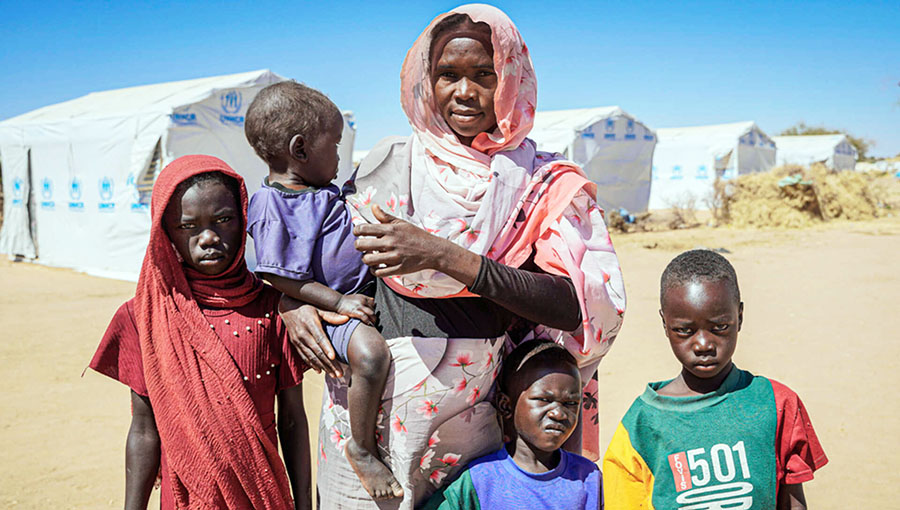
Hear firsthand from families forced to flee Sudan
Moatinoon – Follow up
Source: IRC
Chad’s eastern region has long supported Sudanese refugees, but local resources and infrastructure are drained, leaving thousands without access to basic services. Conditions are especially critical for the more than 100,000 children facing severe malnutrition and limited access to health care.
For mothers with small children, the frantic journey to escape the violence in Sudan and find refuge in Chad is especially harrowing.
Here are the stories of three women who fled with nothing but their children and a desperate need to find safe harbor.
Badriya
After Badriya’s village in Borsaliba, Sudan, was attacked and burned by armed groups, she fled with only her child and the clothes she wore that day. Many families were separated as they ran.
“They took our possessions,” she said. “Everything was taken away. We left with only one item of clothing.”
The journey out of Sudan was long and terrifying. Badriya walked for several days without food or rest, focused only on keeping her child alive. She stopped only briefly along the way, giving the little water they had to elderly people travelling with them.
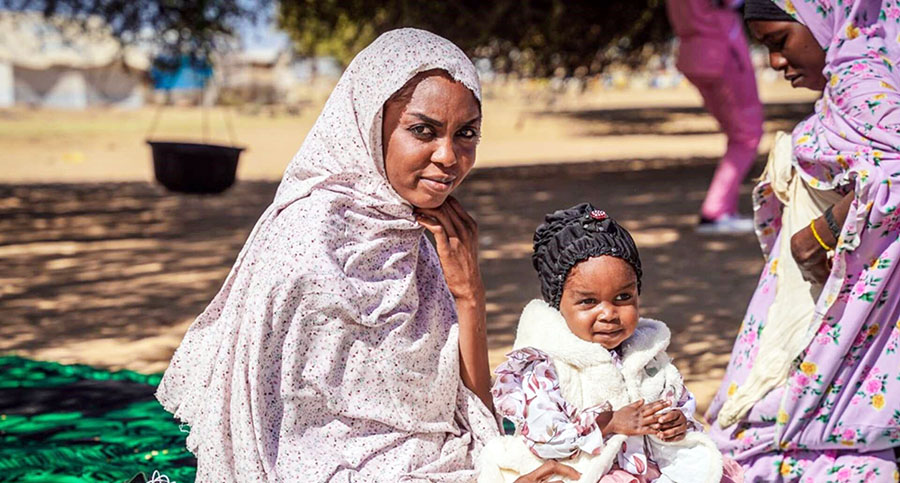
Life in the camp
Reaching Chad did not bring much comfort. In Korbo, families sleep in simple shelters with almost no belongings. Food is in short supply, and even in the camp, safety is fragile. When women leave to collect firewood or look for work, they face the risk of beatings and sexual violence.
Without wood, they cannot cook the little food they receive. Without containers or buckets, they struggle to store water. Without blankets, the cold nights make everyone more vulnerable to illness. “We get sick,” says Badriya. “The children are all sick.”
The International Rescue Committee (IRC) works to provide lifesaving medicine and emergency supplies to refugees like Badriya in eastern Chad. This support continues through mobile health services, treatment for malnutrition, and care for survivors of gender-based violence, but the needs are far greater than the resources currently available.
When asked what she wants people outside Chad to understand, Badriya’s answer goes straight to the essentials. “Right now, we need medicine and food,” she said. “We need our homes to be safe and to have more water.” She expresses deep gratitude for the support she has received, especially from health workers who know her by name, while still holding onto hope that more will come.
Hanadi
Hanadi, a 22‑year‑old from El Fasher, lived through intense bombardment that destroyed her home, killed two of her brothers, and left another missing. While pregnant, she gave birth prematurely amidst a missile strike. With no food and only the ground to sleep on, she walked for days, carrying her fragile, near-lifeless baby, until they were finally rescued in Kutum.
While she is now physically safer in a camp in eastern Chad, she is still facing other struggles. Hanadi, along with her mother and her aunt now live in a shelter as a family of nine. “We came with nothing,” she said, and found that little was left in terms of basic items when they arrived.
She and her family are still searching for their missing relatives while contending with their own trauma and injuries. In this fragile new life, humanitarian organizations such as the IRC are a crucial source of support.
Bousseina
Bousseina Ismail is a 38-year-old mother who was forced to flee her home in Abu Tulayh suddenly one afternoon. “We just took the children by the hand and left, without even any food for the children,” she recalls.
With her children, Bousseina traveled without food, becoming separated from her brother for several days. When they finally arrived in Chad, they were exhausted and empty-handed.
Now settled in Iridimi camp in Tiné, Bousseina’s life is more stable, but still difficult. She struggles with limited food, fragile shelter conditions, and limited family support—especially now she is pregnant. “Only my mother was here, but she has left for elsewhere,” she said. “Now there’s only my children. I don’t have any family here now.”
“We haven’t faced conflict or heard any gunshots [in the camp]”, she says, expressing relief to be free from immediate danger. However, daily life remains a struggle.

