
Updated: 9 February 2026 20:01:16
Sudan’s Nomads Trapped as Insecurity and Ethnic Divisions Escalate with War
Reuters – Moatinoon
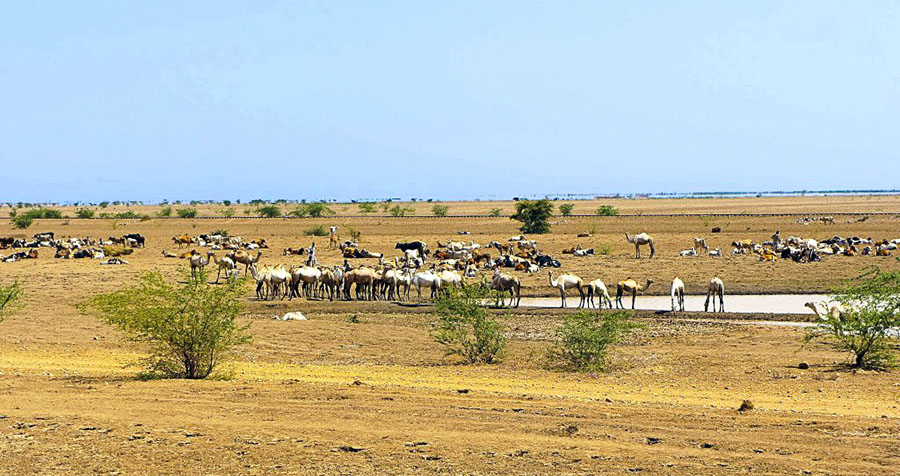
Jabara al-Bashir and his family once roamed Sudan’s desert with their camels and livestock, moving freely between markets, water sources, and green grazing lands.
But since the outbreak of war in 2023, he and other Arab nomads have found themselves stranded in the desert outside the central Sudanese city of El-Obeid, increasingly vulnerable to bandits and ethnic tensions.
The war between the Sudanese army and the paramilitary Rapid Support Forces (RSF) has displaced nearly 14 million people and sparked waves of ethnically driven bloodshed, alongside the spread of famine and disease.
Local researcher Ibrahim Jumaa said the war has also disrupted the delicate balance of land ownership and livestock migration routes that sustained nomadic livelihoods and their broader social relations in the region.
El-Obeid is one of Sudan’s major cities and the capital of North Kordofan state, which has witnessed some of the fiercest fighting in recent months.
Residents of North Kordofan who spoke to Reuters said they now feel trapped amid rising ethnic hatred linked to the war, much of it fueled by social media.
“Previously, no one would stop a person or a nomadic caravan and ask where they were from,” al-Bashir said. “A caravan was a caravan, a market was a market, a road was a road. You moved freely, by choice. Now there is no choice, and no place that will accept you.”
He added: “Before, there were many markets where you could buy and sell. No one hated or rejected anyone. Now everything has become restricted and risky.”
Risk of Theft
In addition to the escalating war, nomadic herders—whom Jumaa said number in the millions across Sudan—are facing growing threats from bandits who steal livestock.
“In the past, markets were open and safe; things were not like they are today,” said Hamed Mohamed, another herder trapped on the outskirts of El-Obeid. “This is now a time of problems. We cannot go anywhere, and if we do, enemies take the animals. Now our limit is just El-Obeid.”
The Rapid Support Forces emerged from Arab militias known as the Janjaweed, which have been accused of committing genocide in Darfur in the early 2000s.
The United States and human rights organizations have accused the RSF of committing genocide against non-Arab populations in West Darfur during the current conflict, in a continuation of long-standing violence rooted in land disputes.
The RSF has denied responsibility for ethnically motivated killings and said those responsible for abuses would be held accountable.
Throughout the war, the force has forged alliances with other Arab tribes and has at times allowed looting and kidnappings to take place.
However, some Arab tribes and many of their members have not joined the fighting.
Jumaa called for the “design of social programs to counter hate speech, reinforce the rule of law, and promote social reconciliation, given the profound impact the war has had on the social fabric of communities.”
