
Updated: 5 February 2026 17:00:46
On the Sudan Aid Conference: Safe Zones or a Repackaged Version of Operation Lifeline?
Dr. Salah Al-Amin
Expert on Humanitarian Aid Organizations
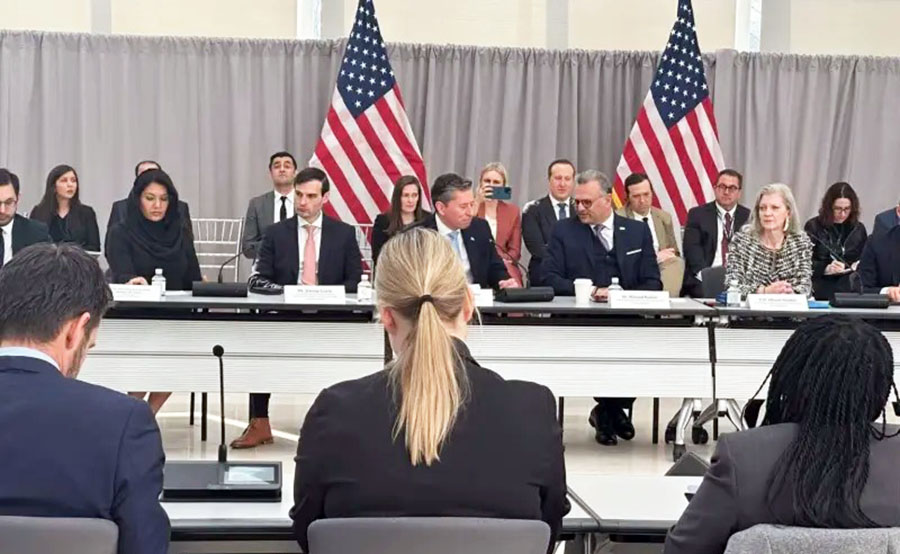
The humanitarian crisis in Sudan is a complex emergency that requires centralized coordination with multiple actors, placing local communities and on-the-ground responders at the heart of the operation. From this perspective, the humanitarian aid conference recently convened in Washington at the initiative of the United States can be seen as an expansion of the so-called “Quad” to include additional countries—signaling a primary focus on mobilizing funding.
However, in light of Masad Boulos’s statement that the warring parties have given preliminary approval to a proposal for a humanitarian truce and the discussion of “safe zones,” I believe that the most significant and troubling absence is that of Sudanese civilian forces, as well as Sudanese communities themselves—the very people on the ground and for whom any humanitarian truce would supposedly be implemented.
For this reason, I am republishing a post I wrote several years ago, prompted by recurring discussions about withdrawals from certain cities to create safe zones for the delivery of humanitarian aid.
Safe zones are generally defined as areas agreed upon by parties to a conflict—or imposed by the international community—with the aim of ensuring the safety of civilians who are not party to the armed conflict, protecting them from hostilities. Such zones are governed by specific conditions, and any violation constitutes a breach of international humanitarian law and international human rights law.
Historically, the term “safe zones” is not a formal legal concept in international law. It is not explicitly codified under that exact name in international conventions, although closely related concepts do exist, such as medical zones, hospital and rehabilitation zones, or neutral and demilitarized areas.
The idea of safe zones first emerged in 1870 during the Franco-Prussian War, introduced by Henry Dunant, the Swiss founder of the International Committee of the Red Cross. He proposed neutralizing certain cities and designating them for the care of wounded combatants. This represented the earliest form of medical and safety zones, though the concept was not taken seriously at the time due to prevailing military developments.
Human Rights Watch defines safe zones as specific areas in which parties to an armed conflict agree not to deploy military forces or conduct attacks, typically established through a resolution of the United Nations Security Council.
Under international humanitarian law, there are three main forms of such zones: areas devoid of defensive means, demilitarized zones, and hospital or medical zones.
Throughout history, the concept of safe zones has been applied under various labels, including “quiet corridors,” “humanitarian corridors,” “protected areas,” “safe havens,” “neutral zones,” and “safe zones,” often declared by the UN Security Council in cooperation with international actors.
The experience of safe havens or safe zones has been implemented historically in Rwanda (1994), Bosnia and Herzegovina (1995), and Gaza. Yet, in none of these cases did such designations prevent these areas from being attacked.
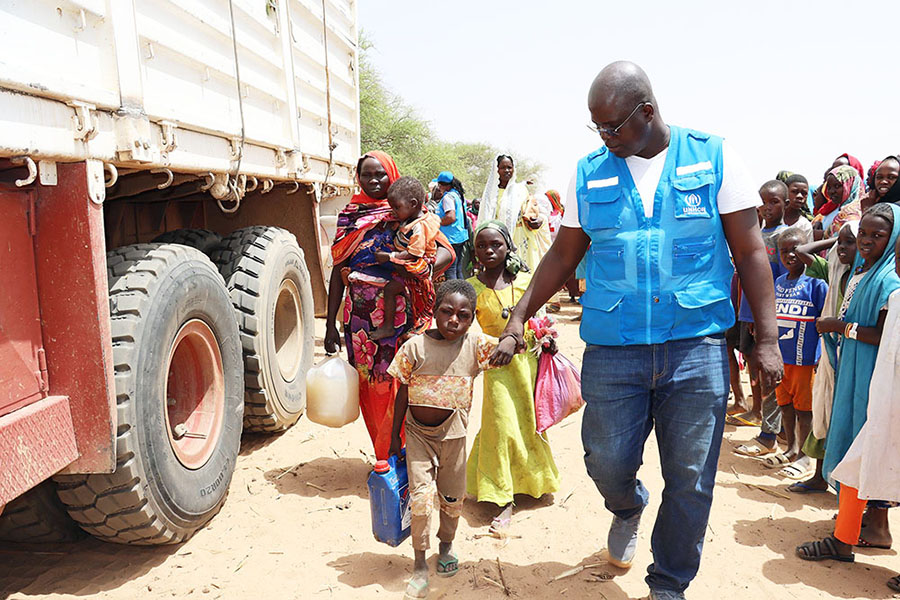
In the Sudanese context, given the complexity of the situation, the intransigence of the warring parties, and lessons learned from previous experiences, I believe the most appropriate approach would be a humanitarian operation resembling Operation Lifeline Sudan, which was implemented during Sudan’s civil war (1983–2005). This operation lasted 15 years and involved more than 31 international organizations, led by UNICEF under a mandate from the United Nations.
Amid the sounds of gunfire, Operation Lifeline Sudan succeeded in delivering food, water, education, healthcare, and—above all—protection to millions of Sudanese in war-affected areas. The presence and sustained access of humanitarian workers also played a critical role in monitoring and documenting human rights violations.
I am not suggesting that a second Operation Lifeline Sudan should be a simple copy-and-paste replication of the first. Such an approach would be impossible given the profound differences between the 1983 war and the war that erupted in 2023.
In the earlier conflict, there were two principal parties with centralized leadership: the Sudan People’s Liberation Army under a unified command, and the central government under a single leadership (later, following the Nasir split, areas under that faction were incorporated into the agreement). By contrast, the 2023 war features fragmented leadership structures, shifting alliances, and entire مناطق under the control of groups not aligned with either main party. These include areas controlled by the Sudan Liberation Army/Abdul Wahid al-Nur and others under the Sudan People’s Liberation Movement–North/Abdelaziz al-Hilu.
A second Lifeline operation would therefore be far more complex—but not impossible. Its realization would require pressure from the international community, and even more importantly, sustained pressure from Sudanese women and men inside and outside the country. They must be the leaders of this process. Any humanitarian operation should build upon the grassroots initiatives already undertaken amid death, bullets, gunpowder, and disease—such as community kitchens, neighborhood soup kitchens, emergency response rooms, and the transfer of funds through mobile banking applications like Bankak.
Despite being the largest civilian humanitarian relief operation ever conducted during a war at the time, and despite its strengths—such as strong coordination mechanisms and the establishment of safe havens—Operation Lifeline Sudan was not without significant flaws and shortcomings. A careful and critical study of that experience, however, can help in designing a second Lifeline operation capable of restoring life to civilians who now stand on the edge of death.

