
Updated: 26 December 2025 17:28:28
Finding light in Sudan’s dark night
*By Don Cheadle and John Prendergast
Source: The Hill
As the horrors continue to mount in Sudan’s genocidal war, most of what we hear about is man’s inhumanity towards his fellow humans. But beneath that reality is a spark of humanity, whereby thousands of Sudanese are standing up at great cost to themselves to save their neighbors.
Doctor Jamal Eltaeb, head of traumatology at a hospital near Sudan’s shattered capital city, Khartoum, is one of those heroes. One morning at the height of the war, two children, Tagwa and Faris, went to the market for their mother when a missile struck, critically injuring both. Neighbors immediately brought them to Eltaeb’s hospital. He amputated Tagwa’s leg and Faris’ leg and arm, despite lacking anaesthesia.
“Their mother arrived three hours later,” Eltaeb noted, “expecting to find them dead. When she saw them alive, her relief and gratitude were overwhelming.”
Eltaeb was recently awarded the Aurora Prize for Awakening Humanity, which recognizes individuals who risk their lives to save others, for his unwavering commitment to serving the Sudanese people amid the country’s devastating civil war. Despite the near-total collapse of the country’s health system, Eltaeb has kept Al Nao Hospital in Omdurman operating as one of the last functioning referral hospitals in greater Khartoum, parts of which the Sudan war has reduced to rubble. His dedication has saved hundreds of lives under difficult conditions: he often works without electricity, dwindling supplies of anaesthesia, and a constant risk of attack.
Noubar Afeyan, Co-Founder of the Aurora Humanitarian Initiative said, “In a world where the ‘inhumanitarians’ too often dominate the headlines, Eltaeb reminds us that the humanitarian spirit endures—and that each of us has a responsibility to keep it alive.”
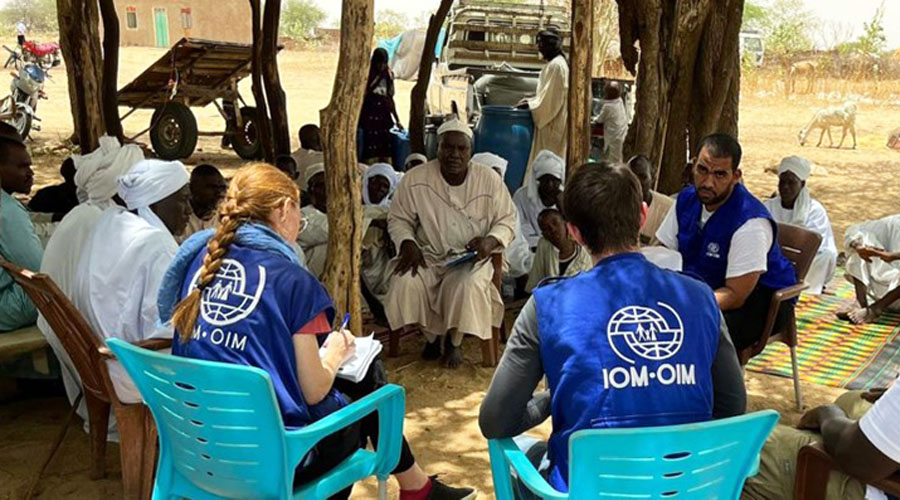
The numbers of suffering Sudanese are mind-boggling. The International Rescue Committee noted recently, Sudan “represents the largest recorded and fastest displacement crisis in the world. It is also the largest humanitarian crisis ever recorded.” When you see that 30 million people need aid to survive, remember that a Sudanese mother right now is watching her child starve to death. When you see that 12 million people are homeless, picture armed men torching a family’s home, forcing that family to hide in an abandoned, bombed-out building.
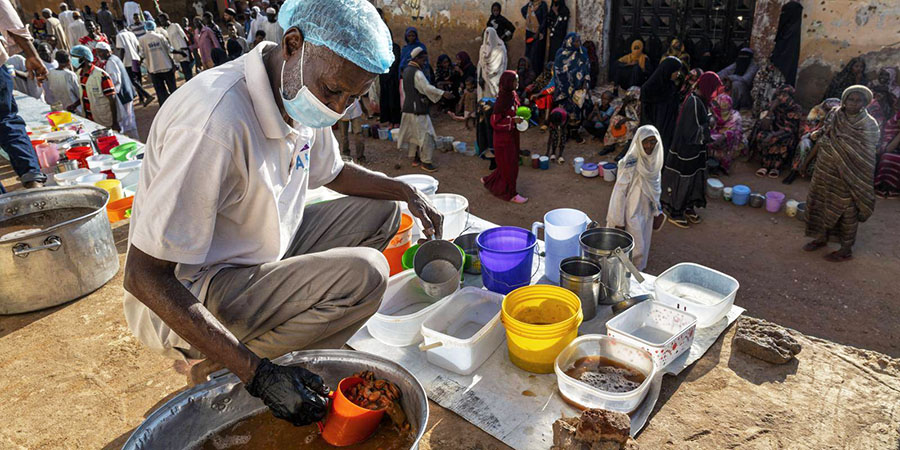
Eltaeb is not alone in standing with his people in the midst of war. Local communities throughout Sudan have organized emergency response rooms — voluntary associations that provide food and medicine as well as evacuate vulnerable neighbors.
They were nominated for the Nobel Peace Prize this year. With just droplets of international aid, they still manage somehow to provide food and services to three million of the most vulnerable Sudanese. Women lead the bulk of the emergency response rooms. These local groups are the only game in town, as the warring parties have systematically denied access to the U.N. and other international relief organizations. Emergency response rooms are the most cost-effective aid providers we have ever seen, with an estimated 95 percent of donations reaching the needy. Sudanese analyst Kholood Khair says, “In many ways, they are the state now.”
People like Eltaeb and the courageous Sudanese who staff and run the emergency response rooms represent a hopeful future for Sudan and deserve much more international recognition and support. But the aid organization Islamic Relief issued a report that says the emergency response room network of community food kitchens is on the precipice of collapsing due to the pressures of ongoing war and lack of funding.
The U.S. foreign aid agency, USAID, had been the biggest donor. When the Trump administration shuttered the agency earlier this year, it felt, according to one volunteer, “like someone cut a rope we were holding on to.”
Another emergency response room volunteer near Eltaeb’s hospital says there are times when they run out of food without being able to serve everyone in line. Recently the volunteer had to tell a mother there was nothing left for her two children. “I went home and I couldn’t even speak to my own family that night. The shame of having food in my stomach when the children did not, it is a heavy feeling for me.”
From outside Sudan, we can demand that the external supporters of the war like the United Arab Emirates stop throwing gasoline on Sudan’s fire. At a December 11 House Foreign Affairs Committee hearing, Rep. Chris Smith (R-N.J.) said, “We cannot turn a blind eye to the UAE’s role in supplying weapons that kill innocent Sudanese civilians.”
With the U.S. and other donors reducing support, and with no end to the conflict in sight, the strength and determination of the Sudanese people are signs of hope. They are pressing for peace, fighting for basic rights and dignity, and doing everything they can to sustain themselves through this devastating war. And we can aid the Sudanese people’s efforts to make a difference by donating to the emergency response rooms and Eltaeb’s hospital, as well as spreading the word that the lives of children like Tagwa and Faris can be saved.
*Don Cheadle is an actor and activist. John Prendergast is co-founder of the Sentry and member of the Aurora Humanitarian Initiative’s Selection Committee.

